¡Acompáñanos a viajar por el mundo de los libros!
Añadir este libro a la estantería
Grey
Escribe un nuevo comentario Default profile 50px
Grey
Suscríbete para leer el libro completo o lee las primeras páginas gratis.
All characters reduced
Tao Te Ching - Enriched edition Ancient Masterpiece of Philosophy - cover

Tao Te Ching - Enriched edition Ancient Masterpiece of Philosophy

Lao Tzu

Editorial: DigiCat

  • 0
  • 0
  • 0

Sinopsis

The "Tao Te Ching," attributed to the ancient Chinese philosopher Lao Tzu, is a seminal text in Taoist philosophy that elegantly conveys profound insights on the nature of existence, governance, and harmony. Written in a poetic and aphoristic style, the text consists of 81 short chapters which juxtapose simplicity and complexity through paradoxical statements. This work serves as a foundational document not only for Taoism but also for broader Eastern philosophical thought, advocating for a deep connection to the natural world and promoting principles of wu wei (non-action) and natural order. Lao Tzu, a contemporary of Confucius, is often regarded as the father of Taoism, though much of his life remains shrouded in legend. His teachings emerged during a time of social upheaval in ancient China, fostering a counter-cultural ideology that embraced simplicity and introspection over societal conventions and rigidity. It is believed Lao Tzu's experiences as a historian and philosopher guided him to prioritize the harmony between individuals and the cosmos, reflecting a wisdom far ahead of his time. "Tao Te Ching" is highly recommended for those seeking spiritual depth and philosophical insight. Its layered meanings invite readers to reflect upon their own lives and the world around them, making it a timeless guide for personal growth and ethical living. Engaging with this text offers an invaluable opportunity to explore the art of living harmoniously within the complexities of existence.

In this enriched edition, we have carefully created added value for your reading experience:
- A succinct Introduction situates the work's timeless appeal and themes.
- The Synopsis outlines the central plot, highlighting key developments without spoiling critical twists.
- A detailed Historical Context immerses you in the era's events and influences that shaped the writing.
- An Author Biography reveals milestones in the author's life, illuminating the personal insights behind the text.
- A thorough Analysis dissects symbols, motifs, and character arcs to unearth underlying meanings.
- Reflection questions prompt you to engage personally with the work's messages, connecting them to modern life.
- Hand‐picked Memorable Quotes shine a spotlight on moments of literary brilliance.
- Interactive footnotes clarify unusual references, historical allusions, and archaic phrases for an effortless, more informed read.
Disponible desde: 25/05/2022.
Longitud de impresión: 144 páginas.

Otros libros que te pueden interesar

  • Hidden Mercy - AIDS Catholics and the Untold Stories of Compassion in the Face of Fear - cover

    Hidden Mercy - AIDS Catholics...

    Michael J. O'Loughlin

    • 0
    • 0
    • 0
    The 1980s and 1990s, the height of the AIDS crisis in the United States, was decades ago now, and many of the stories from this time remain hidden: A Catholic nun from a small Midwestern town packs up her life to move to New York City, where she throws herself into a community under assault from HIV and AIDS. A young priest sees himself in the many gay men dying from AIDS and grapples with how best to respond, eventually coming out as gay and putting his own career on the line. A gay Catholic with HIV loses his partner to AIDS and then flees the church, focusing his energy on his own health rather than fight an institution seemingly rejecting him. 


    Set against the backdrop of the HIV and AIDS epidemic of the late twentieth century and the Catholic Church's crackdown on gay and lesbian activists, journalist Michael O'Loughlin searches out the untold stories of those who didn't look away, who at great personal cost chose compassion. 


    This is one journalist's—gay and Catholic himself—compelling picture of those quiet heroes who responded to human suffering when so much of society told them to look away. These pure acts of compassion and mercy offer us hope and inspiration as we continue to confront existential questions about what it means to be Americans, Christians, and human beings responding to those most in need.
    Ver libro
  • The Case Of Wagner Nietzsche Contra Wagner and Selected Aphorisms - cover

    The Case Of Wagner Nietzsche...

    Friedrich Nietzsche

    • 0
    • 0
    • 0
    What happens when a philosopher declares war on an artist who once inspired him? 
    In this provocative collection, Friedrich Nietzsche - iconoclast, poet of ideas, and architect of modern existentialism - turns his formidable intellect against Richard Wagner, the composer he once revered. The result is a searing psychological and aesthetic autopsy of genius, decadence, and the struggle between art and truth. 
    Nietzsche’s voice echoes through the ages in The Case of Wagner, a charged and theatrical critique of Wagner’s music, values, and legacy. In Nietzsche Contra Wagner, he deepens the attack, dissecting the moral, cultural, and personal tensions between their divergent paths. The Selected Aphorisms that follow offer piercing reflections on music, morality, truth, and the human spirit—each a spark in Nietzsche’s incendiary philosophy. 
    Written in his unmistakable style - ironic, lyrical, ruthless—these texts mark the culmination of a fractured friendship and the birth of a new philosophical vision. They embody the turmoil of a thinker who challenged the foundations of Western culture, and whose ideas continue to resonate in debates on art, identity, and modernity. 
    Now brought to life in a clear, refined AI narration, this audiobook offers a crisp and immersive experience - faithful to the cadence and clarity Nietzsche’s work demands. Whether you are a longtime admirer or a curious newcomer, this journey into Nietzsche’s thought will provoke, challenge, and awaken. 
    Enter the mind of one of history’s most fearless thinkers - press play, and confront the beautiful chaos within.
    Ver libro
  • Roman Legions - The Military Might of an Empire - cover

    Roman Legions - The Military...

    Rogan Fish

    • 0
    • 0
    • 0
    The Roman legions were the backbone of one of the most formidable military forces in history. Before the rise of the professional army, Rome’s early military structure was largely based on citizen soldiers who fought in times of need. This early system was influenced by both the Etruscans and the Greeks, shaping the foundation of what would become the highly disciplined and organized Roman legions. Over time, reforms, particularly those of Gaius Marius, transformed the Roman military into a professional and highly efficient force that would dominate the ancient world. 
    In the early days of Rome, military service was tied to land ownership. The army was made up of citizen militias, with each man providing his own weapons and armor. This system was similar to that of the Greek hoplites, where soldiers fought in close formations with shields and spears. However, as Rome expanded, it became clear that a more structured and permanent military force was needed. The influence of the Etruscans introduced elements of hierarchy and organization, while the Greeks contributed to Rome’s use of phalanx-style formations in battle. Despite these early influences, the Roman army continued to evolve, adapting to new threats and challenges. 
    The real transformation of the Roman military came during the late Republic, when Gaius Marius introduced the Marian Reforms. These changes allowed for the recruitment of landless citizens, shifting the army from a temporary force to a standing professional military. Soldiers were now equipped by the state, ensuring uniformity in weapons and armor. The structure of the army was also refined, replacing the older phalanx formations with the more flexible manipular and cohort systems. This allowed for greater maneuverability on the battlefield, giving the Romans a significant advantage over their enemies.
    Ver libro
  • Dogwhistles and Figleaves - How Manipulative Language Spreads Racism and Falsehood - cover

    Dogwhistles and Figleaves - How...

    Jennifer Mather Saul

    • 0
    • 0
    • 0
    It is widely accepted that political discourse in recent years has become more openly racist and more accepting of wildly implausible conspiracy theories. Dogwhistles and Figleaves explores ways in which such changes—both of which defied previously settled norms of political speech—have been brought about. Jennifer Saul shows that two linguistic devices, dogwhistles and figleaves, have played a crucial role. Some dogwhistles (such as "88", used by Nazis online to mean "Heil Hitler") serve to disguise messages that would otherwise be rejected as unacceptable, allowing them to be transmitted surreptitiously. Other dogwhistles (like the 1988 "Willie Horton" ad) work by influencing people in ways that they are not aware of, and which they would likely reject were they aware. Figleaves (such as "just asking questions") take messages that could easily be recognized as unacceptable, and provide just enough cover that people become more willing to accept them. Saul argues that these devices are important for the spread of racist discourse. She also shows how they contribute to the transmission of norm-violating discourse more generally, focusing on the case of wildly implausible conspiracist speech. This book is the first full-length exploration of dogwhistles and figleaves. It offers an illuminating and disturbing view of the workings of contemporary political discourse.
    Ver libro
  • Motherland - A Journey through 500000 Years of African Culture and Identity - cover

    Motherland - A Journey through...

    Luke Pepera

    • 0
    • 0
    • 0
    A groundbreaking exploration of 500,000 years of African history, cultures, and identity. 


    Historian, archaeologist, and anthropologist Luke Pepera takes us on a personal journey discovering 500,000 years of African history and cultures in order to reclaim and reconnect with this extraordinary heritage. He tackles the question many people of African descent ask—Who are we? Where do we come from? What defines us? And it explores how knowledge of this deeper history might affect current understandings of African identity. 


    Through thematically-linked chapters that explore aspects of African identity from nomadic culture and matriarchal society to beliefs about the afterlife and the tradition of oral storytelling, and interwoven with Luke's own experiences of exploring his Ghanaian family history and his personal questions of identity, this is a comprehensive, relevant, and beautifully told new history of Africa, and how it has shaped the world we know today.
    Ver libro
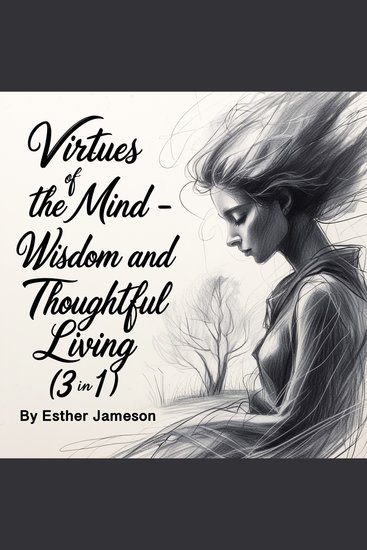
  • Virtues of the Mind - Wisdom and Thoughtful Living (3 in 1) - cover

    Virtues of the Mind - Wisdom and...

    Esther Jameson

    • 0
    • 0
    • 0
    This book offers an insightful journey into the mental virtues that enable individuals to lead thoughtful, mindful, and informed lives. By embracing Understanding, Prudence, and Reflection, we can sharpen our decision-making, navigate life’s complexities, and foster wisdom in every aspect of our daily existence. 
    Understanding is the foundation of knowledge and growth. This section explores how seeking a deep comprehension of ourselves, others, and the world around us can lead to more compassionate, informed choices. It highlights the importance of open-mindedness, empathy, and the willingness to learn. 
    Prudence is the ability to make sound decisions, weighing the consequences of our actions. This part emphasizes the importance of careful judgment, foresight, and discipline in navigating life’s challenges. Prudence helps us avoid impulsive actions and ensures we make decisions that lead to long-term well-being. 
    In Reflection, the focus shifts to the power of introspection. By regularly reflecting on our thoughts, actions, and experiences, we can gain clarity, refine our goals, and grow emotionally and intellectually. This section emphasizes how mindful reflection leads to greater self-awareness and personal improvement. 
    Together, these three virtues enable thoughtful living, making it easier to navigate the complexities of life with wisdom, patience, and discernment. This book offers practical guidance on how to cultivate these virtues and integrate them into daily life for a more fulfilling and thoughtful existence.
    Ver libro