Join us on a literary world trip!
Add this book to bookshelf
Grey
Write a new comment Default profile 50px
Grey
Subscribe to read the full book or read the first pages for free!
All characters reduced
The Girls of St Wode's - cover

The Girls of St Wode's

L. T. Meade

Publisher: Interactive Media

  • 0
  • 0
  • 0

Summary

"The Girls of St. Wode's" by L. T. Meade is a captivating tale set in an all-girls boarding school. Follow the adventures, friendships, and challenges of the young students as they navigate academic life and personal growth. This heartwarming story explores the bonds that form within the school's walls and the lessons learned along the way.
Available since: 10/21/2023.
Print length: 266 pages.

Other books that might interest you

  • In Kedar's Tents - An Englishman in the Carlist Wars - cover

    In Kedar's Tents - An Englishman...

    Henry Seton Merriman

    • 0
    • 0
    • 0
    Spain in the Carlist wars, an Englishman carrying a message he does not understand, and a rider ahead of him on the same road. Merriman wrote spare, ironic adventure and knew Spain from years of traveling it for an insurance firm.
    Show book
  • Glinda of Oz and Other Oz Stories - Six Short Tales of the Emerald City - cover

    Glinda of Oz and Other Oz...

    L. Frank Baum

    • 0
    • 0
    • 0
    Ozma and Dorothy go to settle a war between the Flatheads and the Skeezers, and are trapped under a lake in a glass-domed city whose ruler has hidden the means of raising it. Baum died before the book was published and left it as his farewell to Oz. It is the most inventive of the later volumes, and the shorter tales printed with it show him working in a smaller key. Its 133 original illustrations have been carefully restored and coloured for this edition.
    Show book
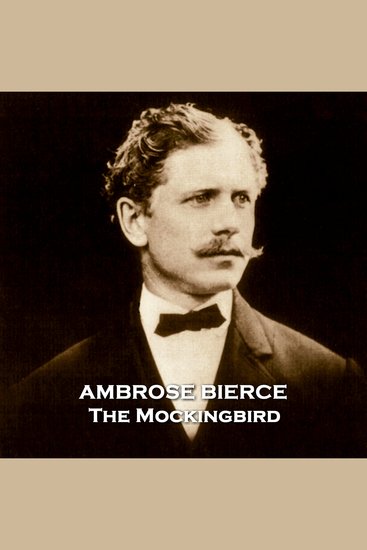
  • The Mockingbird - From their pens to your ears genius in every story - cover

    The Mockingbird - From their...

    Ambrose Bierce

    • 0
    • 0
    • 0
    Ambrose Gwinnett Bierce was born on 24th June 1842 at Horse Cave Creek in Meigs County, Ohio. His parents were poor but they introduced him to literature at an early age, instilling in him a deep appreciation of books, the written word and the elegance of language.  
    Growing up in Koscuisko County, Indiana poverty and religion were defining features of his childhood, and he would later describe his parents as “unwashed savages” and fanatically religious, showing him little affection but always quick to punish. He came to resent religion, and his introduction to literature appears to be their only positive effect. 
    At age 15 Bierce left home to become a printer’s devil, mixing ink and fetching type at The Northern Indian, a small Ohio paper. Falsely accused of theft he returned to his farm and spent time sending out work in the hopes of being published. 
    His Uncle Lucius advised he be sent to the Kentucky Military Institute. A year later he was commissioned as an Officer.  As the Civil War started Bierce enlisted in the 9th Indiana Infantry Regiment.  
    In April 1862 Bierce fought at the Battle of Shiloh, an experience which, though terrifying, became the source of several short stories. Two years later he sustained a serious head wound and was off duty for several months. He was discharged in early 1865.  
    A later expedition to inspect military outposts across the Great Plains took him all the way to San Francisco. He remained there to become involved with publishing and editing and to marry, Mary Ellen on Christmas Day 1871.  They had a child, Day, the following year.  
    In 1872 the family moved to England for 3 years where he wrote for Fun magazine. His son, Leigh, was born, and first book, ‘The Fiend’s Delight’, was published.  
    They returned to San Francisco and to work for a number of papers where he gained admiration for his crime reporting. In 1887 he began a column at the William Randolph Hearst’s San Francisco Examiner.  
    Bierce’s marriage fell apart when he discovered compromising letters to his wife from a secret admirer. The following year, 1889 his son Day committed suicide, depressed by romantic rejection. 
    In 1891 Bierce wrote and published the collection of 26 short stories which included ‘An Occurrence at Owl Creek Bridge’.  Success and further works including poetry followed.  
    Bierce with Hearst’s resources helped uncover a financial plot by a railroad to turn 130 million dollars of loans into a handout. Confronted by the railroad and asked to name his price Bierce answered “my price is $130 million dollars. If, when you are ready to pay, I happen to be out of town, you may hand it over to my friend, the Treasurer of the United States”.  
    He now began his first foray as a fabulist, publishing ‘Fantastic Fables’ in 1899.  But tragedy again struck two years later when his second son Leigh died of pneumonia relating to his alcoholism.  
    He continued to write short stories and poetry and also published ‘The Devil’s Dictionary’.  
    At the age of 71, in 1913 Bierce departed from Washington, D.C., for a tour of the battlefields where he had fought during the civil war. At the city of Chihuahua he wrote his last known communication, a letter to a friend. It’s closing words were “as to me, I leave here tomorrow for an unknown destination,” Ambrose Bierce then vanished without trace.
    Show book

  • Adieu - A Tale of the Retreat from Moscow - cover

    Adieu - A Tale of the Retreat...

    Honoré de Balzac

    • 0
    • 0
    • 0
    An officer sees, at a country house in 1819, the woman he lost at the crossing of the Berezina seven years before — and she does not know him, or anything, and has not spoken since. What he does about it is one of the coldest ideas in French fiction. Balzac worked at night on fifty cups of coffee a day; this short story takes the Retreat from Moscow and puts it in a country park outside Paris.
    Show book
  • A midsummer's Night Dream - Full Cast Drama - cover

    A midsummer's Night Dream - Full...

    William Shakespeare

    • 0
    • 0
    • 0
    One of William Shakespeare's most beloved and whimsical comedies. This enchanting play weaves together the stories of several groups of characters as they navigate the magical and mischievous world of the fairy kingdom and the Athenian woods. The play opens in the court of Athens, where Duke Theseus is preparing for his upcoming marriage to Hippolyta, the Queen of the Amazons. The young lovers, Hermia and Lysander, are also introduced. However, Hermia's father, Egeus, insists that she marry Demetrius, whom she does not love. 
    Faced with the choice of marrying Demetrius, facing execution, or a life of chastity in a nunnery, Hermia and Lysander plan to escape to the nearby woods. They are pursued by Demetrius, who is himself pursued by Helena, Hermia's friend, who is infatuated with him. In the forest, a group of bumbling and amateurish actors led by the comical Bottom are preparing a play for the upcoming wedding of Duke Theseus and Hippolyta. Unbeknownst to them, the forest is also home to the fairy king Oberon, his queen Titania, and their mischievous servant, Puck. 
     
    Oberon and Puck, with the help of a magic flower, create a web of love and mischief in the forest. Puck mistakenly causes both Demetrius and Lysander to fall in love with Helena, leading to comical and chaotic misunderstandings. Titania, under the influence of Oberon's magic, falls in love with Bottom, who has been given the head of an ass. As the night unfolds, the characters' romantic entanglements and conflicts are resolved. Oberon releases Titania from her enchantment, and Demetrius and Lysander are restored to their proper loves. The lovers and the amateur actors return to the court, where their antics are performed as humorous entertainment. 


    Show book
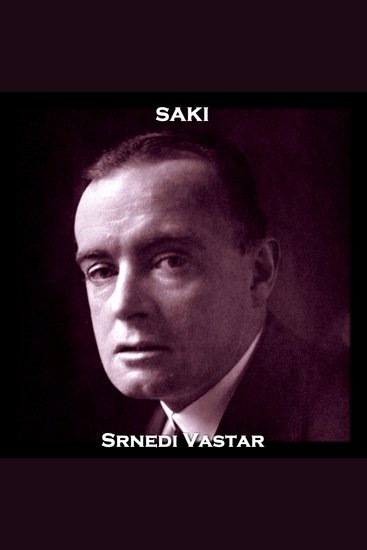
  • Srnedi Vastar - From their pens to your ears genius in every story - cover

    Srnedi Vastar - From their pens...

    Saki Saki

    • 0
    • 0
    • 0
    Hector Hugh Munro, more familiarly known by his pen-name ‘Saki’ was born in what was then Akyab in British Burma on 18th December 1870. His father was an Inspector General for the Indian Imperial Police, and his mother the daughter of a Rear Admiral. 
    When he was 2 his mother died and he and his siblings were sent back to England to be raised by their grandmother and paternal maiden aunts in a strict, puritanical household near Barnstaple, Devon. Educated by governesses Saki used many of these women as character models for his later writing. 
    At 17 his father retried and returned to England and then embarked on a series of European travels with Saki and his siblings. 
    After a short stint working in Burma with the Indian Imperial Police Saki decided to move to London to make a living as a writer. Initially he wrote as a journalist for a number of newspapers and magazines before attempting an historical study, ‘The Rise of the Russian Empire’, whose real value lay in directing him to writing short stories instead, the first of which, ‘Dogged’, he published in 1899. 
    From here it was a short stab of the pen to writing political satire before in 1902 he became the foreign correspondent for The Morning Post, first in the Balkans, then Russia, Paris and back to London in 1908, where 'the agreeable life of a man of letters with a brilliant reputation awaited him.'  
    Collections of his short stories full of witty, mischievous and often macabre stories that satirized Edwardian society and two novels now appeared in the years up to the Great War.  At its’ outbreak he was 43 but managed to join as an ordinary trooper. More than once he returned to the battlefield when officially too sick or injured.  
    On 14th November 1916 Hector Hugh Munro was sheltering in crater during the Battle of the Ancre, when he was shot and killed by a German sniper. According to several sources, his last words were "Put that bloody cigarette out!"
    Show book