Join us on a literary world trip!
Add this book to bookshelf
Grey
Write a new comment Default profile 50px
Grey
Subscribe to read the full book or read the first pages for free!
All characters reduced
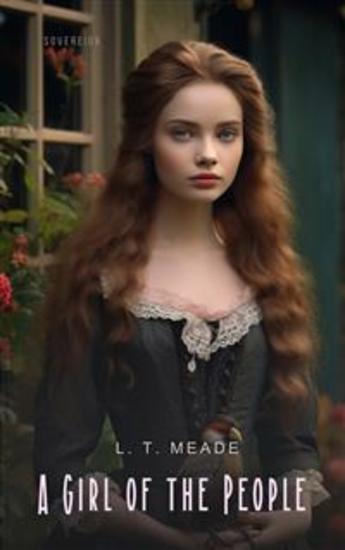
A Girl of the People - cover

A Girl of the People

L. T. Meade

Publisher: Interactive Media

  • 0
  • 0
  • 0

Summary

"A Girl of the People" by L. T. Meade follows the life of Mollie Maxwell, a spirited and compassionate young woman from a working-class background. Despite facing societal challenges, Mollie's determination leads her to pursue education and social reform. She becomes a voice for the underprivileged, advocating for better living conditions and workers' rights. Along the way, Mollie navigates love, friendship, and the complexities of class distinctions, making a lasting impact on her community and inspiring others to strive for a fairer society.
Available since: 09/14/2023.
Print length: 174 pages.

Other books that might interest you

  • A Wireless Message - From their pens to your ears genius in every story - cover

    A Wireless Message - From their...

    Ambrose Bierce

    • 0
    • 0
    • 0
    Ambrose Gwinnett Bierce was born on 24th June 1842 at Horse Cave Creek in Meigs County, Ohio. His parents were poor but they introduced him to literature at an early age, instilling in him a deep appreciation of books, the written word and the elegance of language.  
    Growing up in Koscuisko County, Indiana poverty and religion were defining features of his childhood, and he would later describe his parents as “unwashed savages” and fanatically religious, showing him little affection but always quick to punish. He came to resent religion, and his introduction to literature appears to be their only positive effect. 
    At age 15 Bierce left home to become a printer’s devil, mixing ink and fetching type at The Northern Indian, a small Ohio paper. Falsely accused of theft he returned to his farm and spent time sending out work in the hopes of being published. 
    His Uncle Lucius advised he be sent to the Kentucky Military Institute. A year later he was commissioned as an Officer.  As the Civil War started Bierce enlisted in the 9th Indiana Infantry Regiment.  
    In April 1862 Bierce fought at the Battle of Shiloh, an experience which, though terrifying, became the source of several short stories. Two years later he sustained a serious head wound and was off duty for several months. He was discharged in early 1865.  
    A later expedition to inspect military outposts across the Great Plains took him all the way to San Francisco. He remained there to become involved with publishing and editing and to marry, Mary Ellen on Christmas Day 1871.  They had a child, Day, the following year.  
    In 1872 the family moved to England for 3 years where he wrote for Fun magazine. His son, Leigh, was born, and first book, ‘The Fiend’s Delight’, was published.  
    They returned to San Francisco and to work for a number of papers where he gained admiration for his crime reporting. In 1887 he began a column at the William Randolph Hearst’s San Francisco Examiner.  
    Bierce’s marriage fell apart when he discovered compromising letters to his wife from a secret admirer. The following year, 1889 his son Day committed suicide, depressed by romantic rejection. 
    In 1891 Bierce wrote and published the collection of 26 short stories which included ‘An Occurrence at Owl Creek Bridge’.  Success and further works including poetry followed.  
    Bierce with Hearst’s resources helped uncover a financial plot by a railroad to turn 130 million dollars of loans into a handout. Confronted by the railroad and asked to name his price Bierce answered “my price is $130 million dollars. If, when you are ready to pay, I happen to be out of town, you may hand it over to my friend, the Treasurer of the United States”.  
    He now began his first foray as a fabulist, publishing ‘Fantastic Fables’ in 1899.  But tragedy again struck two years later when his second son Leigh died of pneumonia relating to his alcoholism.  
    He continued to write short stories and poetry and also published ‘The Devil’s Dictionary’.  
    At the age of 71, in 1913 Bierce departed from Washington, D.C., for a tour of the battlefields where he had fought during the civil war. At the city of Chihuahua he wrote his last known communication, a letter to a friend. It’s closing words were “as to me, I leave here tomorrow for an unknown destination,” Ambrose Bierce then vanished without trace.
    Show book
  • Kate Chopin - A Short Story Collection - Hugely influential early American feminist writer - cover

    Kate Chopin - A Short Story...

    Kate Chopin

    • 0
    • 0
    • 0
    Katherine O'Flaherty was born on the 8th February 1850 in St Louis, Missouri to parents of French and Irish descent. 
    At age 5, she was sent to the Sacred Heart Academy and, apart from a 2 year period at home when her father died, remained there until graduating in 1868.  Whilst there she began writing and became an avid reader of almost anything that crossed her path.   
    Kate married Oscar Chopin in 1870 and the couple moved to New Orleans, and later to the rural setting of Cloutierville, Louisiana to raise their 6 children.  
    In 1882 her husband died leaving her in a deep trench of debt.  Despite her best efforts to turn the businesses around they were sold, and she moved the family back to St Louis and the financial help of her mother.  Sadly, her mother died within the year.  Kate, now struggling with depression, pushed herself to write and gained a local reputation as a writer of short stories that captured the local color and vibrancy of her surroundings.   
    By the early 1890’s her short stories were published nationally.  With this widespread audience also came negative reviews, controversy, and cries of immorality as themes such as interracial relationships, the rights of women and other burning issues of the day were written about. 
    Despite the criticism, which unnerved her, she continued to write though in the main her works, around 100 short stories and two novels, were not attributed with any literary worth. 
    Kate Chopin died from a brain haemorrhage in St Louis Missouri on the 22nd of August 1904.  She was 54. 
    For much of the 20th Century her work was forgotten and out of print.  It was only in early 1970’s, with the rise of feminism and the call for a more just society that she was given the status her works had long described and shone a literary light at.  She is now safely revered as one of America’s great authors.
    Show book
  • History of Herodotus The - Book 5: Terpsichore (Unabridged) - cover

    History of Herodotus The - Book...

    Herodotus, George Rawlinson

    • 0
    • 0
    • 0
    One of the masterpieces of classical literature, the "Histories" describes how a small and quarrelsome band of Greek city states united to repel the might of the Persian empire. But while this epic struggle forms the core of his work, Herodotus' natural curiosity frequently gives rise to colorful digressions - a description of the natural wonders of Egypt; an account of European lake-dwellers; and far-fetched accounts of dog-headed men and gold-digging ants. With its kaleidoscopic blend of fact and legend, the "Histories" offers a compelling Greek view of the world of the fifth century BC.
    BOOK 5: TERPSICHORE: The Persians left behind by King Darius in Europe, who had Megabazus for their general, reduced, before any other Hellespontine state, the people of Perinthus, who had no mind to become subjects of the king.
    Show book
  • A Fragment of Stained Glass - From their pens to your ears genius in every story - cover

    A Fragment of Stained Glass -...

    D H Lawrence

    • 0
    • 0
    • 0
    David Herbert Lawrence was born on the 11th September 1885 in Eastwood, Nottinghamshire, a coal mining town where the reality of a harsh life was only useful as experiences for future literary works. 
    He was educated at Beauvale Board School and became the first local boy to receive a scholarship to attend Nottingham High School. After 3 years he became a junior clerk in Haywood’s surgical appliances factory. He was also attempting a literary career which, in the short term, led to a teacher training position in Eastwood and later a teaching qualification from University College, Nottingham.  
    Lawrence’s first efforts were poems, short stories and a draft of ‘The White Peacock’. Moving to London and a teaching position in Croydon his writing attracted the attention of Ford Madox Ford, editor of The English Review, and he commissioned him to write ‘Odour of Chrysanthemums’.  
    Wanting to write full-time he now began work on what would become ‘Sons and Lovers.   
    In 1912 he met the older and married mother-of-three Frieda Weekley. They eloped to Germany and here Lawrence could see for himself the growing tensions with France.  So keen was his interest that he was arrested and accused of being a British spy.  
    In early 1914 Frieda obtained her divorce and they returned to Britain to be married just days before the outbreak of war. Owing to her German parentage, and his own public dislike of militarism and violence, the couple were treated with contempt and suspicion throughout the war years.  
    Despite this he continued to write but his reputation in England was so tarnished and, mirrored by his own disdain for the country, he and Frieda left England in November 1919, first for Europe and then America via Ceylon and Australia. 
    They bought a ranch in Taos, New Mexico and visited Mexico several times. The third visit in March 1925 caused a near fatal attack of malaria. To convalesce they moved to Florence. Here he continued work on ‘Lady Chatterley’s Lover’ which for many years would cause controversy. A renewed interest in oil painting resulted in an exhibition in 1929 which was raided by the police and several works were confiscated.  
    D H Lawrence died of complications arising from a bout of tuberculosis on the 2nd of March 1930 in Vence, France.  He was 44.
    Show book
  • Black Beauty - cover

    Black Beauty

    Anna Sewell

    • 0
    • 0
    • 0
    "Black Beauty" is a classic work of children's literature penned by Anna Sewell in 1877. Told from the perspective of a horse named Black Beauty, the novel offers insights into the treatment of animals and the bond between humans and their animal companions. Black Beauty recounts his life's journey, from his carefree days as a foal in the English countryside to the harsher times he faced as a working horse in the bustling city of London. The narrative touches on issues of animal cruelty, kindness, and morality and promotes empathy and proper care for all living creatures.
    Show book
  • My Mortal Enemy - cover

    My Mortal Enemy

    Willa Cather

    • 0
    • 0
    • 0
    Myra Henshawe gave up her uncle's fortune for love. Having eloped with her husband, they embarked on a journey that can only be deemed as ordinary. As their lives play out, Myra begins to regret the decisions she had made in life, leading their marriage—and her health—to its demise. In this thought-provoking novel, Pulitzer Prize-winning author Willa Cather paints a picture of American normalcy riddled with life's regrets and scorned love.
    Show book