¡Acompáñanos a viajar por el mundo de los libros!
Añadir este libro a la estantería
Grey
Escribe un nuevo comentario Default profile 50px
Grey
Suscríbete para leer el libro completo o lee las primeras páginas gratis.
All characters reduced
JAPANESE JOINERY GUIDE FOR BEGINNERS - A complete step by step guide to master Japanese joinery wood making technique - cover

JAPANESE JOINERY GUIDE FOR BEGINNERS - A complete step by step guide to master Japanese joinery wood making technique

Kingsley Anderson

Editorial: BookRix

  • 0
  • 0
  • 0

Sinopsis

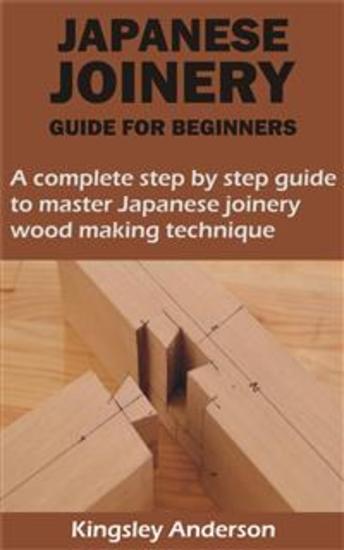
Joinery refers to both the wooden components of a building, and the techniques used for making those components. The craftsperson who does this is often considered a joiner, as he or she is one who joins pieces of wood together to construct something. Traditional Japanese joinery is made entirely without the use of metal fasteners or adhesives. 
While building without the use of nails or other fasteners is not at all unique to Japan, the types of joints used, the durability of the structures created, and the complete absence of iron makes Japanese joinery stand out. 
In this book “JAPANESE JOINERY GUIDE FOR BEGINNERS” I will be teaching you everything that you must know about this amazing wood working technique in order to be able to master this craft and improve on your woodworking skills. 
In Japan however, complex methods of joinery are used not only for practical reasons, but also to highlight craftsmanship, and to enhance aesthetic quality. These decorative joints have often been used in temples, shrines, and castles, but are particularly common in furniture making. 
This book contain some of the following; Introduction to japanese joinery Japanese joinery What are japanese traditional woodworking tools? Japanese-american carpenter Mortise and tenon jointDovetail joint Sampo-zashi carvings in japanese inami wood techniques of japanese lacquering kijiro lacquering lacquer kamakura-bori fuki-urishilots more 
ORDER YOUR COPY NOW 
 
Disponible desde: 22/12/2023.
Longitud de impresión: 9 páginas.
Otros libros que te pueden interesar

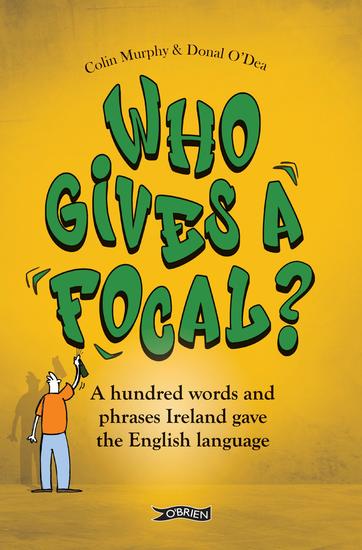
  • Who Gives a Focal? - A Hundred Words and Phrases Ireland Gave the English Language - cover

    Who Gives a Focal? - A Hundred...

    Colin Murphy, Donal O'Dea

    • 0
    • 0
    • 0
     We Irish have enriched the English language with a   slew   of   snazzy   gems. Did you know we're the ones behind   quarks  , electrons  and   vectors  ,   Sudocrem  and   Wellington   boots? No surprise that we invented   begrudgery  , but   croquet  and   Wunderkind   were us too! So if some   yahoo   is   getting on your nerves  , don't box him in the   gob   – hit him with Irishisms   galore  , and you'll soon put the   kibosh   on his   shaninagans  . Y'  dig  ? 
    Written and illustrated by Colin Murphy and Donal O'Dea, the  craggy  old  blokes  behind the bestselling Feckin' Collection and Stuff Irish People Love.
    Ver libro
  • The Gen X Handbook for Middle Age - The Pursuit of Health Success and Human Fulfillment - cover

    The Gen X Handbook for Middle...

    Lisa De Pasquale

    • 0
    • 0
    • 0
    Lisa De Pasquale's The Gen X Handbook for Middle Age is your mixtape of practical and humorous advice for Gen Xers navigating their journey through aging, health, career, and family in a world dictated by the "Me" generations. 
     
    The first wave of latchkey kids is turning sixty. This book is the CliffsNotes for aging gracefully. You'll learn how to maximize your prime years for health, success, and human fulfillment in a culture that expected us to be cynical slackers. 
     
    In this book, you'll discover: how to topple the generational food pyramids; the ideal workout for your movie montage makeover; how to lose 170 pounds—the easy way; biohacking tips for non-billionaires; self-care for the generation who pretends not to care; what to pack in your plastic surgery bug out bag; how to wear old band tees without looking old; how to stop being "Work Mommy"; the secret to raising resilient kids and grandkids; setting up your Gen X safe space at social events; choosing your retirement adventure. 
     
    Slip on your Ray-Bans and start living your best life. Or whatever.
    Ver libro
  • The Design of a Country Estate - cover

    The Design of a Country Estate

    Cathy Purple Cherry

    • 0
    • 0
    • 0
    Architect Purple Cherry tells the story of this luxurious country estate in the Mid-Atlantic—along the Chester River on the Eastern Shore in Centreville, Maryland—and how the vision came to life. The book includes an abundance of hard-working information that focuses on the thought processes behind each decision, whether it is the materials employed or the location of each building for walkability and use. Rife with inspiration on every page—whether your dream is a cozy cabin in the woods or an expansive country estate like this one—this book will appeal to luxury home enthusiasts and design professionals alike, transporting readers to a real-life fantasy.
    Ver libro
  • Chimú Empire - The Kingdom of Chan Chan and the Lords of the Northern Coast - cover

    Chimú Empire - The Kingdom of...

    Rolf Hedger

    • 0
    • 0
    • 0
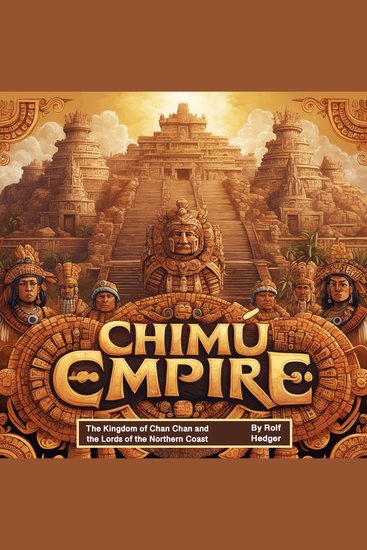
    The Chimú Empire, one of the most prominent pre-Columbian civilizations of the northern coast of Peru, flourished between the 9th and 15th centuries. This advanced civilization is known for its impressive urban centers, most notably the capital city of Chan Chan, which remains the largest adobe city in the world. At its height, the Chimú Empire controlled vast territories, from the southern border of the Moche Valley to the northern regions of present-day Ecuador. The empire was characterized by its highly structured society, advanced technology, and unique artistic traditions, which helped shape the cultural landscape of the Andean region. 
    The roots of the Chimú Empire trace back to the Moche culture, which had a significant influence on the development of the Chimú. However, the Chimú people took the foundational knowledge of their predecessors and expanded upon it, creating a powerful and sophisticated society. They established a series of city-states along the coast, which were eventually unified under the leadership of a single ruler, the Chimú king, who governed from Chan Chan. 
    The Chimú Empire’s political structure was highly organized, with a well-defined hierarchy that ranged from the elite rulers to the common people. The king, or "Sapa Chimú," was considered the most powerful figure, acting as both a political and spiritual leader. The empire was divided into regions, each overseen by local lords who managed administrative and religious duties within their territories. This hierarchical structure helped maintain control over the vast lands and resources of the empire.
    Ver libro
  • The Cultural Revolution - China's Radical Change - cover

    The Cultural Revolution -...

    Nova Ashford

    • 0
    • 0
    • 0
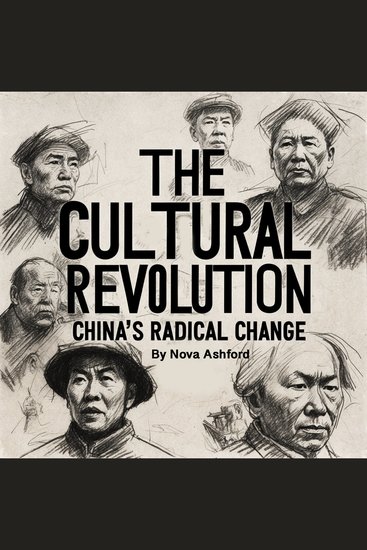
    The Cultural Revolution, which took place in China from 1966 to 1976, was one of the most tumultuous and transformative periods in the country’s history. Initiated by Mao Zedong, the founding father of the People’s Republic of China, the movement sought to preserve Chinese communism by removing capitalist, traditional, and cultural elements from Chinese society. At its core, the Cultural Revolution aimed to enforce Maoist ideology, reaffirm his leadership, and transform the cultural, social, and political fabric of China. It was a radical attempt to reshape Chinese society by addressing perceived corruption and ideological impurity within the Communist Party and broader society. 
    Mao’s motivations for launching the Cultural Revolution were multifaceted. After the failure of the Great Leap Forward (1958-1962), which had resulted in widespread famine and economic chaos, Mao’s position within the Communist Party had been weakened. The Cultural Revolution provided Mao with an opportunity to reassert his control over the party and eliminate rivals, many of whom were seen as too moderate or resistant to his vision of a truly communist society. It also reflected Mao’s concern that China was veering away from the revolutionary ideals that had initially driven the Communist Party. 
    The movement was largely propelled by the Red Guards, a youth-based movement that encouraged the younger generation to challenge authority and remove perceived counter-revolutionary influences. Under the banner of Maoism, the Red Guards sought to destroy the "Four Olds"—old customs, old culture, old habits, and old ideas. This led to widespread destruction of cultural heritage, including temples, books, and artworks. Intellectuals, teachers, and perceived enemies of the revolution were subjected to violent persecution, public humiliation, and forced labor, with many being sent to the countryside for "re-education."
    Ver libro
  • Xia Dynasty - The Myth and Mystery of China's First Dynasty - cover

    Xia Dynasty - The Myth and...

    Rolf Hedger

    • 0
    • 0
    • 0
    The Xia Dynasty is often considered the first dynasty of China, marking the transition from a prehistoric era dominated by tribal alliances to a structured monarchy. However, much of what is known about the Xia comes from ancient texts written centuries later, blurring the line between history and legend. At the heart of this foundation myth is Yu the Great, a figure credited with taming the catastrophic floods that once plagued the Yellow River region. 
    According to traditional accounts, China before the Xia was ruled by the Five Emperors, semi-mythical sages who brought order and knowledge to early societies. The final ruler of this period, Emperor Shun, recognized Yu for his brilliance and appointed him to control the devastating floods that had threatened agricultural settlements for generations. Unlike his predecessors, who attempted to block or divert the waters, Yu devised a system of dredging and canal-building that allowed the floodwaters to drain naturally into rivers and the sea. His efforts reportedly took over a decade, during which he traveled across the land, surveying the terrain and directing large-scale labor projects. His selfless dedication won him the admiration of the people, and his success in flood control cemented his reputation as a leader with the Mandate of Heaven. 
    The concept of the Mandate of Heaven, though later fully developed under the Zhou Dynasty, has its roots in the Xia period. It suggested that rulers were chosen by divine will and that their legitimacy depended on their ability to maintain order and prosperity. Yu's ability to tame the floods demonstrated both his virtue and his right to rule. Upon Emperor Shun’s abdication, Yu became the first king of the Xia Dynasty, establishing a hereditary monarchy that would continue for generations.
    Ver libro