Junte-se a nós em uma viagem ao mundo dos livros!
Adicionar este livro à prateleira
Grey
Deixe um novo comentário Default profile 50px
Grey
Assine para ler o livro completo ou leia as primeiras páginas de graça!
All characters reduced
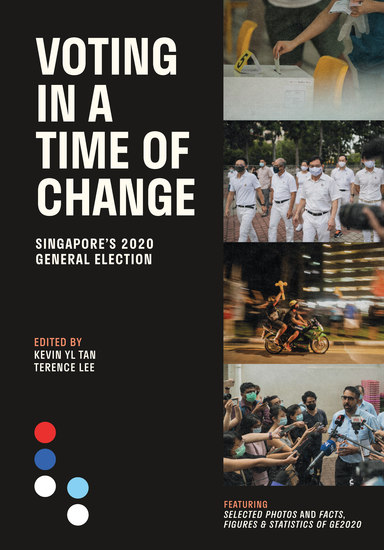
Voting in a Time of Change - cover
LER

Voting in a Time of Change

Kevin YL Tan, Terrence Lee

Editora: Ethos Books

  • 0
  • 0
  • 0

Sinopse

GE2020: an election that should not be forgotten for yielding startling outcomes, including the appointment of the first Leader of the Opposition. 
 
 
Voting in a Time of Change is part of a longitudinal study by editors Kevin YL Tan and Terence Lee, who have been assembling trenchant analyses of each General Election by leading academics and commentators since GE2011. Their long game makes possible specific and unique insights. Of GE2020, this is what they have to say: 
 
 
“The major political shift in Singapore that started in 2011 is marching on, even amidst a Covid-19 pandemic that was to have been a great disrupter. Whether we call this a ‘New Normal’ – as many did back in 2011 – or otherwise is not as important as the momentum for change that has built up since then. Covid-19 thus became a political backdrop to a social and political shift that was merely searching for a catalyst.” 
 
 
What insights and lessons can we carry forward to the next General Elections? This is an indispensable milestone publication for citizens who wish to commit to even more informed choices, and for political observers who are keeping close tabs on the evolution of our political landscape.
Disponível desde: 08/08/2022.
Comprimento de impressão: 406 páginas.
Outros livros que poderiam interessá-lo

  • Utopia (Hero Classics) - cover

    Utopia (Hero Classics)

    Thomas More

    • 0
    • 0
    • 0
    Part of the Hero Classics series 
    Utopia is a distant island where the inhabitants are thriving and justice and reason prevail, in contrast to the realities of sixteenth-century Europe, where greed, superstition and unenlightened tradition reign. Using the framework of a traveller’s account to a fictional land, Thomas More created an ingenious treatise which envisioned a more humanist approach to laws and social structures, and coined the now common term “utopia”. 
    The Hero Classics series:MeditationsThe ProphetA Room of One’s OwnIncidents in the Life of a Slave GirlThe Art of WarThe Life of Charlotte BronteThe RepublicThe PrinceNarrative of the Life of Frederick Douglass, an American SlaveUtopia
    Ver livro
  • The Seven Deadly Sins of White Christian Nationalism - A Call to Action - cover

    The Seven Deadly Sins of White...

    Carter Heyward

    • 0
    • 0
    • 0
    Hear the call to overcome today's culture of hate and bring healing and hope into our life together. While right-wing conservatives dare to call themselves Christians as they tear down equality and justice, commit horrific acts of violence, and fan the flames of fascism in America, Carter Heyward issues a call to action for Christians to truly hear God's message of peace and love. 


    Heyward shows how American Christians have played a major role in building and securing structures of injustice in American life. Rising tides of white supremacy, threats to women's reproductive freedoms and to basic human rights for gender and sexual minorities, the widening divide between rich and poor, and increasing natural disasters and the extinction of Earth's species—all point to a world crying out for God's wisdom. 


    Followers of Jesus must first call out these ingrained and sinful attitudes for what they are, acknowledging what the culture of white Christian nationalism is doing to our country and our world, and commit ourselves ever more fully to generating justice-love, whoever and wherever we are.
    Ver livro
  • A Constitution for the Common Good - Strengthening Scottish Democracy After 2014 - cover

    A Constitution for the Common...

    W Elliot Bulmer

    • 0
    • 0
    • 0
    If Scotland has voted YES on 18 September, how can a written Constitution be good for the people of Scotland?
    
    If Scotland has voted NO, how could a new Constitution protect and enhance Scottish democracy within a restructured UK?
    
    Whether YES or NO, a reconstituted Scotland is possible and good for all its citizens.
    
    
    Nearly every democracy in the world is built upon a written constitution, and constitutions have been at the core of citizens' demands for better governance in places as disparate as Kenya, Tunisia and Ukraine. With the Scottish National Party promising a written constitution in the event of a YES vote and other parties suggesting other possible options for constitutional change in the event of a NO vote, constitutional change looks certain to remain central to the political agenda in Scotland for some time to come.


    But what is a constitution for? Is it a defensive charter to protect the basic structures of democratic government, or is it a transformative covenant for a better society? How can the Constitution sustain democracy and promote ethical politics while at the same time recognising and accommodating differences in society? What difference would a good Constitution make to the poor? How can the Constitution help ensure that the common good of the citizenry prevails over private vested interests?


    In addressing these questions, this book sets out a vision for how Scotland could reconstitute itself. It emphasises the connection between the constitution, democracy and the common good, arguing that democratic self-government is the true prize, regardless of the relationship of Scotland to the rest of the UK.


    This book not only makes a vital contribution to Scotland's current and on-going constitutional debate, whatever the outcome in September 2014, but also engages with fundamental questions of constitutionalism and democracy that are of enduring relevance to both citizens and scholars around the world.
    Ver livro
  • The Shifting Twenty-First Century Presidency - Assessing the Implications for America and the World - cover

    The Shifting Twenty-First...

    Tevi Troy

    • 0
    • 0
    • 0
    The role and range of the American presidency has undergone significant changes in the twenty-first century, with George W. Bush, Barack Obama, Donald Trump, and Joe Biden transforming the office in distinct ways. Many but not all of these changes stem from the numerous crises of this young century: 9/11 and the resulting war on terror, Hurricane Katrina, the Great Recession, the COVID-19 pandemic, and the social unrest of 2020. 


    While crisis brings rapid change, there are other factors at work as well. Increased polarization has led presidents of both parties to press existing rules and norms to their limits in an attempt to accomplish more during their brief tenures. The result is a lot of policy and structural change in a short period, including new cabinet departments, new election rules, and significantly increased spending and debt, among other things. For the most part, these changes have occurred with little thought to what it all means for the functionality and stability of our democratic institutions and, consequently, our nation's capacity to address the needs as well as the aspirations of the American people. The Bipartisan Policy Center's Tevi Troy has brought together a group of presidential scholars and political experts to address these important issues and to reflect on how the presidency has changed and what it might mean for the future.
    Ver livro
  • The Confirmation Bias - How Seeking Information That Confirms Your Beliefs Skews Reality - cover

    The Confirmation Bias - How...

    William Rands

    • 0
    • 0
    • 0
    Confirmation bias is a cognitive phenomenon that plays a significant role in shaping our beliefs and perceptions. It refers to the tendency of individuals to search for, interpret, and remember information in a way that confirms their preexisting beliefs or theories, while disregarding or minimizing evidence that contradicts those beliefs. This bias is not limited to any particular field or context and can influence people in a variety of ways, from politics and religion to personal relationships and health decisions. 
    At its core, confirmation bias serves to protect the individual from cognitive dissonance, which is the uncomfortable tension that arises when a person holds conflicting beliefs or encounters information that challenges their worldview. By favoring information that aligns with their existing views, individuals reduce the mental discomfort of having to reconcile opposing ideas. While this process may offer short-term comfort, it can lead to long-term distortions in thinking, preventing growth and the development of more accurate or well-rounded perspectives. 
    This cognitive bias operates at both conscious and unconscious levels. On a conscious level, people may deliberately seek out information that supports their views, whether it be through selective reading, watching certain news outlets, or engaging in discussions with like-minded individuals. However, confirmation bias also operates unconsciously, influencing the way information is processed, remembered, and recalled. For example, individuals may be more likely to remember information that supports their beliefs and forget or dismiss data that contradicts them, even if they are unaware of this selective memory process.
    Ver livro
  • How To Raise A Citizen (And Why It's Up to You to Do It) - cover

    How To Raise A Citizen (And Why...

    Lindsey Cormack

    • 0
    • 0
    • 0
    An essential guide to nurturing the next generation of responsible, informed citizens 


    Lindsey Cormack's book, How to Raise a Citizen (And Why It's Up to You to Do It), speaks directly to an America in which civic knowledge is alarmingly sparse and many people dread politics. It's a tool for parents, educators, and anyone eager to fill this gap. In the book, Cormack offers an engaging and practical approach to discussing political issues and the inner workings of the US government with children. She explains why our schools can no longer be the sites of civic education that they used to be and provides parents with strategies and necessary know-how to be able to impart these lessons to their children. From the intricacies of the voting process to the foundational principles of democracy and the significance of key government documents like the Constitution, the author demystifies complex topics with clarity and insight. 


    How to Raise a Citizen is a roadmap to a future where political dialogue and civic engagement are not just encouraged but celebrated in our homes. With actionable advice and easy-to-understand explanations, it empowers listeners to instill a sense of civic responsibility and curiosity in the young minds they influence.
    Ver livro