Junte-se a nós em uma viagem ao mundo dos livros!
Adicionar este livro à prateleira
Grey
Deixe um novo comentário Default profile 50px
Grey
Assine para ler o livro completo ou leia as primeiras páginas de graça!
All characters reduced
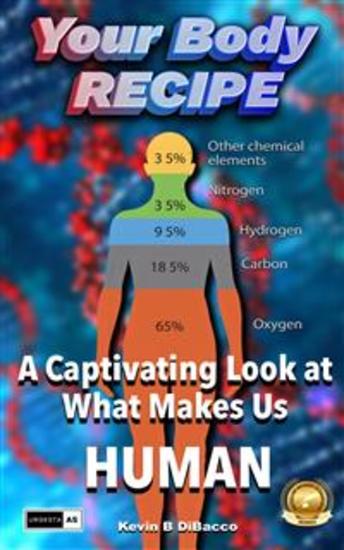
Your Body Recipe - A Captivating Look at: What Makes Us Human - cover
LER

Your Body Recipe - A Captivating Look at: What Makes Us Human

Kevin B DiBacco

Editora: Urgesta AS

  • 0
  • 0
  • 0

Sinopse

"Your Body Recipe: A Captivating Look at What Makes Us Human" by Kevin B. DiBacco is an entertaining and informative guide to the human body's inner workings. Written in a casual, conversational tone, the book aims to make complex biological concepts accessible and engaging to a general audience.

The book begins with an introduction to the basic elements that make up the human body, focusing on oxygen, carbon, hydrogen, and nitrogen. It then delves into the importance of water, explaining how this vital compound supports various bodily functions.

Next, the author explores the three main macronutrients - carbohydrates, fats, and proteins - detailing their roles in providing energy and supporting bodily functions. The book then discusses electrolytes, describing how these charged minerals help regulate various physiological processes.

A significant portion of the book is dedicated to hormones and neurotransmitters, explaining how these chemical messengers control everything from mood to metabolism. The author uses creative analogies and humor to make these complex topics more understandable and memorable.

The book also covers vitamins and minerals, emphasizing their importance in maintaining overall health and well-being. It explains the roles of both fat-soluble and water-soluble vitamins, as well as essential minerals like iron, zinc, and calcium.

The final chapter presents 20 fun facts about the human body, offering readers interesting tidbits of information that showcase the body's remarkable capabilities and quirks.

Throughout the book, DiBacco maintains an enthusiastic and friendly tone, often addressing the reader directly and using playful language to keep the content engaging. He employs creative analogies and metaphors to explain complex biological processes, making the information more relatable and easier to understand.

"Your Body Recipe" serves as an excellent introduction to human biology for readers of all ages, combining scientific accuracy with an entertaining presentation style. It encourages readers to marvel at the complexity and wonder of their own bodies, promoting a greater understanding and appreciation of human biology.
Disponível desde: 28/10/2024.
Comprimento de impressão: 32 páginas.


Outros livros que poderiam interessá-lo

  • Internet of Things (IoT) - Part 3 Future of IoT Ethics and Governance - cover

    Internet of Things (IoT) - Part...

    Daniel Garfield

    • 0
    • 0
    • 0
    As the Internet of Things (IoT) continues its exponential growth, propelling us into an era of unprecedented connectivity, "Internet of Things (IoT)" serves as a thought-provoking guide that explores the future of IoT, focusing on the critical dimensions of ethics and governance. 
    In this insightful book, readers are invited to embark on a compelling journey that uncovers the ethical considerations and governance challenges arising from the widespread deployment of IoT technologies. It examines the profound implications of IoT on society, individuals, and the environment, urging readers to reflect on the ethical implications associated with the vast amounts of data collected, analyzed, and utilized by interconnected devices. 
    "Internet of Things (IoT)" delves into the complex web of privacy, consent, and transparency in the IoT landscape. It examines the delicate balance between data utilization and protecting individual rights, encouraging readers to envision responsible and inclusive governance models that foster trust, accountability, and user empowerment. The book showcases real-world examples, inspiring readers to participate actively in shaping the ethical and regulatory frameworks that guide the future of IoT. 
    As we stand at the precipice of an interconnected future, "Internet of Things (IoT)" offers a roadmap for individuals and organizations to navigate the uncharted waters of the IoT landscape. Join the conversation, contemplate the ethical dilemmas, and contribute to the establishment of responsible governance frameworks that shape a future where IoT flourishes ethically and benefits society as a whole. 
     
    Ver livro
  • Introduction to Software Development - From Idea to Application - cover

    Introduction to Software...

    Craig Dames

    • 0
    • 0
    • 0
    Software development is the process of designing, building, testing, and maintaining software applications that solve specific problems or perform particular tasks. It involves various stages, starting from the initial idea to the final deployment of an application. To understand software development, it's essential to look at the different components that make it a structured and iterative process. 
    At its core, software development is about problem-solving. It’s a way to create programs that automate tasks, facilitate communication, or offer solutions to real-world problems. The process typically follows a lifecycle known as the Software Development Life Cycle (SDLC), which includes phases like planning, designing, coding, testing, and maintenance. Each stage of the SDLC is crucial because it helps ensure that the software is built systematically, efficiently, and in alignment with user needs. 
    In any software development project, there are various roles that contribute to the process. The most well-known roles are software developers, but there are many others who play vital parts. These include project managers, who oversee the project and ensure it stays on track, and business analysts, who work to ensure that the software meets the needs of its users. Designers are responsible for creating user-friendly interfaces and experiences, while testers ensure that the software is functioning correctly and free of bugs.
    Ver livro
  • Docker Unveiled - The Comprehensive Handbook to Streamlined Development - cover

    Docker Unveiled - The...

    William Drake

    • 0
    • 0
    • 0
    There has never been a more critical demand for speed, consistency, and scalability in the dynamic field of software development. While helpful, traditional approaches may fail when faced with the demands of contemporary applications, leading developers on a never-ending search for improved tools and practices. Presenting Docker: an application packaging, shipping, and running platform that efficiently runs apps as lightweight containers. With its ability to simplify and revolutionize software development and deployment processes, Docker has risen to prominence in the computer sector and is now a vital tool for developers everywhere. 
    With regard to this innovative technology, "Docker Unveiled: The Comprehensive Handbook to Streamlined Development" seeks to be your go-to resource. This e-book is designed with developers curious about containerization in mind, as well as newcomers starting their Docker journey. We will examine the fundamental ideas behind containerization, comprehend the basic architecture of Docker, and delve deeply into its extensive feature set.  
    By the time you complete this e-book, you will have a firm understanding of Docker's features and be able to use them to streamline, expedite, and improve your development processes.  
    Furthermore, you will acquire a comprehensive grasp of how Docker fits into the current development and operational ecosystems through the use of real-world case studies and professional perspectives. 
    Ver livro
  • A Path to Peace of Mind and Sobriety - How EMDR safely Unlocks Trapped Memories and Brings Serenity - cover

    A Path to Peace of Mind and...

    Paul Schulte

    • 0
    • 0
    • 0
    This book describes the how and why EMDR can address deep traumatic memories and bring about peace of mind in 8-12 sessions. The neutralising of these traumatic is often an important pre-condition to gaining lasting sobriety. EMDR is ideal for PTSD and difficult memories of physical, emotional, or sexual abuse as well as neglect.
    Ver livro
  • Zoopathology - Animal Diseases: Understanding Illness in Wildlife - cover

    Zoopathology - Animal Diseases:...

    Mike Crawford

    • 0
    • 0
    • 0
    Zoopathology is the branch of veterinary science that focuses on the study of diseases affecting animals in the wild. This field plays a crucial role in understanding how diseases emerge, spread, and impact wildlife populations. It also explores the complex interactions between animals, pathogens, and their environments. In essence, zoopathology is essential for safeguarding wildlife health, preventing disease outbreaks, and maintaining biodiversity. This chapter aims to introduce the foundational concepts and importance of zoopathology, as well as the role of zoopathologists in wildlife health management. 
    At its core, zoopathology examines the nature and cause of diseases affecting animals in their natural habitats. Unlike traditional veterinary medicine, which deals primarily with domesticated animals, zoopathology is concerned with wild species that often face different environmental challenges and stressors. These animals are exposed to a wide range of pathogens, from viruses and bacteria to parasites and fungi, all of which can have devastating effects on their populations. Understanding the mechanisms behind these diseases is critical for developing effective strategies to control their spread. 
    One of the key aspects of zoopathology is its interdisciplinary nature. It draws from various fields, including microbiology, epidemiology, ecology, and genetics. By integrating knowledge from these areas, zoopathologists are able to identify the underlying causes of disease outbreaks, track their transmission, and predict their future course. This helps inform conservation efforts, as well as public health initiatives aimed at preventing zoonotic diseases—those that can be transmitted from animals to humans.
    Ver livro
  • Kinesiology - The Science of Movement How We Use Our Bodies - cover

    Kinesiology - The Science of...

    Mike Crawford

    • 0
    • 0
    • 0
    Kinesiology, the scientific study of human movement, is a multidisciplinary field that integrates principles from anatomy, physiology, biomechanics, and neuroscience. It examines how the body moves, the forces that act upon it, and the underlying mechanisms that control movement. By understanding these principles, professionals in various fields, including physical therapy, sports science, and occupational therapy, can enhance human performance, prevent injuries, and improve rehabilitation strategies. 
    The origins of kinesiology date back to ancient civilizations, where scholars like Aristotle and Galen first explored the mechanics of movement. However, the field gained prominence in the 19th and 20th centuries as scientific advancements allowed for a deeper understanding of biomechanics and motor control. Today, kinesiology encompasses a vast range of topics, from the microscopic study of muscle fibers to large-scale analyses of athletic performance. 
    One of the core components of kinesiology is biomechanics, which applies the principles of physics and engineering to study how forces influence movement. Biomechanics helps explain how the body maintains balance, generates power, and absorbs impact. For example, analyzing the gait cycle of a runner can reveal inefficiencies that may lead to injuries. By optimizing movement patterns, biomechanics contributes to improving athletic performance and developing assistive technologies such as prosthetics and orthotics.
    Ver livro