Junte-se a nós em uma viagem ao mundo dos livros!
Adicionar este livro à prateleira
Grey
Deixe um novo comentário Default profile 50px
Grey
Assine para ler o livro completo ou leia as primeiras páginas de graça!
All characters reduced
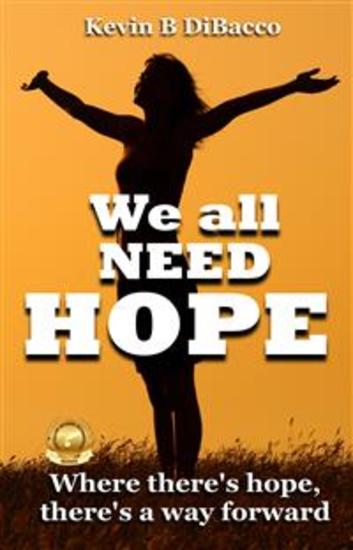
We All Need Hope - Where's there's Hope there's a way Forward - cover
LER

We All Need Hope - Where's there's Hope there's a way Forward

Kevin B DiBacco

Editora: Ink Magic Publishing

  • 0
  • 0
  • 0

Sinopse

In "We All Need Hope," Kevin B. DiBacco delves deep into the essence of hope and its crucial role in human resilience and progress. Through powerful stories, historical examples, and practical strategies, DiBacco illustrates how hope can be a catalyst for personal transformation and societal change. From Nelson Mandela's fight against apartheid to everyday heroes overcoming personal challenges, the book showcases the indomitable human spirit when fueled by hope. DiBacco offers insights on cultivating hope in our daily lives, relationships, and communities, providing readers with tools to navigate life's challenges and inspire others. This compelling work is a testament to the enduring power of hope in the face of adversity and its potential to shape a better future for all.
Disponível desde: 08/09/2024.
Comprimento de impressão: 218 páginas.

Outros livros que poderiam interessá-lo

  • The Amateur Hour - A History of College Teaching in America - cover

    The Amateur Hour - A History of...

    Jonathan Zimmerman

    • 0
    • 0
    • 0
    American college teaching is in crisis, or so we are told. But we've heard that complaint for the past 150 years, as critics have denounced the poor quality of instruction in undergraduate classrooms. Students daydream in gigantic lecture halls while a professor drones on, or they meet with a teaching assistant for an hour of aimless discussion. The modern university does not reward teaching, so faculty members at every level neglect it in favor of research and publication. In the first book-length history of American college teaching, Jonathan Zimmerman confirms but also contradicts these perennial complaints. Drawing upon a wide range of previously unexamined sources, The Amateur Hour shows how generations of undergraduates indicted the weak instruction they received. But Zimmerman also chronicles institutional efforts to improve it, especially by making teaching more "personal." As higher education grew into a gigantic industry, he writes, American colleges and universities introduced small-group activities and other reforms designed to counter the anonymity of mass instruction. They also experimented with new technologies like television and computers, which promised to "personalize" teaching by tailoring it to the individual interests and abilities of each student.But, Zimmerman reveals, the emphasis on the personal inhibited the professionalization of college teaching, which remains, ultimately, an amateur enterprise. The more that Americans treated teaching as a highly personal endeavor, dependent on the idiosyncrasies of the instructor, the less they could develop shared standards for it. Nor have they rigorously documented college instruction, a highly public activity which has taken place mostly in private. Pushing open the classroom door, The Amateur Hour illuminates American college teaching and frames a fresh case for restoring intimate learning communities, especially for America's least privileged students. Anyone who wants to change college teaching will have to start here.
    Ver livro
  • Brandy Station and the March to Gettysburg: The History of the Confederate Invasion of Pennsylvania Before the Biggest Battle of the Civil War - cover

    Brandy Station and the March to...

    Editors Charles River

    • 0
    • 0
    • 0
    As Lee’s army moved into Pennsylvania, Stuart’s cavalry screened his movements, thereby engaging in the more traditional cavalry roles, but it’s widely believed that he was still smarting over the results of June 9. As a result, many historians think it likely that he had already planned to remove the negative effect of Brandy Station by duplicating one of his now famous rides around the enemy army, much as he did to McClellan’s Army of the Potomac during the Peninsula Campaign in 1862. This time, however, as Lee began his march north through the Shenandoah Valley in western Virginia, it is highly unlikely that is what he wanted or expected. 
    To complicate matters even more, as Stuart set out on June 25 on what was probably a glory-seeking mission, he was unaware that his intended path was blocked by columns of Union infantry that would invariably force him to veer farther east than he or Lee had anticipated. Ultimately, his decision would prevent him from linking up with Ewell as ordered and deprive Lee of his primary cavalry force as he advanced deeper and deeper into unfamiliar enemy territory. According to Halsey Wigfall (son of Confederate States Senator Louis Wigfall) who was in Stuart’s infantry, “Stuart and his cavalry left [Lee’s] army on June 24 and did not contact [his] army again until the afternoon of July 2, the second day of the [Gettysburg] battle.” 
    As it would turn out, Lee’s army inadvertently stumbled into Union cavalry and then the Union army at Gettysburg on the morning of July 1, 1863, unaware of the force in their front. From July 1-3, Lee’s army tried everything in its power to decisively defeat George Meade’s Union Army of the Potomac, unleashing ferocious assaults that inflicted nearly 50,000 casualties in all. Lee would try and fail to dislodge the Union army with attacks on both of its flanks during the second day and Pickett’s Charge on the third and final day. 
    Ver livro
  • The 4th Industrial Revolution from an Ethical Perspective - cover

    The 4th Industrial Revolution...

    Timo Plutschinski, Andrew...

    • 0
    • 0
    • 0
    As the Fourth Industrial Revolution ushers into a new era of artificial intelligence (AI) and virtual reality, how should we respond to the societal and ethical dilemmas associated with this new age of transformative scientific power? This research highlights the need for an ethical and globally shared view on how technology affects the economic, social, cultural and spiritual aspects of daily life. With thanks to the international team of experts this book is outlining consequences of the Fourth Industrial Revolution in a broad range for business and work life, for leadership, for media and communication, for churches and for personal and family life. Authors are: Prof. Dr. Jack Barentsen (USA) Andrew Bunnell (USA) Jonathan Ebsworth (United Kingdom) Prof. Dr.-Ing. Klaus Henning (Germany) Prof. Dr. Bruce A. Little (USA) Jeremy Peckham (United Kingdom) Rev. Timo Plutschinski (Germany) Sallux Publishing Printed Edition: ISBN 978-94-92697-20-2
    Ver livro
  • The Overlife - A Tale of Schizophrenia - cover

    The Overlife - A Tale of...

    Diana Dirkby

    • 0
    • 0
    • 0
    The author of this book, Diana Dirkby, is an Australian-born research mathematician who lives with paranoid schizophrenia, a severe brain disorder, as did her mother. The title, “The Overlife,” suggests that a diagnosis of schizophrenia can be the beginning of a new, worthwhile life and not simply the death of the hopes and dreams that preceded the diagnosis. This book gives a fictional account of a mother and daughter living with paranoid schizophrenia. We follow the widely disparate effects of this brain disorder on Sarah, the narrator, and her mother, Jodie. We also meet Dalaigh, Jodie’s husband and Sarah’s father, with his violent resentment at being trapped in a marriage he doesn’t want. By age eight, Sarah is Jodie’s caregiver and must negotiate her mother’s rapidly worsening mental health and her father’s white-hot fury. The weight of these adult conflicts on the shoulders of one so young seems impossible to bear.
    Ver livro
  • Battle of Waterloo - The Determining Moment of Napoleon’s Demise - cover

    Battle of Waterloo - The...

    Kelly Mass

    • 0
    • 0
    • 0
    The Battle of Waterloo, fought on June 18, 1815, near the village of Waterloo in the United Kingdom of the Netherlands (present-day Belgium), was a decisive conflict that ended the Napoleonic Wars. The battle pitted the French army, led by Napoleon Bonaparte, against two powerful forces from the Seventh Coalition. One of these was a British-led coalition under the command of the Duke of Wellington, which included troops from the United Kingdom, the Netherlands, Hanover, Brunswick, and Nassau. The other force was a larger Prussian army commanded by Field Marshal Gebhard Leberecht von Blücher. Together, these forces effectively crushed Napoleon's ambitions and marked the final chapter in his reign. The battle was also known as the Battle of Mont Saint-Jean (to the French) or La Belle Alliance (to the Prussians). 
    The events leading to Waterloo began when Napoleon returned to power in March 1815, following his exile to the island of Elba. His return prompted his former enemies to form the Seventh Coalition, a group determined to prevent his resurgence. The British and Prussian armies were stationed along France's northern border, preparing for a possible confrontation. Napoleon, keen to defeat his enemies before they could join forces, planned to strike at each army individually. On June 16, he attacked the Prussian army at the Battle of Ligny, inflicting a significant defeat, which forced the Prussians to retreat northward. However, the Prussian retreat was conducted in good order, and they maintained contact with Wellington's forces, who were stationed nearby.
    Ver livro
  • How to Recognize Toxic Behavior Patterns - cover

    How to Recognize Toxic Behavior...

    Olivia Werner

    • 0
    • 0
    • 0
    [How to Recognize Toxic Behavior Patterns] delves deep into the intricate web of human psychology, offering an unflinching examination of the subtle ways manipulation and control manifest in relationships. With the precision of a surgeon and the empathy of a trusted confidant, this groundbreaking work illuminates the shadowy corners of toxic dynamics through raw, intimate prose that resonates with lived experience. Drawing from extensive research and real-world cases, the book masterfully dissects the architecture of emotional abuse, from the quiet violence of denial to the complex mechanics of trauma bonding, while providing readers with the tools to recognize and understand their own experiences. The narrative weaves together clinical insights with deeply personal observations, creating a tapestry of understanding that speaks to both the intellectual and emotional dimensions of toxic relationships, making it an essential companion for anyone seeking to navigate the complicated landscape of human connection.
    Ver livro