¡Acompáñanos a viajar por el mundo de los libros!
Añadir este libro a la estantería
Grey
Escribe un nuevo comentario Default profile 50px
Grey
Suscríbete para leer el libro completo o lee las primeras páginas gratis.
All characters reduced
The Lost Art of Logical Thinking - cover

The Lost Art of Logical Thinking

Kevin B DiBacco

Editorial: Chelsea House Press

  • 0
  • 0
  • 0

Sinopsis

Logical thinking skills are essential for career development as they enable individuals to make informed decisions, generate innovative ideas, set goals, and solve problems. In the job industry, and as you advance in your career, you will encounter numerous challenges that require strong logical reasoning skills for effective problem-solving. Before moving forward and finding solutions, it is crucial to understand what logical thinking entails.
Disponible desde: 21/01/2024.
Longitud de impresión: 91 páginas.

Otros libros que te pueden interesar

  • Learn Faster Memorize Easier - Efficient Learning and Memorization Techniques - cover

    Learn Faster Memorize Easier -...

    360K Pro Publishing

    • 0
    • 0
    • 0
    Accelerated Learning is, in essence, exactly what comes to mind; a way of learning at a higher velocity than through other methods. This method is an innovative way to improve an individual’s learning capacities and memory, and is considered one of the best approaches available at the time of writing this book. This audiobook consists of 9 chapters. 
    Chapter 1: What Is Accelerated Learning? 
    Chapter 2: How Neurosciences and Technology can Accelerate Learning 
    Chapter 3: The Basics for Applying Accelerated Learning 
    Chapter 4: Where Can Accelerated Learning Be Useful? 
    Chapter 5: Accelerated Learning Techniques 
    Chapter 6: Improve Memory 
    Chapter 7: Boost IQ 
    Chapter 8: Conclusions 
    Chapter 9: Affirmations Section 
    That’s the table of contents. You can listen to a small part of Chapter 1 in audio sample and check if this book is suitable for you. I'm sure you'll like this book. This book is a worthy investment for your life, if you can improve your memorization and learn accelerated leaning techniques that will worth Billions. 
    Why are you waiting? Go ahead and click the buy button now!
    Ver libro
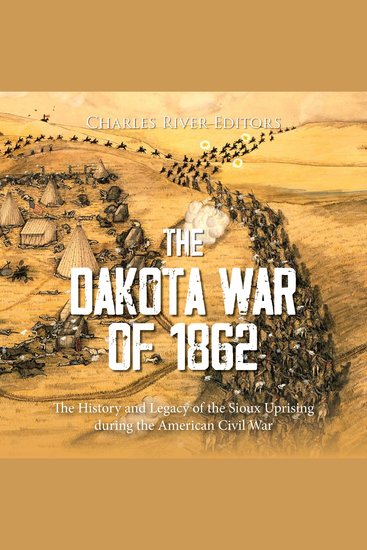
  • Dakota War of 1862 The: The History and Legacy of the Sioux Uprising during the American Civil War - cover

    Dakota War of 1862 The: The...

    Editors Charles River

    • 0
    • 0
    • 0
    Despite being one of the most erstwhile foes the U.S. government faced during the Indian Wars, the Sioux and their most famous leaders were grudgingly admired and eventually immortalized by the very people they fought. Sitting Bull and Crazy Horse remain household names due to their leadership of the Sioux at the fateful Battle of the Little Bighorn, where the native warriors wiped out much of George Custer’s 7th Cavalry and inflicted the worst defeat of the Indian Wars upon the U.S. Army. Red Cloud remains a symbol of both defiance and conciliation, resisting the Americans during Red Cloud’s War but also transitioning into a more peaceful life for decades on reservation.  
    	However, one of the more overlooked conflicts the U.S. Army had with the Sioux took place during the American Civil War. It is known by various names, including the Dakota War, the US-Dakota War, the Dakota Uprising, the Sioux Outbreak, and Little Crow’s War (after the principal Dakota leader), but the current most commonly used name for the war is the “Dakota War.” Two of the four Dakota tribes in the state unleashed their anger and frustration on largely immigrant communities that were heavily German or Norwegian, and the massacres took a heavy toll. In the process, the conflict featured the largest Indian siege of an Army fort in American history, and the end of the conflict brought the largest mass execution in American history.  
    	Indeed, the total loss of life during the Dakota War was perhaps the second largest of all the Indian Wars in North America, second only to the bloody King Philip’s War in colonial New England in the late 17th century, during which more than 1,000 settlers were killed. Throughout the Dakota War, as many as 800 whites were killed, although no one knows the total, and many of the victims were buried in anonymous mass graves.
    Ver libro
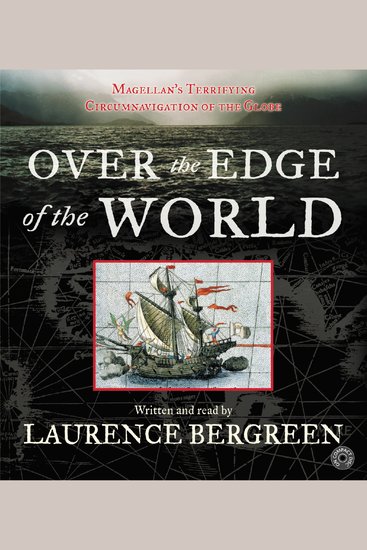
  • Over the Edge of the World - Magellan's Terrifying Circumnavigation of the Globe - cover

    Over the Edge of the World -...

    Anónimo

    • 0
    • 0
    • 0
    A majestic tale of discovery thatchanged many long-held views about the world 
     In 1519 Magellan and his fleet of five ships set sail from Seville, Spain, to discover a water route to the fabled Spice Islands in Indonesia, where the most sought-after commodities -- cloves, pepper, and nutmeg -- flourished. Three years later, a handful of survivors returned with an abundance of spices from their intended destination, but with just one ship carrying eighteen emaciated men. During their remarkable voyage around the world the crew endured starvation, disease, mutiny, and torture. Many men died, including Magellan, who was violently killed in a fierce battle. 
    This is the first full account in nearly half a century of this voyage into history: a tour of the world emerging from the Middle Ages into the Renaissance; a startling anthropological account of tribes, languages, and customs unknown to Europeans; and a chronicle of a desperate grab for commercial and political power.
    Ver libro
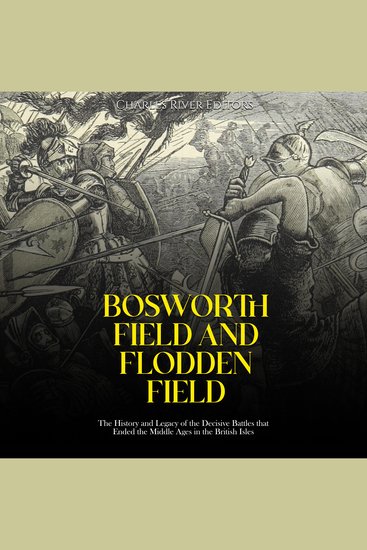
  • Bosworth Field and Flodden Field: The History and Legacy of the Decisive Battles that Ended the Middle Ages in the British Isles - cover

    Bosworth Field and Flodden...

    Editors Charles River

    • 0
    • 0
    • 0
    Today, roses are a sign of love and luxury, but for over 30 years, they provided the symbols for two houses at war for control of England. Thousands of people died and many more were injured fighting beneath the white rose of York and the red rose of Lancaster, and the noble families ruling England tore each other apart in a struggle that was as bitter as it was bloody.  
    As a result, few battles in English history are as famous as Bosworth Field. Fought on August 22, 1485, it was the one which decided the outcome of that long and messy conflict. English king Richard III, who had only recently taken the throne, had superior numbers at the battle, but an army fighting under future king Henry VII proved to have the better fighters. When forces near the field under Lord Stanley sided with Henry during the battle, they surrounded and killed Richard. The last York King went down fighting, but as news of the king's death spread, his army turned and ran, and with that, Henry Tudor was now King Henry VII.  
    At the time of Flodden, England and Wales were ruled by the Tudor dynasty, founded by Henry VII in 1485. Henry had ended the seemingly endless war between the Yorkist and Lancaster factions of the House of Plantagenet when he defeated King Richard III at the Battle of Bosworth Field on August 2, 1485, but his own claim to the throne of England was shaky and easily subject to challenge. His mother was Margaret Beaufort, a descendant of John of Gaunt, third son of King Edward III, and his father, Edmund Tutor, was the son of the Dowager Queen of England, Catherine of Valois. At the time, there were numerous other candidates with stronger claims to the throne, so to strengthen his hold he married Elizabeth of York, daughter of King Edward IV. Even so, Henry was constantly looking over his shoulder to guard against the surviving Plantagenets, and he suppressed rebellions and discovered conspiracies over most of his 12 years in power. 
    Ver libro

  • Right This Way - A History of the Audience - cover

    Right This Way - A History of...

    Robert Viagas

    • 0
    • 0
    • 0
    When you sit down at a play, movie, or concert—or even in front of the TV or scrolling on your phone—you are taking part in one of the oldest and most mysterious forms of human behavior. Being part of an audience is an age-old experience that we all crave, one that has evolved from amphitheaters to screens. Right This Way is a pop history of audiences through the ages. Playbill editor Robert Viagas unfolds the unique aspects of what he calls “audiencing” with stories from the age of the Greeks to the world of Zoom. He walks through the different types of audiences and the history of their responses, what science has to say about how our brains respond to what they see and the reactions of the people around them, and why, during COVID-19, people risked a deadly virus to be part of a crowd. Right This Way explores what the audience experience brings us and how it may evolve in the 21st century.
    Ver libro
  • Cali Expanded City-Region: A Metropolitan Territory - cover

    Cali Expanded City-Region: A...

    Autores Varios

    • 0
    • 0
    • 0
    The analytical approaches to studying the region are diverse and evolve as research products appear, as a result of modern systems for collecting, processing and integrating information from the various disciplines. Studies based on political and administrative boundaries, very common in the nineteenth century, move towards the positivist approaches of the twentieth century based on the distribution and organization of demographic and economic factors. Afterwards, the population and its social conditions in terms of infrastructure, economic level and social status are the main object of studies on the regions. The conceptualization of these approaches to study the region enters into crisis with the most recent trends of globalization on industrial and urban geographies (Veltz, 1996; 2008), more visible since the eighties in the last century. The city expands until it overflows into areas without political administrative jurisdiction, giving rise to an urban-rural territorial continuum due to population flows seeking residence, employment, or flows of goods and services. In addition, new territorial identities are built because of ethnic-racial and cultural diversity, and companies are offered new territories to relocate in the midst of this territorial continuum. The rural space is transformed into a new structure and dynamic of economic, social and urban occupation, without necessarily disappearing territories of peasant character in the margins of the region, though they are more articulated to the urban dynamics of the region.
    Ver libro