¡Acompáñanos a viajar por el mundo de los libros!
Añadir este libro a la estantería
Grey
Escribe un nuevo comentario Default profile 50px
Grey
Suscríbete para leer el libro completo o lee las primeras páginas gratis.
All characters reduced
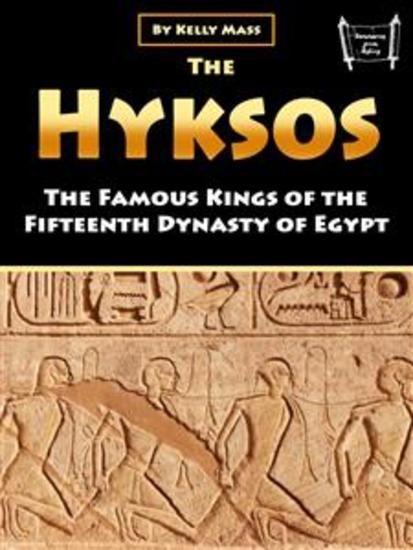
The Hyksos - The Famous Kings of the Fifteenth Dynasty of Egypt - cover

The Hyksos - The Famous Kings of the Fifteenth Dynasty of Egypt

Kelly Mass

Editorial: Efalon Acies

  • 0
  • 0
  • 0

Sinopsis

In the realm of modern Egyptology, the term Hyksos designates the rulers of Egypt's Fifteenth Dynasty, reigning around 1650–1550 BC. These sovereigns held sway from Avaris in the Nile delta, extending their rule from Lower to Middle Egypt, reaching as far as Cusae. Ethnically, the term Hyksos denotes individuals potentially of West Semitic or Levantine origin, as per the Aegyptiaca—a historical account of Egypt composed by the Greco-Egyptian priest and historian Manetho in the 3rd century BC.

While Manetho portrayed the Hyksos as invaders and tyrants, contemporary Egyptology challenges this depiction. Alternatively, the Hyksos era might have followed the presence of Canaanite groups gradually settling in the Nile delta, potentially breaking away from Egypt's faltering and tumultuous governance during the Thirteenth Dynasty.

The Hyksos period marked the first instance of foreign monarchs dominating Egypt. Details of their reign remain elusive, encompassing the extent of their empire and the names and sequence of their rulers.

The Hyksos adopted numerous Levantine and Canaanite customs, alongside Egyptian practices. They are often credited with introducing technological innovations such as the horse and chariot, the sickle sword, and the composite bow, although these claims are subject to debate.
Disponible desde: 12/12/2023.


Otros libros que te pueden interesar

  • Acropolis and the Agora The: The History of Ancient Athens’ Most Important Sites - cover

    Acropolis and the Agora The: The...

    Editors Charles River

    • 0
    • 0
    • 0
    The Acropolis, which literally means “a city on the heights,” is a citadel whose currently surviving structures were mostly built during the 5th century B.C. in honor of Athena, the patron goddess of Athens. It functioned as a sacred precinct that contained the city’s most important religious and municipal structures, many of which have remained relatively intact for over 2,000 years. The Propylaea (the gateway to the Acropolis), the Parthenon (the principal shrine to the goddess), the Erechtheion (a shrine that supposedly houses the burial grounds of mythical Athenian kings), and the Temple of Athena Nike all survive to this day, and for these reasons, the Acropolis is perhaps the definitive and most eloquent expression of classical architecture, if not of the classical form itself. The Acropolis, which literally means “a city on the heights,” is a citadel whose currently surviving structures were mostly built during the 5th century B.C. in honor of Athena, the patron goddess of Athens.  
    	The center of political and commercial interaction in the Ancient Greek polis was the agora. The word essentially means a gathering place or an open space, and in all Greek city states, the agora was central to all aspects of daily life and commerce. As the agora developed as a civic space, particularly from the 6th century B.C. onward in Athens, the architectural splendor of the buildings associated with it became an ever more obvious demonstration of the power and glory of Athenian democracy. 	In its earliest forms, an agora in maritime cities was invariably situated near the sea, while in inland urban centers, it was usually located at the foot of the hill that normally provided the city’s ultimate defense. The agora was always the oldest part of any city and, as such, and as well as being the commercial hub of the area, also became the center of the religious and political life of the polis.
    Ver libro
  • Me Myself and I - A Guide to Traveling Alone! - cover

    Me Myself and I - A Guide to...

    Russell George

    • 0
    • 0
    • 0
    "Me, Myself and I: A Guide to Traveling Alone!" invites you to embrace the liberating journey of solo travel, uncovering self-discovery along the way. Delve into strategies for cultivating a solo travel mindset, mastering planning essentials, and navigating safely while forging meaningful connections. From overcoming fears to documenting cherished memories, this comprehensive guide empowers you to thrive independently, returning home transformed and enriched. Unlock the world and your true self with this empowering companion.
    Ver libro
  • Italy's Hidden Gems - A Tour of the 25 Most Mesmerizing Vacation Spots - cover

    Italy's Hidden Gems - A Tour of...

    Daniel Cornwallis

    • 0
    • 0
    • 0
    Unearth the Undiscovered Beauty of Italy 
     
    Imagine yourself strolling through the cobblestone streets of an enchanting Italian town, untouched by the rush of modern tourism. Italy's Hidden Gems: A Tour of the 25 Most Mesmerizing Vacation Spots is your passport to these unexplored corners of Italy. 
     
    This is not your typical travel guide. This book takes you off the beaten path, revealing the secret locales only locals know about. From the rolling vineyards of Tuscany to the serene canals of Venice, each page is a discovery. 
     
    Authored by seasoned traveler Daniel Cornwallis, this book culminates years of exploration and a deep love for Italy. Cornwallis's vivid descriptions and captivating storytelling will transport you to these hidden gems, making you feel like you're already there. 
     
    Each location is accompanied by a comprehensive guide, including the best times to visit, local cuisines to try, and unique cultural experiences to indulge in. This book is more than just a travel guide—it's a journey that inspires the desire to pack your bags and embark on your own Italian adventure. 
     
    So why wait? Start your journey today with Italy's Hidden Gems: A Tour of the 25 Most Mesmerizing Vacation Spots. Experience Italy like never before, and create memories that will last a lifetime.
    Ver libro
  • Ultimate Guide to Flying with Kids The: Tips and Tricks for Every Age - cover

    Ultimate Guide to Flying with...

    Hugh Knight Robinson

    • 0
    • 0
    • 0
    "Effortless Journeys: Mastering Air Travel with Kids and Babies" Navigating airports and flying can be a daunting task for any parent. How do you keep your toddler entertained on a long flight? What are the essentials to pack for your infant? "Effortless Journeys" is your go-to guide for stress-free air travel with your little ones. This comprehensive Book is packed with practical advice, from pre-flight preparations to in-flight strategies, ensuring your family's trip is as smooth as possible. Written with input from child development experts, seasoned parent travelers, and airline professionals, this guide provides: Insider Tips: Learn how to choose the best flights and seats for family travel. We will tell you a packing Lists: Detailed checklists for every age group, so you never forget a thing. Entertainment Ideas: Creative ways to keep your child engaged and quiet throughout the flight. Health and Safety Protocols: Expert advice on managing health, hygiene, and safety in the air. Real Parent Stories: Relatable anecdotes and experiences for practical insights. Whether you're a first-time parent anxious about your maiden voyage with a baby or a seasoned pro looking for new tricks, "Effortless Journeys" will transform your travel experience. Say goodbye to the stress of flying with kids and hello to enjoyable family trips filled with lasting memories. Grab your copy now and embark on family adventures with confidence!
    Ver libro
  • Last Great Indian Kingdoms - Glory Before the Fall (3 in 1) - cover

    Last Great Indian Kingdoms -...

    Rolf Hedger

    • 0
    • 0
    • 0
    As foreign invasions and internal struggles reshaped India’s political landscape, a few powerful kingdoms stood as the last great defenders of Indian sovereignty before their eventual decline.  
    The Pala Empire, the Vijayanagara Empire, and the Chola Empire were among the most influential dynasties, each leaving a lasting impact on Indian culture, politics, and military strategy.  
    The Pala Empire, known for its strong Buddhist patronage, was one of the last major bastions of Buddhism in India, promoting education through institutions like Nalanda. The Chola Empire, a dominant force in South India, built a vast maritime network, expanded its influence to Southeast Asia, and created architectural marvels such as the Brihadeeswarar Temple.  
    The Vijayanagara Empire, founded as a Hindu stronghold against Islamic expansion, became a beacon of art, culture, and military resilience, with its capital, Hampi, standing as a testament to its grandeur.  
    Despite their military strength and cultural achievements, these kingdoms eventually fell to foreign invasions and internal strife, marking the end of an era in Indian history.
    Ver libro
  • Kofun Period - The Mysterious Tomb Builders and the Roots of Imperial Japan - cover

    Kofun Period - The Mysterious...

    Rolf Hedger

    • 0
    • 0
    • 0
    The Kofun Period, which lasted from approximately 250 to 600 AD, marks a significant era in early Japanese history. This period is named after the distinct burial mounds, or "kofun," that were constructed during this time. These mounds vary in size and shape but are most commonly recognized for their keyhole-like design. The Kofun Period is pivotal as it represents a time of political consolidation, the development of social structures, and the emergence of a powerful ruling elite that would lay the foundation for the imperial system in Japan. 
    The beginning of the Kofun Period is closely tied to the formation of more complex societies in the Japanese archipelago. By this time, a system of chiefdoms had developed, and the early Yamato state began to emerge as a dominant political force. The period sees the consolidation of power under a centralized leadership, which eventually paved the way for the establishment of the imperial family that still exists today. During the Kofun Period, society transitioned from small, localized groups to more organized and hierarchical structures, a shift that was reflected in the elaborate tombs built for the elites. 
    The most notable characteristic of the Kofun Period is the construction of large burial mounds for the ruling class. These tombs were not only elaborate final resting places for powerful individuals but also symbolized the political power and religious authority of the deceased. The kofun mounds varied in size, with some measuring several hundred meters in length. These tombs were often surrounded by moats and would contain a wealth of grave goods, such as weapons, jewelry, and pottery, which reflected both the material culture of the time and the importance of the individual being buried.
    Ver libro