¡Acompáñanos a viajar por el mundo de los libros!
Añadir este libro a la estantería
Grey
Escribe un nuevo comentario Default profile 50px
Grey
Suscríbete para leer el libro completo o lee las primeras páginas gratis.
All characters reduced
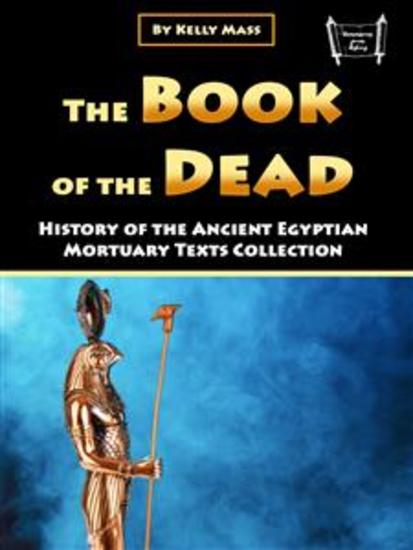
The Book of the Dead - History of the Ancient Egyptian Mortuary Texts Collection - cover

The Book of the Dead - History of the Ancient Egyptian Mortuary Texts Collection

Kelly Mass

Editorial: Efalon Acies

  • 0
  • 0
  • 0

Sinopsis

The ancient Egyptian mortuary text known as the Book of the Dead had its heyday from the onset of the New Kingdom (around 1550 BCE) until approximately 50 BCE. Crafted on papyrus, this collection of magical spells, coined as the "Book," aimed to guide the departed through the Duat, or underworld, into the realm beyond. It represented an amalgamation of texts contributed by various priests over nearly 1,000 years.

Stored within the deceased's coffin or burial chamber, the Book of the Dead marked a continuation of funerary literature, succeeding the Pyramid Texts and Coffin Texts, which were inscribed on items rather than papyrus. Some spells within the book dated back to the third millennium BCE, while others emerged during the Third Intermediate Period (11th to 7th centuries BCE). These spells, once inscribed on tomb walls and sarcophagi, eventually found their place in the Book of the Dead.
Disponible desde: 12/12/2023.

Otros libros que te pueden interesar

  • Talking to Strangers: What We Need to Understand About Strangers - A Group Discussion - cover

    Talking to Strangers: What We...

    Vines Graener

    • 0
    • 0
    • 0
    For most of history, people lived in small, tight-knit communities where interactions were with familiar faces. But with the Age of Exploration, strangers became a regular part of life. Misunderstandings, amplified by language barriers and cultural differences, were common, and these issues still persist today, even among people who speak the same language. It's easy to make assumptions about how others see the world, and it’s difficult to avoid the biases we carry. 
    Some misunderstandings arise because of lies, and lies can be incredibly difficult to detect. Some deceivers are skilled at hiding their dishonesty, while others may lie poorly, yet still manage to gain people’s trust. It’s not that people are naïve; rather, humans are wired to trust others by default. This tendency, coupled with the belief that we’re good at reading character, often leads us astray. 
    The consequences of misjudging others can be severe—ranging from financial loss and wrongful imprisonment to life-threatening situations. It’s essential to be mindful of the gaps in our understanding and work to see things from others’ perspectives.
    Ver libro
  • Warfare and Generals - Rome’s Military Might and Strategic Brilliance (3 in 1) - cover

    Warfare and Generals - Rome’s...

    Rogan Fish

    • 0
    • 0
    • 0
    This book explores the heart of Rome’s power—its military machine and the brilliant minds who commanded it. The first section introduces readers to the Roman legions, the backbone of the Republic and Empire. With unmatched discipline, innovative tactics, and superior organization, these forces shaped the ancient world. You’ll learn how the Roman military was structured, how soldiers trained, and what daily life was like in a marching camp. From basic formations to advanced siege techniques, this section unveils the machinery of conquest that forged a global empire. 
    The second section profiles Rome’s greatest military leaders, from Scipio Africanus and Julius Caesar to Trajan and Constantine. Each general brought unique strategies and personal ambition to the battlefield, expanding Rome’s reach while influencing its political destiny. Their stories highlight decisive battles, tactical innovations, and leadership styles that not only won wars but also inspired loyalty—or sparked civil strife. This segment brings to life the human side of warfare, where courage, cunning, and power struggles played out on both foreign fields and Rome’s own streets. 
    The final part of the book shifts focus to Rome’s many enemies—from Carthaginian generals like Hannibal to the Germanic and Parthian tribes who challenged Rome’s dominance. Readers will explore how Rome adapted to new threats, formed uneasy alliances, and learned from defeat. The book covers both the glory of expansion and the resilience required to hold an empire together. Warfare and Generals is a gripping journey into the brutal, brilliant, and complex world of Roman military history—one that continues to captivate military minds and history lovers alike.
    Ver libro
  • Flipping Patriarchy - Imagining a gender-swapped world - cover

    Flipping Patriarchy - Imagining...

    Man Who Has It All

    • 0
    • 0
    • 0
    An explosive satire of gender stereotypes that flips patriarchy on its head to highlight sexist double standards. 
     
    Exploring subjects like work and comedy, history and sport, the beauty industry and domesticity, anonymous author Man Who Has It All imagines a world in which men are bombarded with the same stereotypical bullshit as women. What if men's t-shirts were emblazoned with slogans encouraging them to be smiley, positive and kind? What if we laughed at jokes about fathers-in-law and male drivers? What if men's history was a niche topic? Behind the jokes about crazy cat gentlemen, testerical men and the 24-hour moustache, lies a deeper, darker message about language, power and control. 
     
    Smart and provocative, Man Who Has It All shines a powerful light on the prejudice ingrained in our society. Told through fictionalised scenarios and wider cultural analysis, this is a feminist handbook that will arm you against the patriarchy.
    Ver libro
  • French History - Events during the Period of the Gauls and the Huguenots - cover

    French History - Events during...

    Kelly Mass

    • 0
    • 0
    • 0
    This is a combo of 2 books, which are the following: 
    1, the Gauls: This is a book about a people that has often been overlooked. Wallowing in the shadow of the seemingly almighty Romans, and dispersed throughout the ages into other peoples, the Gauls appear as if they had nothing going for them. Quite the opposite is true. The Gauls had a distinct culture, with habits, warfare, and so much more to offer to the intrigued historian and everyday researcher. 
    Throughout the Iron Age and the Roman period, the Gauls were a collection of Celtic tribes from Continental Europe (circa from the fifth century BC to the fifth century advertisement). Gaul was the name of the area where they used to live. Their Gaulish language is the significant branch of the Celtic languages of the continent. 
    2, the Huguenots: An important chapter in history is that in which the Catholic Church was being questioned by the commoners. People were standing up against tyranny and illogical rules. They had had it with hypocrisy and double standards. The abuse in the church wasn’t representing the text in the Bible. Too much corruption had crept into the clergy, or so the narrative went about across the entire European continent. 
    The Huguenots were a spiritual group of French Protestants who complied with the Reformed, or Calvinist, Protestant custom. The expression originates from the name of a Swiss politician, Genevan burgomaster Bezanson Hugues (from about 1491 - 1532) and was commonly used in Europe by the 16th century. Huguenot was a term used throughout the Protestant Reformation to describe members of the Reformed Church of France. It came from the Dutch “huisgenoten” and was used throughout the revolution that led to the entire Reformation.
    Ver libro
  • Stories on Lord Shiva series -17 - From various sources of Shiva Purana - cover

    Stories on Lord Shiva series -17...

    Anusha HS

    • 0
    • 0
    • 0
    Lord shiva is adi and he is only the anthya. He is the sole reason for the happenings in both the movable and immovable worlds. Therefore, it is said that not even a spring of grass will move without his permission. He is the one who has given life to all the creatures. He is also the one who takes away the lives of all the creatures. Sadhus sages and aghoraas practice severe penance without minding day and night on Lord Shiva.
    Ver libro
  • Thomas Paine - Common Sense and the Age of Reason Explained - cover

    Thomas Paine - Common Sense and...

    Kelly Mass

    • 0
    • 0
    • 0
    Thomas Paine was a political activist, theorist, political theorist, and revolutionary who was born in England. He wrote 2 of the most popular handouts at the beginning of the American Revolution, Common Sense (1776) and The American Crisis (1776-- 1783) and helped motivate patriots to announce independence from Great Britain in 1776. His thoughts echoed the Knowledge's global human rights concepts. 
    Paine, who was born in Thetford, Norfolk, relocated to the British American groups with the support of Benjamin Franklin in 1774, in the nick of time to participate in the American Revolution. Practically each rebel read (or heard to a reading of) his 47-page brochure Good sense, which was proportionally the very popular American title of perpetuity and catalyzed the defiant need for independence from Great Britain. The American Crisis was a pamphlet series that promoted for revolution. Paine spent the most of the 1790s in France, where he ended up being deeply immersed in the Reign of terror. He wrote Rights of Man (1791), which was partially a defense to the challengers of the Reign of terror. In 1792, he was tried and found guilty in England for seditious libel in his lack for his attacks on Anglo-Irish conservative author Edmund Burke. 
    Thomas Paine has certainly left his mark. He’s become a historical figure worth remembering. Let’s explore more about his life and mission in this book.
    Ver libro