¡Acompáñanos a viajar por el mundo de los libros!
Añadir este libro a la estantería
Grey
Escribe un nuevo comentario Default profile 50px
Grey
Suscríbete para leer el libro completo o lee las primeras páginas gratis.
All characters reduced
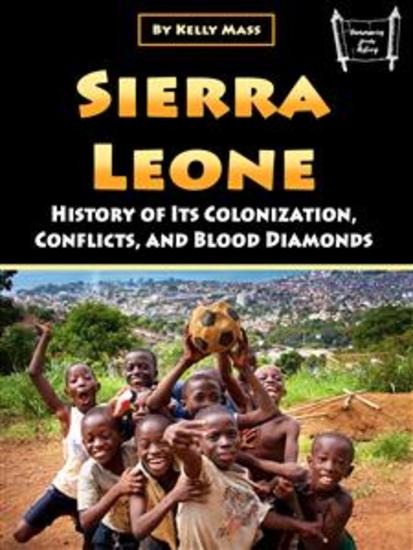
Sierra Leone - History of Its Colonization Conflicts and Blood Diamonds - cover

Sierra Leone - History of Its Colonization Conflicts and Blood Diamonds

Kelly Mass

Editorial: Efalon Acies

  • 0
  • 0
  • 0

Sinopsis

More than two millennia ago, the rich history of Sierra Leone began with the settlement of indigenous African peoples. The Limba, the initial discoverers of this land, established roots that echoed through the ages.

Sierra Leone's unique geographical positioning, encompassed by vast tropical rainforests, served as a sanctuary for those seeking refuge from violence and jihad, setting it apart from other West African cultures. In 1462, Pedro de Sintra, a Portuguese explorer, bestowed upon this region the name Sierra Leone. As trans-Atlantic and coastal trade gained ascendancy over trans-Saharan trade, the Freetown estuary emerged as a vital natural port, capturing international attention and interest.

In the mid-16th century, the Mane people entered Sierra Leone, subjugating the indigenous coastal populations and instilling militarization. This period witnessed constant conflicts among the diverse chiefdoms and kingdoms, with many unfortunate prisoners finding themselves traded to European slave traffickers.

Sierra Leone played a pivotal role in the Atlantic slave trade during the 17th and 18th centuries, evolving into a central hub for anti-slavery movements after the trade's prohibition in 1807. Freetown, established by British abolitionists as a colony for Black Loyalists, ultimately became the cornerstone of British West Africa. The colony's strategic location facilitated the interception of slave ships by a naval squadron, leading to a flourishing community of Liberated Africans and Afro-Caribbean soldiers who had fought for Britain in the Napoleonic Wars. The descendants of these settlers were commonly known as Creoles or Krios.

Throughout the colonial era, the British and Creoles consolidated their influence in the region, quelling inter-chiefdom warfare and slave-trading to facilitate ongoing trade. In 1895, Sierra Leone was officially declared a protectorate by Britain, triggering the tumultuous 1898 Hut Tax War and subsequent rebellions. Amidst these challenges, demands for political rights from Creoles, the formation of trade unions against colonial employers, and peasants seeking fair treatment from their chiefs marked a period of opposition and reform.
Disponible desde: 08/12/2023.
Otros libros que te pueden interesar

  • Holding a Mirror Up to Nature - cover

    Holding a Mirror Up to Nature

    James Gilligan, David A.J. Richards

    • 0
    • 0
    • 0
    At a time when violence in America and Europe dominates the daily news, a groundbreaking new book co-authored by James Gilligan, an eminent psychiatrist who has worked with criminals, and David A.J. Richards, a legal scholar of toxic patriarchy, illuminates the ways in which Shakespeare offers unique insights into the causes of violence as well as its prevention.Now a riveting new audio production, Holding a Mirror Up to Nature: Shame, Guilt, and Violence in Shakespeare takes advantage of scenes performed by acclaimed actors to dramatize how much Shakespeare’s tragic heroes exhibit the psychology of those who commit violence in the contemporary world.The voice of British-American actor John Douglas Thompson called “perhaps the greatest Shakespeare interpreter in contemporary theater,” together with women’s parts spoken by Shakespeare & Company’s distinguished Tod Randolph, and narration by award-winning theater star Nigel Gore, orchestrate this tour de force audiobook that belongs in the listening library of everyone who loves Shakespeare and is curious about what causes and what prevents violence.
    Ver libro
  • Cord Cutting Meditation Release toxic relationship co-dependency - energetic independence unhealthy attachments own your energy powerful assertiveness spiritual parasites psychic attack - cover

    Cord Cutting Meditation Release...

    Think ThinkAndBloom

    • 0
    • 0
    • 0
    Do you feel drained by a relationship and want to release the toxic ties? Do you feel your boundaries are being pushed? Do you feel stuck in a connection and need to cut the invisible cords?  
    This Cutting Cords Guided Meditation is aimed at cutting the invisible toxic ties in a relationship. It could be family members, friends, co-workers, or intimate partners. It is particularly useful for those who are empaths or extra-sensitive to other people’s energies. It serves to protect us from further harm in our mental and emotional bodies.  
    In this course, we will Disassociate your energetic cordsLet go of the toxic relationship Own your power Release psychic attack Create powerful boundary Honor your sensitivitiesProtect your energetic body And much more  
    After cutting the cords, you will feel calmer and re-balance yourself back to the center.
    Ver libro
  • Maroons and the Gullah The: The History of the Unique Cultures Formed by Free Africans in the Americas - cover

    Maroons and the Gullah The: The...

    Editors Charles River

    • 0
    • 0
    • 0
    Although the slave systems required the continual use of force and coercion, as well as the harsh punishment of any rebellion, slaves were not a helpless labor force terrorized into obedience and docility. Slaves resisted and sometimes rebelled, and over the centuries there were thousands of slave rebellions of varying sizes. Slaves commonly resisted in many ways, such as sabotaging their tools and the crops they were tending, but much more rarely slaves violently rebelled, which were for the most part put down with extreme violence. 
    Of course, a fairly common form of resistance was running away and seeking hiding places in environments where slave catchers experienced difficulty. Slaves who ran and hid out, or who made their own settlements, were called maroons, from the Spanish word cimarron, which means “wild” or “untamed.” The term that historians commonly use to describe this is marronage, adapted from the French word maron, meaning the same as maroon. Marronage took two forms, grand and petty. Grand marronage was permanent, with escapees joining together to establish lasting settlements in inaccessible areas in mountains and swamps, sometimes preferring death rather than being caught and enslaved again. 
    The Gullah Geechee, or the “Gullah” for short, are the descendants and rightful heirs of the once-shackled slaves who resided in these parts. As the guardians and torch holders of the incredible legacy left behind by their persevering ancestors, the modern Gullah spare no effort in preserving the inherently unique customs and traditions, complete with their own creole tongue, that have been passed down from one generation to the next.
    Ver libro
  • The Israeli-Palestinian Conflict - What Everyone Needs to Know® - cover

    The Israeli-Palestinian Conflict...

    Dov Waxman

    • 0
    • 0
    • 0
    No conflict in the world has lasted as long, generated as many news headlines, or incited as much controversy as the Israeli-Palestinian conflict. Yet, despite, or perhaps because of, the degree of international attention it receives, the conflict is still widely misunderstood. While Israelis and Palestinians and their respective supporters trade accusations, many outside observers remain confused by the conflict's complexity and perplexed by the passion it arouses. 


    The Israeli-Palestinian Conflict: What Everyone Needs to Know® offers an even-handed and judicious guide to the world's most intractable dispute. Writing in an engaging, jargon-free Q&A format, Dov Waxman provides clear and concise answers to common questions, from the most basic to the most contentious. Covering the conflict from its nineteenth-century origins to the latest developments of the twenty-first century, this book explains the key events, examines the core issues, and presents the competing claims and narratives of both sides. Listeners will learn what the Israeli-Palestinian conflict is all about, how it has evolved over time, and why it continues to defy diplomatic efforts at a resolution.
    Ver libro
  • The Buddha's Teachings As Philosophy - cover

    The Buddha's Teachings As...

    Mark Siderits

    • 0
    • 0
    • 0
    Mark Siderits's The Buddha’s Teachings As Philosophy explores three different systems of thought that arose from core claims of the Buddha. By detailing and critically examining key arguments made by the Buddha and developed by later Buddhist philosophers, Siderits investigates the Buddha's teachings as philosophy: a set of claims—in this case, claims about the nature of the world and our place in it—supported by rational argumentation and, here, developed with a variety of systematic results. The Buddha’s Teachings As Philosophy will be especially useful to students of philosophy, religious studies, and comparative religion—to anyone, in fact, encountering Buddhist philosophy for the first time. Among the issues discussed by Siderits are those regarded as particularly challenging in the 21st century, such as karma and rebirth and the nature of nirvana. 
    PLEASE NOTE: When you purchase this title, the accompanying PDF will be available in your Audible Library along with the audio.
    Ver libro
  • The Children of Athena - Greek writers and thinkers in the Age of Rome 150 BC–AD 400 - cover

    The Children of Athena - Greek...

    Charles Freeman

    • 0
    • 0
    • 0
    A compelling and fascinating portrait of the continuing intellectual tradition of Greek writers and thinkers in the Age of Rome. 
     
    In 146 BC, Greece yielded to the military might of the Roman Republic; sixty years later, when Athens and other Greek city-states rebelled against Rome, the general Lucius Cornelius Sulla destroyed the city of Socrates and Plato, laying waste to the famous Academy where Aristotle had studied. However, the traditions of Greek cultural life would continue to flourish during the centuries of Roman rule that followed, in the lives and work of a distinguished array of philosophers, doctors, scientists, geographers, travellers and theologians. 
     
    Charles Freeman's accounts of such luminaries as the physician Galen, the geographer Ptolemy and the philosopher Plotinus are interwoven with contextual 'interludes' that showcase a sequence of unjustly neglected and richly influential lives. Like the author's The Awakening, The Children of Athena is a cultural history on an epic scale: the story of a rich and vibrant tradition of Greek intellectual inquiry across a period of more than five hundred years, from the second century BC to the start of the fifth century AD.
    Ver libro