Junte-se a nós em uma viagem ao mundo dos livros!
Adicionar este livro à prateleira
Grey
Deixe um novo comentário Default profile 50px
Grey
Assine para ler o livro completo ou leia as primeiras páginas de graça!
All characters reduced
House of Medici - Historical Background of the Richest Italian Family during the Renaissance - cover
LER

House of Medici - Historical Background of the Richest Italian Family during the Renaissance

Kelly Mass

Editora: Efalon Acies

  • 0
  • 0
  • 0

Sinopse

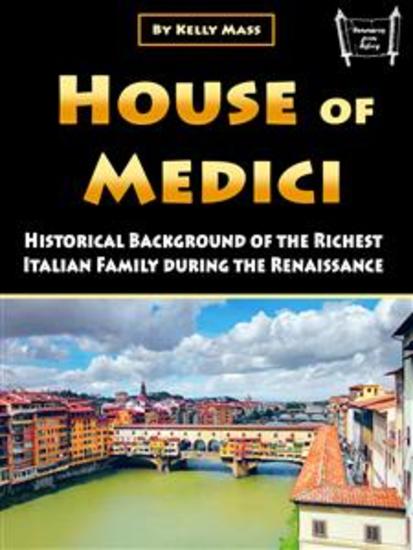
In the heart of the Republic of Florence, during the initial decades of the 15th century, emerged the House of Medici—a formidable Italian financial and political dynasty. Cosimo de' Medici, the influential figurehead, spearheaded their ascent to prominence. Originating from the picturesque Mugello region in Tuscany, the Medici family burgeoned and eventually laid the foundation for the renowned Medici Bank.

This financial institution, a colossal entity in 15th-century Europe, played a pivotal role in propelling the Medicis into the political arena of Florence. Remarkably, their political sway intensified, despite their status as citizens rather than monarchs until the unfolding of the 16th century. The Medici Bank's influence was an indispensable ally in their journey to political eminence.

Notable figures in the Medici lineage, including Pope Leo X, Pope Clement VII, Pope Pius IV, and Pope Leo XI, added a distinctive touch to the ecclesiastical landscape. Furthermore, the Medici imprint extended beyond the sacred halls to encompass French royalty, with Catherine de' Medici and Marie de' Medici both gracing the throne.

In the annals of history, the Medici family was bestowed with the prestigious title of Duke of Florence in 1532—a hereditary honor that symbolized their enduring legacy. Over time, territorial expansion elevated their dominion to the esteemed Grand Duchy of Tuscany in 1569, a seat of power they held until the demise of Gian Gastone de' Medici in 1737. However, the zenith of their rule witnessed economic prosperity, giving way to financial turmoil under the reign of Cosimo III de' Medici.
Disponível desde: 09/01/2024.

Outros livros que poderiam interessá-lo

  • NarcisSATAN - Weaponized Worship - cover

    NarcisSATAN - Weaponized Worship

    Dee Shaffer

    • 0
    • 0
    • 0
    Do you find yourself in a dark spiral of emotional torment as you repeatedly attempt to resolve issues within your relationship?  Does it feel as though you walked right into a trap and that your reality has shifted into an atmosphere of lies?  The branches of seduction seem to reach out to you with the most beautiful gestures of love only to repeatedly bludgeon you with those very same limbs. The healthy identity that you once recognized and embraced has been eroded with a gradual, calculated destruction of your soul. NarcisSATAN will reveal the wicked playbook used by all narcissists and provide undeniable truth about how they operate as well as their methods of control. This book will expose the narcissist’s ultimate desire which is what drives them to deploy many weapons against their victims. Finally, this book will examine the dark forces behind these individuals and will shock the reader when the true source of narcissism is ultimately exposed.  
    Written with inspired prose and an unparalleled depth of understanding, "NARCISSATAN" is a striking exploration of the human psyche and how it interacts with the spiritual realm. Prepare to be both enlightened and strengthened while grasping the perplexity of real-life narcissistic relationships as its darkness is unmasked by the light of truth.
    Ver livro
  • How to Recognize Toxic Cultural Norms - cover

    How to Recognize Toxic Cultural...

    Olivia Werner

    • 0
    • 0
    • 0
    [How to Recognize Toxic Cultural Norms] unravels the invisible threads that bind us to societal expectations, examining with unflinching clarity the ways we've normalized our own diminishment. Through lyrical prose that moves like morning light across familiar surfaces, this revolutionary text illuminates the subtle violences we've accepted as natural – from the reflexive smiles we offer when we'd rather not smile, to the constant internal calibration of whether we're being too much or not enough. The book delves deep into the architecture of our conditioning, revealing how cultural norms operate like gravity, invisibly shaping the trajectory of our movements through the world, while offering a compassionate framework for recognition and resistance. Drawing on intimate observations of how these patterns manifest in our bodies, relationships, and daily choices, it transforms personal awakening into collective possibility, showing how the simple act of questioning inherited wisdom becomes a radical reclamation of human authenticity.
    Ver livro
  • Modernization and Reform - Den Xiaoping's Legacy - cover

    Modernization and Reform - Den...

    Jun Liu

    • 0
    • 0
    • 0
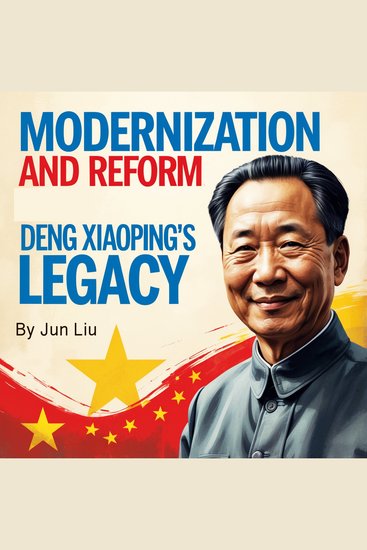
    Deng Xiaoping’s rise to power is a tale marked by perseverance, political acumen, and the ability to navigate the turbulent political landscape of 20th-century China. Born in 1904 in the Sichuan province, Deng’s early life was shaped by his education in France, where he studied at the University of Paris. His exposure to Marxist ideas during this time laid the foundation for his later role in the Chinese Communist Party. Upon his return to China, Deng became an important figure in the party’s early years, rising through the ranks as a trusted leader. 
    Deng’s political career began during the Second Sino-Japanese War, where he served in key military roles, building his reputation as a capable leader. However, it was during the Chinese Civil War that Deng truly began to cement his place in the party hierarchy. His involvement in the revolution and his leadership of various military campaigns helped to solidify his standing as a rising star in the Communist Party. Despite the chaos and upheaval surrounding the war, Deng’s strategic thinking and leadership made him an indispensable figure in the fight against both the Japanese and later the Nationalists. 
    After the establishment of the People’s Republic of China in 1949, Deng continued to rise through the ranks of the Communist Party, serving in various influential positions. However, his career was not without its setbacks. During the Cultural Revolution, a political movement led by Mao Zedong, Deng fell out of favor and was purged from his positions of power. He was sent to work on a farm, and his political influence was effectively diminished. Yet, despite these challenges, Deng’s political resilience would eventually lead to his return to power.
    Ver livro
  • The Process of Poetry - cover

    The Process of Poetry

    Rosanna McGlone

    • 0
    • 0
    • 0
    A unique collection of interviews with contemporary poets at the height of their craft. How does a subconscious thought become an award-winning poem? Journalist, Rosanna McGlone, speaks to some of the country's leading poets to find out. Don Paterson, Sean O'Brien, Gillian Clarke, and many more, explore the development of a single poem from rough notes to a final version to provide invaluable insights for writers and poetry enthusiasts alike.
    Ver livro
  • A Rare Recording of Eleanor Roosevelt - cover

    A Rare Recording of Eleanor...

    Eleanor Roosevelt

    • 0
    • 0
    • 0
    Eleanor Roosevelt (October 11, 1884 - November 7, 1962) was born in New York City and was a niece of President Theodore Roosevelt. She would have a long and distinguished career as an American political figure, diplomat, and activist, making her one of the most admired women of the twentieth century. She served as the first lady of the United States from 1933 to 1945, during her husband President Franklin D. Roosevelt's four terms in office, making her the longest-serving first lady of the United States. Roosevelt served as United States Delegate to the United Nations General Assembly from 1945 to 1952. President Harry S. Truman later called her the "First Lady of the World" in tribute to her human rights achievements. The following recording is a radio address Roosevelt made to the nation hours after the attack on Pearl Harbor.
    Ver livro
  • Fascism - What It Is and How to Fight It - cover

    Fascism - What It Is and How to...

    Leon Trotsky

    • 0
    • 0
    • 0
    Fascism: What It Is and How to Fight It, written by Leon Trotsky in 1933, is a critical analysis of the rise of fascist movements in Europe, particularly focusing on Nazi Germany under Adolf Hitler. Trotsky argues that fascism is not a sudden, irrational outburst of violence but rather the result of deep structural crises in capitalist society, which the ruling class seeks to resolve through authoritarian means. He explains that fascism arises when the traditional political establishment is unable to suppress revolutionary movements from below (such as workers' uprisings or socialist revolutions) and when the capitalist system is threatened by economic collapse. 
    Trotsky highlights that fascism is a tool of the bourgeoisie, aimed at preserving the existing social order through terror, militarism, and the suppression of democratic freedoms. However, it is not simply a reactionary force; it has its own set of internal contradictions, as fascists simultaneously defend capitalist interests while attacking the political establishment and the working class. 
    Trotsky warns of the dangers of fascism's rise and stresses the importance of building a united front of the working class and the Left to prevent its spread. He critiques both Stalinism and social democracy for their failures to adequately respond to the fascist threat, emphasizing the need for a revolutionary approach to combat the fascist menace.
    Ver livro