


Junte-se a nós em uma viagem ao mundo dos livros!
Adicionar este livro à prateleira
Grey
Deixe um novo comentário Default profile 50px
Grey
Assine para ler o livro completo ou leia as primeiras páginas de graça!
All characters reduced
Art History - Ideas Criticisms and Summaries - cover
LER

Art History - Ideas Criticisms and Summaries

Kelly Mass

Editora: Efalon Acies

  • 0
  • 0
  • 0

Sinopse

Exploring the aesthetic facets and visual expressions within historical and stylistic frameworks constitutes the field of study known as art history. Traditionally centered on mediums like painting, drawing, sculpture, architecture, pottery, and decorative arts, art history has evolved to encompass a broader spectrum of visual culture.

This expansion involves delving into the diverse visual and intellectual implications arising from the ever-evolving definition of art. The canvas of art history is vast, encompassing creations from various civilizations worldwide, spanning epochs, all unified by a predominant reliance on visual representations to convey meaning, value, or utility.

Distinguishing itself from art criticism and art theory (or "philosophy of art"), art history takes on a unique role. While art criticism evaluates artistic worth and sanctions styles or movements, and art theory delves into the fundamental nature of art, art history utilizes historical methods. It seeks to unravel the mysteries behind artistic creations by addressing questions such as the artist's motivations, patrons, influences, and the socio-political backdrop that shaped both the artist and the creation. These inquiries extend to understanding the artist's impact on artistic, political, and social trajectories.

Yet, the distinction between art history and art philosophy often poses challenges to a comprehensive exploration. The current disciplinary divide occasionally impedes the investigation, as many fundamental queries about the nature of art overlap with historical inquiries. The blurred boundaries prompt debates on whether addressing the historical context can effectively answer questions about the intrinsic nature of art.

Art history emerges as an interdisciplinary pursuit, considering an array of variables that influence the visual appearance of artwork. Beyond the artist's individual creativity, factors such as cultural, political, religious, economic, and societal influences come under scrutiny. This interdisciplinary approach enriches the study, providing a holistic understanding of the intricate tapestry that weaves together the visual narratives of diverse civilizations across time.
Disponível desde: 29/12/2023.

Outros livros que poderiam interessá-lo

  • Sound N’ Fury - Rock N’ Roll Stories - cover

    Sound N’ Fury - Rock N’ Roll...

    Alan Niven

    • 0
    • 1
    • 0
    Most rock ’n’ roll books are a bore. They all have the same narrative arc and are aimed at the dwindling following that now follows an artist that has long passed their AARP date. 
    		 
    Sound N’ Fury does not have a story arc. It is a collection of anecdotes, like a record comprised of various tracks — each one has its point and purpose. Alan Niven, who guided Guns N’ Roses from the gutter of Los Angeles to Wembley Stadium, shares stories from his remarkable life as a manager with an immediacy delivered by an extraordinary recall of dialogue. Readers will encounter not just Guns N’ Roses (who have sold almost 10 million tickets to their shows) but The Rolling Stones, Aerosmith, Clarence Clemons, Whitesnake, Elton John, and others who came from humble origins and experienced fame known only to few. Small-town minds collided with worldwide adulation, expectations, and demands. The results are amusing, affirming, and, predictably, disastrous. Keep in mind that rock ’n’ roll is God’s occupation for the unemployable.
    		 
    Written with a crisp and fluid style, the magnificence and idiocy of the music world will dance off the pages and engross even those who are not rock fans.
    Ver livro
  • Twelve Years a Slave - cover

    Twelve Years a Slave

    Solomon Northup

    • 0
    • 1
    • 0
    "They can take your freedom, but they cannot take your identity."
    
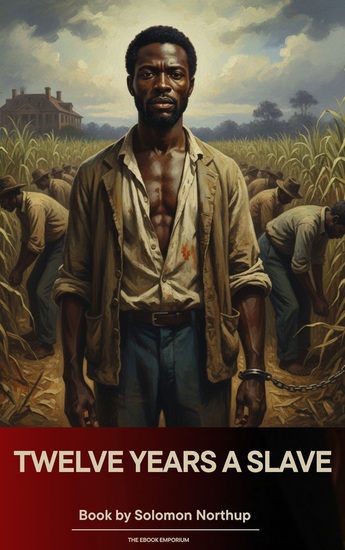
    In 1841, Solomon Northup was a professional violinist and family man living in Saratoga Springs, New York. After being lured to Washington D.C. with the promise of work, he was drugged, shackled, and stripped of his name. For the next twelve years, he was passed from master to master in the bayous of Louisiana, enduring the sadistic cruelty of men like Edwin Epps while witnessing the quiet heroism of his fellow enslaved people. Twelve Years a Slave is a visceral, unflinching look at the "peculiar institution" through the eyes of a man who knew both the dignity of liberty and the agony of the lash. It remains a foundational text of American history and a testament to the endurance of the human spirit.
    
    The Mechanics of Oppression: Northup provides a meticulous, almost journalistic description of the economics and daily operations of the slave trade. He details the cultivation of cotton and sugar, the social hierarchies of the plantation, and the psychological warfare used to keep human beings in subjection.
    
    A Quest for Justice: The narrative is propelled by Northup's secret attempts to communicate with his family in the North. His eventual rescue is a heart-stopping moment of tension and triumph, highlighting the legal and social complexities of a divided nation where a man's status as "property" or "person" could depend entirely on the color of his skin and the geography of his location.
    
    Why It Is a Vital Classic: While many narratives were edited to suit political agendas, Northup's account is praised for its stark realism and descriptive power. It provides names, dates, and locations that were later verified by historians, making it one of the most credible and devastating indictments of slavery ever written.
    
    Bear witness to the truth. Purchase "Twelve Years a Slave" today.
    Ver livro
  • The Boy Who Survived Auschwitz - cover

    The Boy Who Survived Auschwitz

    Adriana Lerman

    • 1
    • 1
    • 0
    Levi Lerman was a cheerful and lively boy from the town of Ostrowiec. He was only fourteen years old when his life took an unimaginable turn with the outbreak of World War II in 1939, when the Nazi forces invaded Poland and occupied his hometown.
    Over a painful six-year period, Levi endured a harsh life in the Ostrowiec ghetto, suffered devastating losses, performed exhausting forced labor, and survived countless transfers to concentration camps, including the extermination camp of Auschwitz-Birkenau.
    In the middle of this torment, a single light guided him through the darkness: his unbreakable determination to live and to protect his father—a strength that helped him survive against all odds.
    Ver livro
