¡Acompáñanos a viajar por el mundo de los libros!
Añadir este libro a la estantería
Grey
Escribe un nuevo comentario Default profile 50px
Grey
Suscríbete para leer el libro completo o lee las primeras páginas gratis.
All characters reduced
Down Country Lanes Behind Abandoned Houses - cover

Down Country Lanes Behind Abandoned Houses

Keith V. Bletzer

Editorial: Bentham Science Publishers.

  • 0
  • 0
  • 0

Sinopsis

Based on six years of extended ethnography in multiple agricultural areas of the Eastern United States, Down Country Lanes, Behind Abandoned Houses is a monograph which explores the lives of migrant and seasonal farm workers. The six-year study secured multi-setting field data in primary, secondary and casual sites, and audio-taped narrative life stories from men and women who harvest and perform the related tasks that help to make the many foods which we enjoy in abundance. The study presented in this book elaborates vignettes from field observations with a focus on workers who use drugs and alcohol, and is complemented by formal (narrative life stories) and informal interviews. The author explores diverse field data that reveal the hardships, exclusion and social adversities that migrant farm workers experience many times more often than any other social group with considerable susceptibility to drug / alcohol use. 
Down Country Lanes, Behind Abandoned Houses gives readers a perspective about farm workers’ social vulnerability across multiple agricultural areas, while comparing willful neglect and social non-existence experienced by farm workers to a gray zone of contemporary horrors in the way that these men and women have been viewed and treated over many decades. The monograph is an invaluable reference for the study of social problems, substance abuse, trans-national migratory experiences and field methods in sociology. The book also serves as a contemporary handbook on the anthropology of American agricultural labor.
Disponible desde: 15/03/2024.

Otros libros que te pueden interesar

  • The Law - cover

    The Law

    Frédéric Bastiat

    • 0
    • 0
    • 0
    "The Law" by Frédéric Bastiat is a seminal work in political philosophy and economics, offering a robust defense of individual liberty and property rights against the encroachments of government. Written in 1850, Bastiat's concise yet profound treatise critiques the use of law as an instrument of coercion and redistribution, arguing instead that its proper role is the protection of individual freedoms. Through eloquent and accessible prose, Bastiat expounds on the dangers of socialism and economic interventionism, advocating for a system where the law serves only to uphold justice, ensure public order, and protect rights. His work remains a cornerstone of libertarian thought, celebrated for its lucid analysis of the principles underpinning a free society and its prescient warnings against the overreach of governmental power.
    Ver libro
  • Truman and the Bomb - The Untold Story - cover

    Truman and the Bomb - The Untold...

    D. M. Giangreco

    • 0
    • 0
    • 0
    Many myths have grown up around President Harry S. Truman's decision to use nuclear weapons against Imperial Japan. In destroying these myths, Truman and the Bomb will discomfort both Truman's critics and his supporters, and force historians to reexamine what they think they know about the end of the Pacific War. 


    Using previously unpublished material, D. M. Giangreco busts myths and more. An award-winning historian and expert on Truman, Giangreco is perfectly situated to debunk the many deep-rooted falsehoods about the roles played by American, Soviet, and Japanese leaders during the end of the World War II in the Pacific. Truman and the Bomb, a concise yet comprehensive study of Truman's decision to use the atomic bomb, will prove to be a classic for studying presidential politics and influence on atomic warfare and its military and diplomatic components. 


    Making this book particularly valuable for professors and students as well as for military, diplomatic, and presidential historians and history buffs are extensive primary source materials, including the planned United States naval and air operations in support of the Soviet invasion of Manchuria. These documents support Giangreco's arguments while enabling the listener to enter the mindsets of Truman and his administration as well as the war's key Allied participants.
    Ver libro
  • The Essential Baruch Spinoza - How to Improve Your Mind The Road to Inner Freedom and The Book of God - cover

    The Essential Baruch Spinoza -...

    Baruch Spinoza

    • 0
    • 0
    • 0
    Three philosophical works by the seventeenth-century Enlightenment thinker and author of Ethics.How to Improve Your MindIn this earlier work, Dutch philosopher Baruch Spinoza articulates his view that life is best lived with the supreme happiness of knowing God’s infinite love. By extension, all earthly pursuits—including money, fame, and sex—are mere distractions from the greater joy of the soul’s quietude.Translated by the philosopher and founder of the Philosophical Library, Dagobert D. Runes. Runes also provides exclusive commentary and biographical notes.The Road to Inner FreedomSpinoza views the ability to experience rational love of God as the key to mastering the contradictory and violent human emotions.The Book of GodThe Book of God, one of Spinzoa’s earliest works, came to light only a hundred years ago in two slightly varying Dutch manuscripts. Its youthful author lived in turbulent times, when the Western world was torn by civil and religious strife, and bullies, bigots and pseudo-prophets vied for the ear of a fearful people. While Europe was in an uproar over the right church, Spinoza was seeking the right God. This book is the first known report of his findings. Translated by Dr. A. Wolf from the Dutch [the author’s Tractatus de Deo et homine version] and edited and with an introduction by Dagobert D. Runes.
    Ver libro
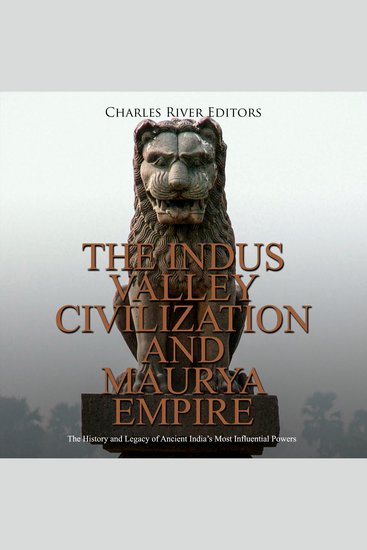
  • Indus Valley Civilization and Maurya Empire The: The History and Legacy of Ancient India’s Most Influential Powers - cover

    Indus Valley Civilization and...

    Editors Charles River

    • 0
    • 0
    • 0
    India’s oldest civilization, known as the Indus Valley Civilization or the Harappan Civilization, was contemporary with ancient Mesopotamia and ancient Egypt and had extensive contacts with the former, making it one of the most important early civilizations in the world. Spread out along the rivers of the Indus River Valley, hundreds of settlements began forming around 3300 BCE, eventually coalescing into a society that had all of the hallmarks of a true civilization, including writing, well-developed cities, a complex social structure, and long-distance trade. 
    During the last centuries of the first millennium BCE, most of the Mediterranean basin and the Near East were either directly or indirectly under the influence of Hellenism. The Greeks spread their ideas to Egypt, Mesopotamia, and Persia and attempted to unify all of the peoples of those regions under one government. Although some of the Hellenistic kingdoms proved to be powerful in their own rights – especially Ptolemaic Egypt and the Seleucid Empire, which encompassed all of Mesopotamia, most of the Levant, and much of Persia during its height – no single kingdom ever proved to be dominant. The Hellenic kingdoms battled each other for supremacy and even attempted to claim new lands, especially to the east, past the Indus River in lands that the Greeks referred to generally as India. But as the Hellenistic Greeks turned their eyes to the riches of India, a dynasty came to power that put most of the Indian subcontinent under the rule of one king. The dynasty that came to power in the late 4th century BCE is known today as the Mauryan Dynasty, and although the ruling family was short-lived and their power was ephemeral, its influence resonated for several subsequent centuries and spread as far east as China and into the Hellenistic west.
    Ver libro
  • How We Got Our Antiracist Constitution - Canonizing Brown v Board of Education in Courts and Minds - cover

    How We Got Our Antiracist...

    Jesse Merriam

    • 0
    • 0
    • 0
    Over the past decade, several American cities have been rocked by race riots. With each passing year, a new racial agenda emerges—from police defunding to education reform to reparations—inciting more and more division and radicalization along racial lines. What started all of this? The roots of this pathology run much deeper than the recent symptoms suggest. The civil rights revolution unleashed an assault on the US Constitution, and the sacralization of that revolution, marked by the canonization of Brown v. Board of Education (1954), has transformed our constitutional order. A system once rooted in local self-governance and natural rights now operates along new moral axes, entirely foreign to the American way of life. The choice is increasingly obvious: Either the traditional American order or the new civil rights regime will prevail.
    Ver libro
  • A Teenage Rhapsody 1966 to 1973 - cover

    A Teenage Rhapsody 1966 to 1973

    R. J. Dickinson

    • 0
    • 0
    • 0
    "A Teenage Rhapsody 1966 to 1973" is autobiographical and describes my transition from adolescence to manhood at a time when the shackles of certain traditional social oppressions were been swept aside by optimism for a better future that previous generations were denied. 
    That better future started with the phenomenon called 'the teenager' who suddenly had a voice, a voice of freedoms, expression and of influence that helped create the Swinging Sixties. 
    I was there, yes I was there. What I was to experience growing up in the suburbs of Leeds at the time the book suggests, was that of hardship, laughter, fun, love and betrayal, juvenile violence and the explosion of alternatives that were now becoming accepted, as inevitable. 
    But also what I was experiencing, with the doctrine of Victorian values to keep me out of harm's way, was the freedom, without concern, to wander and explore for endless hours, the labyrinth of streets of back to back terrace houses that offered adventure around every corner. 
    The simplicity of life during the time of my teenage years, alongside a commonality of certain basic traditions passed down from generation to generation, that still apply and work regardless of generation. This was liberating, allowing me to develop my mind and character through trial and error at a pace of life that was less demanding and frenzied to what is to arrive in the next century, when all this description will be viewed in the format akin to a Sepia painting hanging with obscurity in a corner of a gallery. 
    This story had a need to be told.
    Ver libro