¡Acompáñanos a viajar por el mundo de los libros!
Añadir este libro a la estantería
Grey
Escribe un nuevo comentario Default profile 50px
Grey
Suscríbete para leer el libro completo o lee las primeras páginas gratis.
All characters reduced
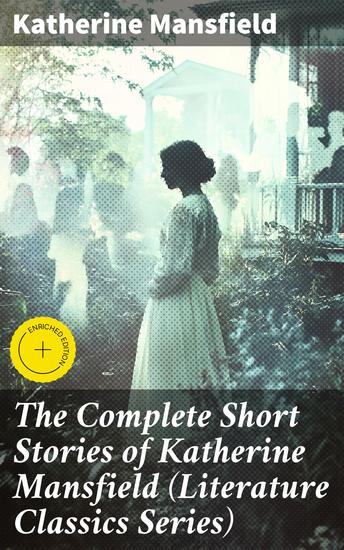
The Complete Short Stories of Katherine Mansfield (Literature Classics Series) - Enriched edition Exploring Human Emotions in Modernist Short Fiction - cover

The Complete Short Stories of Katherine Mansfield (Literature Classics Series) - Enriched edition Exploring Human Emotions in Modernist Short Fiction

Katherine Mansfield

Editorial: Good Press

  • 0
  • 0
  • 0

Sinopsis

The Complete Short Stories of Katherine Mansfield encompasses the intricate tapestry of human emotion, relationships, and existential musings that reflect the complexity of early 20th-century life. Mansfield's literary style is distinguished by its modernist approach, characterized by vivid imagery, acute psychological insight, and a striking use of stream-of-consciousness techniques. The stories, ranging from the poignant 'The Garden Party' to the haunting 'Miss Brill,' reveal the subtleties of social conventions and the inner worlds of her characters, painted against the backdrop of post-war society grappling with change and uncertainty. Katherine Mansfield, a New Zealander who became a prominent figure in the Bloomsbury Group in London, was influenced by her own experiences of displacement and transformation. Her keen observations of daily life and profound empathy for the human condition stem from her varied travels and her tumultuous personal life, including her tumultuous relationships and struggles with health. Mansfield's commitment to exploring the lives of women and their societal roles is evident throughout her work, marking her significance in feminist literature and modernist writing. Readers seeking a deeply introspective and finely crafted exploration of life's ephemeral moments will find great reward in Mansfield's Complete Short Stories. This collection not only serves as a testament to her literary genius but also invites reflection on the universal themes of identity, love, and loss, making it an essential read for lovers of modernist literature.

In this enriched edition, we have carefully created added value for your reading experience:
- A comprehensive Introduction outlines these selected works' unifying features, themes, or stylistic evolutions.
- The Author Biography highlights personal milestones and literary influences that shape the entire body of writing.
- A Historical Context section situates the works in their broader era—social currents, cultural trends, and key events that underpin their creation.
- A concise Synopsis (Selection) offers an accessible overview of the included texts, helping readers navigate plotlines and main ideas without revealing critical twists.
- A unified Analysis examines recurring motifs and stylistic hallmarks across the collection, tying the stories together while spotlighting the different work's strengths.
- Reflection questions inspire deeper contemplation of the author's overarching message, inviting readers to draw connections among different texts and relate them to modern contexts.
- Lastly, our hand‐picked Memorable Quotes distill pivotal lines and turning points, serving as touchstones for the collection's central themes.
Disponible desde: 13/01/2024.
Longitud de impresión: 793 páginas.

Otros libros que te pueden interesar

  • Ernest Shackleton and Robert Falcon Scott: The History of the British Explorers’ Notorious Rivalry during the Heroic Age of Antarctic Exploration - cover

    Ernest Shackleton and Robert...

    Editors Charles River

    • 0
    • 0
    • 0
    An earlier wave of explorers led to the opening of the New World, and early polar expeditions saw ancient ships of various nations sail along the coastlines of Greenland and within reach of the Arctic and Antarctic continents. Many 19th century figures approached the polar region with an eye to traversing it. Most notable among them was British explorer Sir James Clark Ross, who took the Erebus and the HMS Terror to the southernmost coastlines of the planet.  
    Some of the explorers who were involved became household names around the world, including British explorer Sir Ernest Henry Shackleton and Norwegian explorer Roald Amundsen. Perhaps the one that has become most closely associated with this period is Robert Falcon Scott. Widely referred to as “Scott of the Antarctic,” Captain Scott became an icon of tenacity in the face of incredible adversity, and his final expedition to the South Pole lives on as an example of the nobility of the human spirit, even in the face of utter disaster. A monument to Scott’s persistence still stands at Observation Point, inscribed with the last line of Tennyson’s “Ulysses”: “To strive, to seek, to find, and not to yield.” 
    Inevitably, as time passed, modern historians further removed from the romanticization of the expeditions began to more closely (and objectively) scrutinize the explorers and their missions. However, in the case of Scott, that has only furthered his renown, because historians still have wildly different opinions of him, from his personality and leadership to the results of his missions, especially his ill-fated final one. Likewise, Shackleton’s place in history is not the one he set out to make, but his extraordinary deeds have made his contributions to early exploration of Antarctica indelible. Despite the victor’s wreath eventually going to another, Shackleton’s name is essential to any discussion of Antarctic exploration.
    Ver libro
  • The Invention of Jane Harrison - cover

    The Invention of Jane Harrison

    Mary Beard

    • 0
    • 0
    • 0
    Jane Ellen Harrison (1850-1928) is the most famous female Classicist in history, the author of books that revolutionized our understanding of Greek culture and religion. A star in the British academic world, she became the quintessential Cambridge woman—as Virginia Woolf suggested when, in A Room of One's Own, she claims to have glimpsed Harrison's ghost in the college gardens. 


    This lively and innovative portrayal of a fascinating woman raises the question of who wins (and how) in the competition for academic fame. Mary Beard captures Harrison's ability to create her own image. And she contrasts her story with that of Eugénie Sellers Strong, a younger contemporary and onetime intimate, the author of major work on Roman art, and once a glittering figure at the British School in Rome—but who lost the race for renown. The setting for the story of Harrison's career is Classical scholarship in this period—its internal arguments and allegiances and especially the influence of the anthropological strain most strikingly exemplified by Sir James Frazer. Questioning the common criteria for identifying intellectual "influence" and "movements," Beard exposes the mythology that is embedded in the history of Classics. At the same time she provides a vivid picture of a sparkling intellectual scene. The Invention of Jane Harrison offers shrewd history and undiluted fun.
    Ver libro
  • Lieutenant General James Longstreet: Innovative Military Strategist - The Most Misunderstood Civil War General - cover

    Lieutenant General James...

    F. Gregory Toretta

    • 0
    • 0
    • 0
    A “fascinating and informative” reassessment of the underappreciated Confederate general’s achievements and ahead-of-his-time military strategy (Midwest Book Review).   Lieutenant-General James Longstreet, commander of the First Corps of the Army of Northern Virginia, was a brilliant tactician and strategist. Prior to the Civil War there were many technological developments, of which the rifled musket and cannon, rail transport, and the telegraph were just a few. In addition, the North enjoyed a great advantage in manpower and resources. Longstreet adapted to these technological changes and the disparity between the belligerents, making recommendations on how the war should be fought.   Longstreet made a mental leap to adjust to this new type of warfare. Many others didn’t make this leap, including Lee, Jackson, Bragg, Hood, and Jefferson Davis, and Longstreet’s advice went unheeded. In contrast to many southern generals, he advocated for defensive warfare, using entrenchments and trying to maneuver the enemy to assault his position, conserving manpower, resources, and supplies. With the advent of the highly accurate and long-range rifled musket, offensive tactics became questionable and risky. This caused Longstreet to come into conflict with General Robert E. Lee at Gettysburg, and with General Bragg at Chickamauga.   Longstreet, a pragmatic and methodical general, was never given full authority over an army in the field. Had his suggestions been utilized there would have been a better outcome for the South. Many historians and biographers have misunderstood Longstreet and his motives, but this work offers a fresh perspective. It takes a new viewpoint of the Civil War and the generals who tailored their designs to pursue the war, analyzes Longstreet’s views of the generals and the tactics and strategy they employed, and examines why Longstreet proposed and urged a new type of warfare.
    Ver libro
  • Why Read - Selected Writings 2001–2021 - cover

    Why Read - Selected Writings...

    Will Self

    • 0
    • 0
    • 0
    From the Booker–shortlisted author of Umbrella, a world-girdling collection of writings inspired by a life lived in and for literature 
     
    From one of the most unusual and distinctive writers working today, Will Self’s Why Read is a cornucopia of thoughtful and brilliantly witty essays on writing and literature. 
     
    Self takes us with him: from the foibles of his typewriter repairman to the irradiated exclusion zone of Chernobyl, to the Australian outback, and to literary forms past and future. With his characteristic intellectual brio, Self aims his inimitable eye at titans of literature like Woolf, Kafka, Orwell, and Conrad. He  
    writes movingly on W. G. Sebald’s childhood in Germany and provocatively describes the elevation of William S. Burroughs’s Junky from shocking pulp novel to beloved cult classic. Self also expands on his regular column in Literary Hub to ask readers how, what, and ultimately why we should read in an  
    ever-changing world. Whether he is writing on the rise of the bookshelf as an item of furniture in the nineteenth century or on the impossibility of Googling his own name in a world lived online, Self’s trademark intoxicating prose and mordant, energetic humor infuse every piece. 
     
    A book that examines how the human stream of consciousness flows into and out of literature, Why Read will satisfy both old and new readers of this icon of contemporary literature.
    Ver libro
  • Backpack Jacket Surfboard - My Journey Across America Then and Now - cover

    Backpack Jacket Surfboard - My...

    Graham Broyd

    • 0
    • 0
    • 0
    Backpack, Jacket, Surfboard is an adventure memoir, a time capsule, and an unfiltered look at the joys, risks, and revelations of a cross-country road trip—then and now.
    Ver libro
  • Jack the Ripper - cover

    Jack the Ripper

    Victoria Lynn Morley

    • 0
    • 0
    • 0
    I fired my second editor in 2016 after 10 years, and I asked: “Why are you changing my book and putting in voices he supposedly is hearing in his head like a schizophrenic?” Louise responded, “Well he would have to have been crazy to carve up those women in that way.” I resonated “If he was a schizophrenic, then I’m a schizophrenic, you’ve been brainwashed by social media, he was a killer!” 
     
    Then I hired my third editor/proofreader, Harold Winberg, who translated technical instruction manuals into six languages. I knew he would pay close attention to details and not change, or distort the message. To understand one’s psyche, as a trained psychologist I know, you have to start at the true beginning. You can’t just jump into London 1888 during the Jack the Ripper murders and begin chapter 1 there because it’s thrilling, at first glance he would appear a deranged psychopath, at the least. 
     
    John or Jack was already a skilled horse slaughterer at age 17, he could slit the throat and sever the vocal cords of horses with a sharp knife – a silent killer.
    Ver libro