¡Acompáñanos a viajar por el mundo de los libros!
Añadir este libro a la estantería
Grey
Escribe un nuevo comentario Default profile 50px
Grey
Suscríbete para leer el libro completo o lee las primeras páginas gratis.
All characters reduced
Richard the Lion Heart - cover

Richard the Lion Heart

Kate Norgate

Editorial: Librorium Editions

  • 0
  • 0
  • 0

Sinopsis

“When History drops her drums and trumpets and learns to tell the story of Englishmen, it will find the significance of Richard not in his Crusade or in his weary wars along the Norman border, but in his lavish recognition of municipal life.” It may well seem strange to begin by quoting these words of the master who inspired my earliest venture—and thereby, indirectly at least, all my later ventures also—into the field of history, the preface to a book on Richard the First in which that sovereign’s island realm figures scarcely more than in the background, and the life of its people not at all. Certainly England and the English people ought to have stood in the forefront and to have been treated in the fullest detail, if this book were intended for a history of Richard’s reign; but it has been written with no such intention. It is merely an attempt to sketch, from materials of which some of the most valuable and interesting have become accessible to students only within a comparatively recent period, the life-story of a prince who reigned less than ten years and lived less than forty-two, yet whose personal character, peculiar circumstances, and adventurous career have given him—whether deservedly or not—a conspicuous place in mediæval history, and made him a hero of romance in every country from England to Palestine.
Disponible desde: 15/08/2023.

Otros libros que te pueden interesar

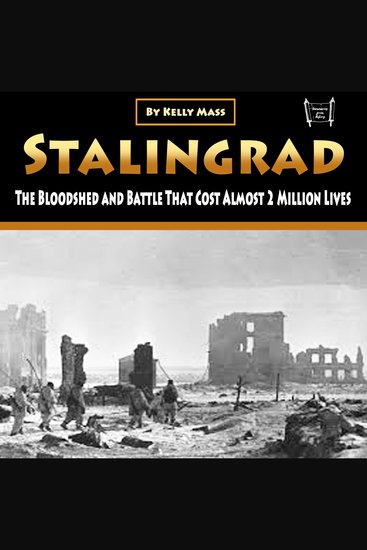
  • Stalingrad - cover

    Stalingrad

    Kelly Mass

    • 0
    • 0
    • 0
    Stalingrad has changed names. It's now called Volgograd and is still one of the largest cities in Russia. But we can't ignore the fact that for a significant time in history, it was called Stalingrad, named after the tyrant and leader of the Soviet Union in the Second World War, Joseph Stalin. Let's explore the history of this city during the Second World War, and why the battles fought there were so horrendous and pivotal in history.At the time of the Battle of Stalingrad In Southern Russia, Germany and its allies combated the Soviet Union for control of Stalingrad (now Volgograd). It is just one of the bloodiest engagements in the history of warfare, with an approximated 2 million general losses. It's marked by intense close-quarters battle and direct attacks on people in air campaign. The German High Command was pushed to eliminate substantial army forces from other theaters of war after their defeat at Stalingrad.The Stalingrad battle has been represented in the movies “Stalingrad” and “Enemy at the Gates.” It has become a level in video games like the “Call of Duty” series. Its casualties were many. Its circumstances brutal and took a very long time. Let’s take a look at what took place, why it was such a heroic turning point for the Russians against Hitler’s Nazi armies, and what happened after the Germans were pushed back.
    Ver libro
  • Teasing Ellis: An Erotic Lesbian Romance - cover

    Teasing Ellis: An Erotic Lesbian...

    T.E. Robbens

    • 0
    • 0
    • 0
    Book 10 of The Ellis Chronicles - Ellis and Lynn are getting closer despite Katie's best attempts to divert them. Lynn's sparkling blue eyes tease Ellis at every turn and Ellis can't keep Lynn off her mind or out of her dreams. But even in a very steamy dream about Lynn, Katie finds a way to break Ellis' concentration.
    Ver libro
  • Inca Empire The: An Enthralling Overview of the Incas Their Civilization in Ancient Peru and the Spanish Conquest - cover

    Inca Empire The: An Enthralling...

    Billy Wellman

    • 0
    • 0
    • 0
    Did you know that the Incas worshiped the mummies of their emperors? 
    For the Incas, death didn’t exist; it simply took the dead to a different plane of life. So, the mummies of their emperors were treated as people; they were given food and drink and even visited each other ceremoniously. They also owned country estates, which generated enough profits to keep them in the style to which they were accustomed. 
    This might sound like a curiosity, but this form of ancestor worship was central to the Inca culture and to the history of the Inca Empire, which stretched from Ecuador and Colombia in the north to Chile in the south. 
    Everyone has seen pictures of one of the Incas’ greatest achievements: the mountain-top wonder of Machu Picchu. But Inca history has always been told by the Spanish colonizers who conquered them since the Inca had no formal writing. Now, archaeology is giving us more information on how the Inca really lived, helping us differentiate real history from myth and propaganda. 
    In this audiobook, you will discover how the Inca created an expansive empire in just a century and why that civilization crumbled so fast once the Spanish arrived. 
    You’ll also discover the following:How the Inca civilization developed out of a number of preceding cultures in the Andes and Peruvian coast;How quickly the Incas were able to expand and why they needed to;How the empire was administered and how runners were able to take messages from one end of it to the other with remarkable speed;The amazing Inca infrastructure program, which included building roads through mountain ranges and across raging rivers;Why Inca cuisine included tasty guinea pigs and llama jerky;And so much more! 
    Scroll up and click the “add to cart” button to learn more about the fascinating Inca Empire!
    Ver libro
  • Sophist - cover

    Sophist

    Plato

    • 0
    • 0
    • 0
    Sophist (Ancient Greek: S?f?st??) discusses being and not-being while drawing a distinction between the philosopher and the sophist. - Summary by Geoffrey Edwards
    Ver libro
  • The Children of Athena - Greek writers and thinkers in the Age of Rome 150 BC–AD 400 - cover

    The Children of Athena - Greek...

    Charles Freeman

    • 0
    • 0
    • 0
    A compelling and fascinating portrait of the continuing intellectual tradition of Greek writers and thinkers in the Age of Rome. 
     
    In 146 BC, Greece yielded to the military might of the Roman Republic; sixty years later, when Athens and other Greek city-states rebelled against Rome, the general Lucius Cornelius Sulla destroyed the city of Socrates and Plato, laying waste to the famous Academy where Aristotle had studied. However, the traditions of Greek cultural life would continue to flourish during the centuries of Roman rule that followed, in the lives and work of a distinguished array of philosophers, doctors, scientists, geographers, travellers and theologians. 
     
    Charles Freeman's accounts of such luminaries as the physician Galen, the geographer Ptolemy and the philosopher Plotinus are interwoven with contextual 'interludes' that showcase a sequence of unjustly neglected and richly influential lives. Like the author's The Awakening, The Children of Athena is a cultural history on an epic scale: the story of a rich and vibrant tradition of Greek intellectual inquiry across a period of more than five hundred years, from the second century BC to the start of the fifth century AD.
    Ver libro
  • Billy the Kid - cover

    Billy the Kid

    Charles A. Siringo

    • 0
    • 0
    • 0
    A cowboy outlaw whose youthful daring has never been equalled in the annals of criminal history.When a bullet pierced his heart he was less than twenty-two years of age, and had killed twenty-one men, Indians not included.The author feels that he is capable of writing a true and unvarnished history of "Billy the Kid," as he was personally acquainted with him, and assisted in his capture, by furnishing Sheriff Pat Garrett with three of his fighting cowboys--Jas. H. East, Lee Hall and Lon Chambers.The facts set down in this narrative were gotten from the lips of "Billy the Kid," himself, and from such men as Pat Garrett, John W. Poe, Kip McKinnie, Charlie Wall, the Coe Brothers, Tom O'Phalliard, Henry Brown, John Middleton, Martin Chavez, and Ash Upson. All these men took an active part, for or against, the "Kid." Ash Upson had known him from childhood, and was considered one of the family, for several years, in his mother's home.Other facts were gained from the lips of Mrs. Charlie Bowdre, who kept "Billy the Kid," hid out at her home in Fort Sumner, New Mexico, after he had killed his two guards and escaped. (Introduction by the author)
    Ver libro