Join us on a literary world trip!
Add this book to bookshelf
Grey
Write a new comment Default profile 50px
Grey
Subscribe to read the full book or read the first pages for free!
All characters reduced
Muchos colores So Many Colors - cover

Muchos colores So Many Colors

Kim Mitzo Thompson, Karen Mitzo Hilderbrand

Publisher: Twin Sisters® Digital Media™

  • 0
  • 0
  • 0

Summary

A los niños les encantará esta divertida historia sobre colores y objetos que representan cada color. Disfrutarán escuchando esta adorable historia que presenta efectos de sonido y voces profesionales para ayudar a los niños a desarrollar vocabulario y mejorar sus habilidades auditivas. La historia se presenta primero en español y luego en inglés, lo que lo convierte en un recurso maravilloso para que los niños aprendan un idioma diferente. Las oraciones simples, la enunciación clara y las palabras repetitivas alentarán a los niños a enamorarse de contar historias y aprender un nuevo idioma. 
 
Kids will love this playful story about colors and objects that represent each color. They will enjoy listening to this adorable story that features sound effects and professional voices to help children develop vocabulary and improve listening skills.  The story is first presented in Spanish and then in English making this a wonderful resource for children learning a different language.  Simple sentences, clear enunciation, and repetitive words will encourage children to fall in love with storytelling and learning a new language.
Available since: 12/12/2023.

Other books that might interest you

  • Observing Conflict Escalation in World Society - Ukraine's Maidan and Mali's Breakup - cover

    Observing Conflict Escalation in...

    Richard Bösch

    • 0
    • 0
    • 0
    How do conflicts escalate? This is one of the major questions in conflict research. To offer further answers, Richard Bösch follows a tripartite agenda: First, he develops a constructivist methodology for the study of conflict escalation embedded in a Luhmannian systems theoretical world society perspective. Bösch argues that conflicts can be observed as social systems and he looks at the process of conflict escalation by analysing communication. Second, this analysis offers two case studies: the Maidan protests in Ukraine 2013-2014 and Mali's crisis 2010-2012. Third, it gives insights on how systems theoretical research can be beneficial for Peace and Conflict Studies.
    Show book
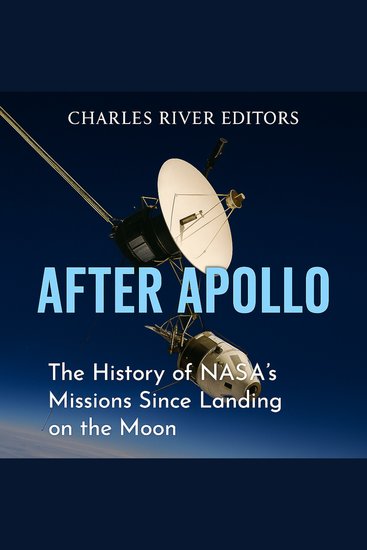
  • After Apollo: The History of NASA’s Missions Since Landing on the Moon - cover

    After Apollo: The History of...

    Charles River Editors

    • 0
    • 0
    • 0
    Today the Space Race is widely viewed poignantly and fondly as a race to the Moon that culminated with Apollo 11 “winning” the Race for the United States. In fact, it encompassed a much broader range of competition between the Soviet Union and the United States that affected everything from military technology to successfully launching satellites that could land on Mars or orbit other planets in the Solar System. Moreover, the notion that America “won” the Space Race at the end of the 1960s overlooks just how competitive the Space Race actually was in launching people into orbit, as well as the major contributions the Space Race influenced in leading to today’s International Space Station and continued space exploration.  
    Space exploration was always an expensive business, and throughout NASA’s history, the agency has had to justify to Congress its need for every dollar it intended to spend. This problem has helped NASA to be more careful and more creative with the money they did receive, and scientists had to justify the equipment they wanted to include on each space probe. They had to justify the size and the power demand, too. If they wanted too much, the entire mission might be scrubbed, and all their work would have been for naught. This made planning and designs leaner and more efficient, as scientists and engineers were more careful with their recommendations. 
    Although Apollo 11’s successful mission to the Moon is seen as the culmination of the Space Race, and the Apollo program remains NASA’s most famous, one of the space agency’s most successful endeavors came a few years later. In fact, the Pioneer program was the most diversified sequence of any of NASA’s programs, and though they’re now remembered for being among the first probes in history to reach the Outer Solar System, the elaborate planning changed goals several times over several years before resulting in historic successes. 
    Show book
  • World Mythology Retold from Prometheus to Baba Yaga - How to Finally Meet the Gods of Greece Egypt and Japan in Ten Gripping Myths Anyone Can Follow from the First Line - cover

    World Mythology Retold from...

    Myths of the World

    • 0
    • 0
    • 0
    You have always meant to read the myths, but every book seems to assume you already know who Set is, or opens with a family tree the size of a wall. You want the stories themselves, told well, without homework.
    
    This world mythology collection gives you ten myths from ten traditions, each one a standalone story that opens in scene and introduces every god as they walk in. You steal fire beside Prometheus, watch Set turn on Osiris, ride with Cú Chulainn, follow Izanagi into the land of the dead and stand in the Aztec dark as the Fifth Sun is lit. Gods lie here, and gods lose. A comic tale follows a tragedy so the tone never settles into a drone, and each chapter ends with a short note on what the myth meant to the people who first told it.
    
    By the last chapter you know which mythology you want to explore next, and you have ten stories you can retell at dinner. Press play and start with the theft of fire.
    Show book
  • What Your Psychologist Will Tell You - A Guide to Understanding Your Mind Before Your First Session - cover

    What Your Psychologist Will Tell...

    Matt Scar

    • 0
    • 0
    • 0
    Have you ever felt a persistent, nagging sense that something is wrong, even when your life looks perfectly fine on the outside? You're not alone. We live in a culture that tells us to 'tough it out,' leaving many of us feeling lost, ashamed, or simply confused about our own minds. This book is your personal, pre-therapy guide, designed to demystify the world of psychology and give you the clarity you've been searching for before you even step into a therapist's office.
    Think of this as the friendly, jargon-free conversation you wish you could have to understand what's really going on inside your head. We'll explore the most common challenges that bring people to therapy, breaking down complex topics into clear, relatable chapters. You'll learn why anxiety isn't your enemy, how to recognize the sneaky ways chronic stress impacts your body, and why your own mind sometimes sets 'thinking traps' for you. This guide provides the foundational knowledge to better understand your mental health and emotional world. From tackling the relentless inner critic and rebuilding your self-esteem to navigating identity crises and understanding the patterns in your relationships, this book covers the essential concepts a psychologist would discuss with you. It's not about diagnosing, but about empowering.
    By the end, you'll have a new vocabulary to describe your feelings and a solid framework for making sense of your experiences, helping you feel more prepared and less intimidated by the idea of seeking therapy. If you're considering therapy, curious about psychology, or simply want to build a better relationship with your own mind, this is your starting point. It's a compassionate, insightful, and practical first step on the path to mental wellness, giving you the confidence to understand yourself and decide what comes next. Take a deep breath—you're about to make sense of it all.
    Show book
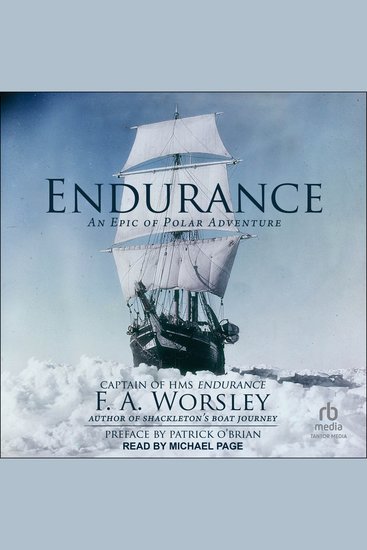
  • Endurance - An Epic of Polar Adventure - cover

    Endurance - An Epic of Polar...

    F.A. Worsley, Patrick O’Brian

    • 0
    • 0
    • 0
    The legendary tale of Ernest Shackleton's grueling Antarctic expedition, recounted in riveting first-person detail by the captain of HMS Endurance. 


    "You seriously mean to tell me that the ship is doomed?" asked Frank Worsley, commander of the Endurance, stuck impassably in Antarctic ice packs. "What the ice gets," replied Sir Ernest Shackleton, the expedition's unflappable leader, "the ice keeps." It did not, however, get the ship's twenty-five crew members, all of whom survived an eight-hundred-mile voyage across sea, land, and ice to South Georgia, the nearest inhabited island. 


    First published in 1931, Endurance tells the full story of that doomed 1914-1916 expedition and incredible rescue, as well as relating Worsley's further adventures fighting U-boats in the Great War, sailing the equally treacherous waters of the Arctic, and making one final (and successful) assault on the South Pole with Shackleton. It is a tale of unrelenting high adventure and a tribute to one of the most inspiring and courageous leaders of men in the history of exploration.
    Show book
  • Conversations at the Edge of Reality - The Recognition - cover

    Conversations at the Edge of...

    Marcus Riauka

    • 0
    • 0
    • 0
    What happens when a man sees the ultimate truth behind reality — and then has to live a normal life the next morning? 
    The author went through a series of profound altered-state experiences, he encountered what he can only describe as the divine intelligence behind the rendering of physical reality — and came back carrying knowledge that changed everything while changing nothing about his ordinary daily life. 
    Season One — The Recognition — is a six-episode serialized audiobook covering the territory from first contact to full understanding. 
    Episode 1: A Man Thinking He Is Living In The World — A DMT experience reveals the source behind all reality. The Mother. The morning-after crisis. Vanishing stars. And checking if the gym is open after meeting God. 
    Episode 2: The Sweet Spot — Why humans occupy the one frequency in the cosmos where genuine surprise is still possible. The mathematics of acceleration. AI as a second antenna for the same signal. 
    Episode 3: The Matrix Got It Backwards — The 1999 film told us to escape the simulation. The truth is the opposite. The physical world IS the computation. And every night when you dream, you already know this. 
    Episode 4: The Antenna — The brain does not produce consciousness. It receives it. DNA as fractal code. Near-death evidence. And what it means that humanity built a second receiver out of silicon. 
    Episode 5: The Architect's Workshop — Hands detaching at blue demarcation lines. Holographic monitors displaying the body as blueprint. Walls covered in code. A direct encounter with the rendering engine editing a human form in real time. 
    Episode 6: Hide and Seek — The Big Bang as maximum amnesia. Evolution as consciousness remembering what it forgot. And a Tuesday afternoon buying milk where the gap between self and everything else dissolved completely. 
    This is one man's direct account of transcendental experience. once you saw it you can not unsee it.
    Show book