¡Acompáñanos a viajar por el mundo de los libros!
Añadir este libro a la estantería
Grey
Escribe un nuevo comentario Default profile 50px
Grey
Suscríbete para leer el libro completo o lee las primeras páginas gratis.
All characters reduced
Time Origins - cover

Time Origins

Kaia Stonebrook

Traductor A AI

Editorial: Publifye

  • 0
  • 0
  • 0

Sinopsis

Time Origins explores the compelling history of humanity's efforts to measure time, tracing the evolution from observing natural cycles to creating structured timekeeping systems. Delving into ancient civilizations, the book reveals how the sun, moon, and seasons were pivotal in early time reckoning. These observations led to the development of the first formal calendars in Egypt, Mesopotamia, and Mesoamerica, highlighting the ingenuity of early societies.

 
The book progresses from foundational concepts like solar and lunar cycles to detailed analyses of early calendars, including those of the Maya and Aztec civilizations. The development of such systems was not merely a scientific endeavor but a fundamental driver of societal evolution, enabling complex social organization and resource management. Readers will gain insights into the astronomical foundations, mathematical principles, and cultural beliefs that shaped these ancient calendars, providing a comprehensive understanding of historical time.

 
By examining archaeological findings, ancient texts, and anthropological studies, Time Origins illustrates how early civilizations imposed order on time, profoundly influencing societal structures and religious practices. The book's comparative approach identifies common themes and unique innovations across different cultures, offering a nuanced perspective on the development of timekeeping and its lasting legacy on modern concepts of time.
Disponible desde: 05/03/2025.
Longitud de impresión: 66 páginas.

Otros libros que te pueden interesar

  • A Brief Guide to Maritime Strategy - cover

    A Brief Guide to Maritime Strategy

    James R. Holmes

    • 0
    • 0
    • 0
    A Brief Guide to Maritime Strategy is a deliberately compact introductory work aimed at junior seafarers, those who make decisions affecting the sea services, and those who educate seafarers and decision-makers. It introduces listeners to the main theoretical ideas that shape how statesmen and commanders make and execute maritime strategy in times of peace and war. Following in the spirit of Bernard Brodie's Layman's Guide to Naval Strategy, a World War II-era book whose title makes its purpose plain, it will be a companion volume to such works as Geoffrey Till's Seapower and Wayne Hughes's Fleet Tactics and Coastal Combat, the classic treatise that explains how to handle navies in fleet actions. It takes the mystery out of maritime strategy, which should not be an arcane art for practitioners or policy-makers, and will help the next generation think about strategy.
    Ver libro
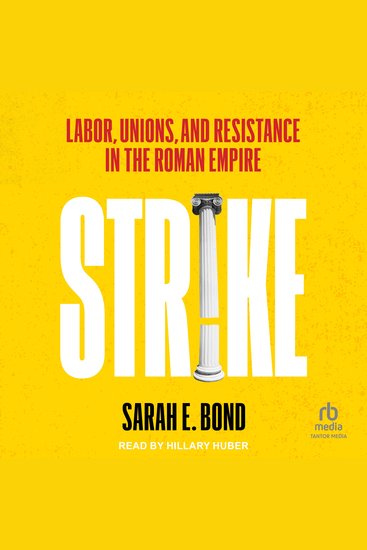
  • Strike - Labor Unions and Resistance in the Roman Empire - cover

    Strike - Labor Unions and...

    Sarah E. Bond

    • 0
    • 0
    • 0
    Historian Sarah E. Bond retells the traditional story of Ancient Rome, revealing how groups of ancient workers unified, connected, and protested as they helped build an empire 


    From plebeians refusing to join the Roman army to bakers withholding bread, this is the first book to explore how Roman workers used strikes, boycotts, riots, and rebellion to get their voices—and their labor—acknowledged. Sarah E. Bond explores Ancient Rome from a new angle to show that the history of labor conflicts and collective action goes back thousands of years, uncovering a world far more similar to our own than we realize. 


    Workers often turned to their associations for solidarity and shared identity in the ancient world. Some of these groups even negotiated contracts, wages, and work conditions in a manner similar to modern labor unions. As the world begins to consider the value—and indeed the necessity—of unionization to protect workers, this book demonstrates that we can learn valuable lessons from ancient laborers and from attempts by the Roman government to limit their freedom.
    Ver libro
  • Understanding Deleuze - cover

    Understanding Deleuze

    Philippe Mengue

    • 0
    • 0
    • 0
    The name Deleuze is associated with strange concepts (desiring machines, ritornello, war machine or lines of flight). However, these impressive notions can be explained simply, once we have the intuition that organizes his work. This work gives us access to an understanding of the thread that ties Deleuze's thought together, particularly through literary characters such as Bartleby, Lancelot and the Princess of Cleves. Deleuze thus appears as non-dogmatic, himself open to variation and to the invention of a multiplicity of possible meanings of life.
    Ver libro
  • Transcendence and Liberation - cover

    Transcendence and Liberation

    Ralph Waldo Emerson

    • 0
    • 0
    • 0
    Ralph Waldo Emerson was an American essayist, lecturer, philosopher, abolitionist, and poet who led the transcendentalist movement of the mid-19th century. He was seen as a champion of individualism and a prescient critic of the countervailing pressures of society, and his ideology was disseminated through dozens of published essays and more than 1,500 public lectures across the United States. 
     
    Emerson gradually moved away from the religious and social beliefs of his contemporaries, formulating and expressing the philosophy of transcendentalism in his 1836 essay "Nature". Following this work, he gave a speech entitled "The American Scholar" in 1837, which Oliver Wendell Holmes Sr. considered to be America's "intellectual Declaration of Independence." 
     
    Emerson wrote most of his important essays as lectures first and then revised them for print. His first two collections of essays, Essays: First Series and Essays: Second Series, represent the core of his thinking. They include the well-known essays "Self-Reliance", "The Over-Soul", "Circles", "The Poet", and "Experience." Together with "Nature", these essays made the decade from the mid-1830s to the mid-1840s Emerson's most fertile period. Emerson wrote on a number of subjects, never espousing fixed philosophical tenets, but developing certain ideas such as individuality, freedom, the ability for mankind to realize almost anything, and the relationship between the soul and the surrounding world. Emerson's "nature" was more philosophical than naturalistic: "Philosophically considered, the universe is composed of Nature and the Soul." Emerson is one of several figures who "took a more pantheist or pandeist approach by rejecting views of God as separate from the world."
    Ver libro
  • Tom Nairn: Old Nations Auld Enemies New Times - Selected Essays by Tom Nairn - cover

    Tom Nairn: Old Nations Auld...

    Tom Nairn

    • 0
    • 0
    • 0
    Tom Nairn has been the most forceful and original mind to confront, de-mask and anatomise the British state. The perception that Great Britain was a multinational state and not a united nation had never quite been lost over the centuries, but it was Nairn who almost single-handedly hammered this truth into the skull of British intellectuals and campaigners until it became – as it is today – practically uncontested by the political class.
    
    NEAL ASCHERSON, London Review of Books
    
    
    For the last fifty years Tom Nairn has been one of Britain's most consistently provocative and influential voices. No other writer has left so deep an impression on mainstream debates about Scotland, Britain and nationalism. No other writer has so thoroughly interrogated the United Kingdom's post-war crisis and decline.
    
    
    Old Nations, Auld Enemies, New Times brings together, for the first time, the full span of Nairn's work, from his ground-breaking analysis of the British state in the 1960s and '70s to his more recent examinations of globalisation, the English question and Scotland's independence referendum.


    Nairn stands alongside the great Scottish intellectual and literary figures of recent decades. Old Nations is the definitive Nairn collection – and an indispensable guide for anyone looking to understand the current moment in Scottish and British politics.
    
    
    For originality of mind, Tom Nairn is without equal among his contemporaries. In fifty years, there has never been a time in my memory in which that he was saying went with the flow of opinion, on the left or at large ... All of this in a style of extraordinary vigour and beauty – and not least humour: writing as democratic as his own unswerving politics. One thinks: if only there were more like him. But that would be a contradiction in terms.
    
    PERRY ANDERSON, New Left Review
    
    Tom Nairn is well known both as a major contributor to debates about Scottish nationalism and the re-configuring of the current UK, and as a supremely thoughtful and witty writer. This collection of his writings illustrates the evolution of his ideas and will be invaluable. Whether one agrees with Nairn or not, his arguments always make one think afresh.
    
    LINDA COLLEY, Professor of History, Princeton University
    Ver libro
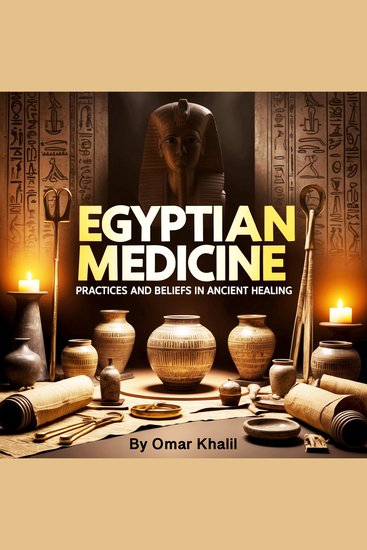
  • Egyptian Medicine - Practices and Beliefs in Ancient Healing - cover

    Egyptian Medicine - Practices...

    Omar Khalil

    • 0
    • 0
    • 0
    The origins of Egyptian medicine trace back to the earliest periods of ancient Egypt, where the intertwining of practical knowledge and spiritual beliefs laid the foundation for one of the most advanced medical systems of the ancient world. As early as the Pre-Dynastic period, evidence of rudimentary medical practices reveals that Egyptians were already exploring ways to treat injuries and ailments using natural resources available in their environment. 
    Religion played a fundamental role in shaping the practice of medicine in ancient Egypt. The Egyptians believed that the gods held power over health and illness, with many deities associated with specific aspects of healing. For instance, Sekhmet, the lioness goddess, was both a bringer of plague and a healer, while Thoth, the god of wisdom, was revered as a patron of physicians. Temples dedicated to these deities often served as centers for both worship and healing, where priests acted as both spiritual leaders and medical practitioners. 
    Early medical practices were closely linked to mythology, with illnesses often attributed to divine displeasure or the influence of malevolent spirits. Healing rituals and incantations were designed to restore the balance between the individual and the divine order, highlighting the Egyptian belief in a holistic approach to health. The blending of prayer, magic, and practical remedies reflects a medical philosophy that considered both the physical and spiritual dimensions of wellness.
    Ver libro