Rejoignez-nous pour un voyage dans le monde des livres!
Ajouter ce livre à l'électronique
Grey
Ecrivez un nouveau commentaire Default profile 50px
Grey
Abonnez-vous pour lire le livre complet ou lisez les premières pages gratuitement!
All characters reduced
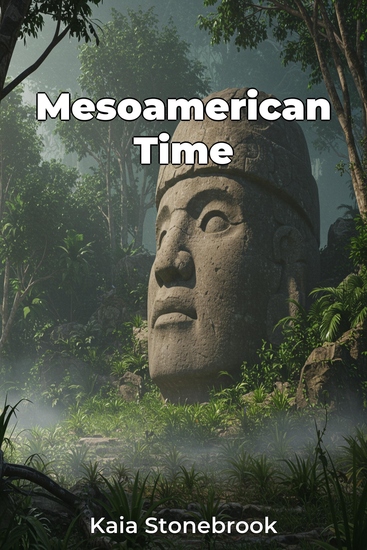
Mesoamerican Time - cover

Mesoamerican Time

Kaia Stonebrook

Traducteur A AI

Maison d'édition: Publifye

  • 0
  • 0
  • 0

Synopsis

Mesoamerican Time explores the fascinating origins and evolution of ancient Mesoamerican calendars, revealing how societies without advanced technology developed remarkably precise timekeeping systems. The book traces these systems from the Olmecs and Zapotecs to the more well-known Maya and Aztecs, demonstrating how these calendars were integral to religious beliefs, agricultural practices, and political structures. Intriguingly, these calendars were not just about tracking days; they were deeply intertwined with understanding the cosmos, and the book highlights how the 260-day Tzolkin ritual calendar, and the 365-day Haab solar calendar worked together.

 
The book emphasizes the foundational contributions of the Olmecs and Zapotecs, often overlooked in favor of the Maya. It examines the Long Count calendar and other systems, presenting historical context, Mesoamerican mathematics, and hieroglyphic writing to explain their complexity. By analyzing stelae inscriptions, monumental art, and archaeological site layouts, the book progresses from introducing basic concepts to exploring the specific contributions of each civilization, ultimately examining the enduring legacy and modern relevance of these ingenious systems.
Disponible depuis: 05/03/2025.
Longueur d'impression: 64 pages.

D'autres livres qui pourraient vous intéresser

  • Ottoman-Portuguese Conflicts The: The History and Legacy of the Military Encounters Between the Ottoman Empire and Portugal in the Indian Ocean - cover

    Ottoman-Portuguese Conflicts...

    Editors Charles River

    • 0
    • 0
    • 0
    The Ottoman conquest of Constantinople played a decisive role in fostering the Renaissance in Western Europe. The Byzantine Empire’s influence had helped ensure that it was the custodian of various ancient texts, most notably from the ancient Greeks, and when Constantinople fell, Byzantine refugees flocked west to seek refuge in Europe. Those refugees brought books that helped spark an interest in antiquity that fueled the Italian Renaissance and essentially put an end to the Middle Ages altogether.  
    	It was also roughly around this time that a period of European exploration began, and major factors that contributed to this period of exploration were introduced by the Chinese, albeit indirectly. The magnetic compass had already been developed and used by the Chinese sailors since the 12th century, although it had first been created in the 3rd century BCE as a divination device. The Song Dynasty then began using the device for land navigation in the 11th century and sailors began using it shortly after. The technology slowly spread west via Arab traders, although a case can be made for the independent European creation for the compass (Southey 1812: 210). Regardless, by the 13th century the compass had found its way to Western traders, coming at a time that trade had been increasing across Europe.  
    	The Portuguese started exploring the west coast of Africa and the Atlantic under orders from Prince Henry the Navigator. At this point, Europeans had not yet been capable of navigating completely around Africa since the ships being built were not yet fully capable of being able to sail very far from the coast and navigation in open waters was difficult, but the Portuguese continued pushing down the western African coast looking for ways to bypass the Ottomans and Muslims of Africa who had been making overland trade routes difficult. .
    Voir livre
  • Plato's Meno - cover

    Plato's Meno

    Plato

    • 0
    • 0
    • 0
    A dialogue between Socrates and Meno probes the subject of ethics. Can goodness be taught? If it can, then we should be able to find teachers capable of instructing others about what is good and bad, right and wrong, or just and unjust. Socrates and Meno are unable to identify teachers of ethics, and we are left wondering how such knowledge could be acquired.
     
    To answer that puzzle, Socrates questions one of Meno’s servants in an attempt to show that we know fundamental ideas by recollecting them.
    Voir livre
  • Gladiators - History and Background of Roman Slave Fighters - cover

    Gladiators - History and...

    Kelly Mass

    • 0
    • 0
    • 0
    Gladiators were highly trained warriors who fought to the death for the entertainment of the Roman public. These brutal battles took place in large arenas throughout the Roman Republic and Empire, where gladiators would engage in combat with other fighters, wild animals, or even condemned criminals. The fights were often bloody and merciless, designed to showcase the might and martial prowess of the Roman world. While some gladiators volunteered, seeking fame and fortune in the arena, many were slaves or prisoners of war who were forced to fight. 
    The life of a gladiator was harsh and dangerous. Those who entered the arena did so at great personal risk, as their fights often meant risking their lives for the entertainment of the masses. Even voluntary gladiators, known as "auctorati," gambled with their personal safety and social standing. They had little to no rights and were subject to the whims of their owners or sponsors. Gladiators who survived and fought well could gain fame and admiration, but their lives were fraught with physical injury and emotional isolation. The training they underwent was grueling, often conducted in harsh conditions at special training schools known as "ludi," where they were forced to endure relentless drills and punishments. 
    Gladiators were not only fighters but also symbols of Roman martial virtues. Through their valor and resilience in the arena, they represented Rome's ideals of strength, honor, and discipline. Their performances were often immortalized in Roman art and artifacts, with their images appearing on coins, pottery, and sculptures. Despite the grim nature of their lives, gladiators could gain popular admiration for their ability to fight bravely or die with honor. Some even became beloved figures in Roman culture, celebrated in both elite and everyday art.
    Voir livre
  • Distracted - A Philosophy of Cars and Phones - cover

    Distracted - A Philosophy of...

    Robert Rosenberger

    • 0
    • 0
    • 0
    Although the dangers of texting while driving are widely known, many people resist the idea that phone usage will impair their driving. And connectivity features in new cars have only made using technology behind the wheel more tempting. What will it take to change people's minds and behavior? Robert Rosenberger contends that a better understanding of why this combination of technologies is so dangerous could effectively adjust both habits and laws. 


    Rosenberger brings together ideas from philosophy and cognitive science to leverage a postphenomenological perspective that reveals how our smartphones make us such bad drivers. Reviewing decades of empirical studies in cognitive science, he shows that we have developed habits of perception regarding our compulsive technology use—habits that may wrest our attention away from the road. 


    Distracted develops innovative concepts for understanding technology-related habits and the ways that our relationships to our devices influence how we perceive the world. In turn, these ideas can help drivers be more cognizant of the effect that smartphone usage has on their perceptions, better inform efforts to enact stricter regulations, and help us all to be more reflective about the technologies that shape our lives.
    Voir livre
  • Summary Of How to Be Perfect - The Correct Answer to Every Moral Question by Michael Schur - cover

    Summary Of How to Be Perfect -...

    BOOK TIGERS

    • 0
    • 0
    • 0
    In a world filled with moral dilemmas and ethical pitfalls, how do you discern right from wrong? Every day, we navigate a maze of complicated choices and unsound advice. 
    For centuries, philosophers have pondered these questions, providing insights that remain relevant today. This book distills their wisdom, offering practical guidance for modern decision-making and self-understanding. 
    Dive into profound reflections on pressing questions like: Can we appreciate art if the artist was immoral? How much should one donate to charity to make a real impact? This audiobook explores these and more, making complex theories accessible and applicable to our daily lives. 
    Listen to "Summary Of How to Be Perfect: The Correct Answer to Every Moral Question" by Michael Schur, an unofficial summary and analysis, and equip yourself with the knowledge to make better decisions and understand yourself more deeply. Start your journey to moral clarity today.
    Voir livre
  • Celtic History: An Enthralling Overview of the Celts - cover

    Celtic History: An Enthralling...

    Billy Wellman

    • 0
    • 0
    • 0
    Have you ever wondered about the ancient Celts of Ireland and what made them who they were? Did you know that Halloween originated with them, that they invented the harp, or that they wielded swords reaching lengths of three feet?  
    In this audiobook, you’ll discover Celtic historical facts like these and so much more. Whether you’re already familiar with the Celts or whether you’ve never even heard of them, this audiobook is for you. If you would like to delve into their lives, culture, and modern Ireland’s Celtic heritage, you can find all of that in this comprehensive, captivating guide. 
    In our introduction to Celtic history, you can introduce yourself to all aspects of Celtic life in an easily accessible way, complete with visuals and easy-to-read language (no academic jargon here!). 
    We will take you through Celtic history by explaining the following:Where the Celts came from and who they wereHow they settled in IrelandEssential Celtic myths, gods, goddesses, legends, and heroesTheir seasonal festivals and celebrationsKey stories influencing the Celts and the modern IrishCeltic art and its glorious evolution and influence through the agesCeltic rituals, past and presentHow Christianity affected Celtic societyThe rise of Christianity in Ireland and the decline of paganismWhy the Celts matterAnd so much more! 
     Scroll up and click the “add to cart” button to begin learning about the Celts today!
    Voir livre