¡Acompáñanos a viajar por el mundo de los libros!
Añadir este libro a la estantería
Grey
Escribe un nuevo comentario Default profile 50px
Grey
Suscríbete para leer el libro completo o lee las primeras páginas gratis.
All characters reduced
Mayan Calendar - cover

Mayan Calendar

Kaia Stonebrook

Traductor A AI

Editorial: Publifye

  • 0
  • 0
  • 0

Sinopsis

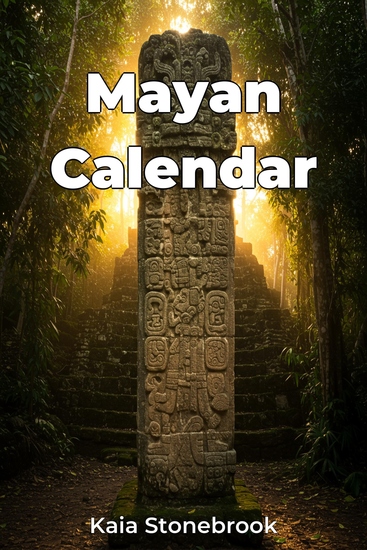
Mayan Calendar explores the fascinating Long Count, a sophisticated timekeeping system central to Mayan civilization. The book unveils how this intricate calendar shaped Mayan life, offering unique insights into their worldview, advanced astronomy, and complex mathematics. One intriguing aspect is the Mayan's base-20 number system, including their innovative concept of zero. The book also highlights how the calendar wasn't just about tracking days; it governed religious ceremonies, agricultural practices, and even legitimized the rule of kings.

 
The book progresses by first establishing the historical context of the Mayan civilization, then delving into the mathematical and astronomical foundations of the Long Count. It then investigates the historical interpretations of key dates and the evolution of scholarly understanding. By synthesizing archaeological evidence, epigraphic studies, and astronomical data, Mayan Calendar provides a balanced view of Mayan timekeeping, separating fact from the 2012 phenomenon and other misinterpretations.
Disponible desde: 04/03/2025.
Longitud de impresión: 68 páginas.


Otros libros que te pueden interesar

  • My War In The Jungle - The Long-Delayed Memoir of a Marine Lieutenant in Vietnam 1968-69 - cover

    My War In The Jungle - The...

    G.M. Davis

    • 0
    • 0
    • 0
    This memoir tells the story of a Marine rifle platoon commander’s time in the mountainous jungle of the northernmost province of the then Republic of Vietnam.While tasked with fighting the enemy, G.M. Davis made some great friends but saw too much death. The author tracks his tour of duty in the jungle, leading Marines not against the Viet Cong but against the North Vietnamese Army, a well-trained and well-supplied professional army dedicated to unifying the two Vietnams. The heat, the worry, the responsibility, and the daily grind took a toll amid firefights, battles, victory, and loss. Contact with the enemy was frequent, and the chaos of even a small fight was daunting. Davis also examines the political reality of the time, arguing that the war was lost before it began, but that the nation kept fighting and losing soldiers so politicians could look strong and keep their jobs. Looking back at the war, he concludes it was a waste of lives and treasure.
    Ver libro
  • The Feudal System - How Lords Vassals and Serfs Shaped Medieval Europe - cover

    The Feudal System - How Lords...

    Arlo Holders

    • 0
    • 0
    • 0
    Feudalism was a dominant social, economic, and political system in medieval Europe that shaped the lives of millions from the 9th to the 15th centuries. Rooted in the decline of the Roman Empire, it emerged as a response to the need for local defense, stability, and order. With the fall of centralized authority, particularly in the wake of the collapse of Roman imperial power, local leaders, and warriors filled the vacuum, giving rise to a new hierarchical structure that became the backbone of medieval society. 
    At the heart of feudalism was the relationship between lords and vassals, defined by a system of land ownership and mutual obligations. The land, or fief, was the most valuable asset in the feudal system. Lords, or landowners, granted portions of their land to vassals, typically in exchange for military service, loyalty, and other obligations. In return for this land, vassals swore an oath of fealty to their lord, pledging to serve him in times of war, provide counsel, and honor the lord’s authority. This bond was often formalized through ceremonies that emphasized loyalty and trust, making feudalism not just a legal arrangement but a deeply personal relationship. 
    In addition to the lord-vassal dynamic, serfs and peasants formed the labor force that sustained the feudal economy. While lords and vassals fought battles and governed lands, serfs worked the fields and managed agriculture, which was the primary source of wealth in the medieval world. Unlike slaves, serfs were bound to the land, unable to leave without their lord’s permission. In exchange for protection and the right to work the land, serfs provided a portion of their crops and other goods as rent.
    Ver libro
  • Parmenides - cover

    Parmenides

    Plato

    • 0
    • 0
    • 0
    "Parmenides" is one of Plato's dialogues in which the philosopher Parmenides visits Athens and engages in a philosophical conversation with a young Socrates. "Parmenides" is a complex and nuanced exploration of the nature of reality and the limits of human knowledge. Through the dialogue between Parmenides and Socrates, Plato explores the challenges of developing a coherent philosophical theory, as well as the importance of engaging in critical thinking and dialogue in order to refine and improve one's ideas. Read in English, unabridged.
    Ver libro
  • Democracy - A Guided Tour - cover

    Democracy - A Guided Tour

    Jason Brennan

    • 0
    • 0
    • 0
    In this short, accessible book, leading democratic theorist Jason Brennan guides listeners through the evolution of the concept of democracy and actual democratic practice over time to help them understand the foundations of this longstanding and yet newly fragile political system. 


    In his wide-ranging tour of the concept, Brennan will examine what democracy meant to the Greeks who first developed the concept before examining how it changed throughout European and later Western history. This will open up rich and perplexing questions. Over time, democracy shifted from being a fringe idea to the gold standard of political institutions: how did this change occur? How did the question of who counts as part of the ruling "people" change over time? As monarchies were replaced with democracies, what did theorists think the promises and perils of republican democracy were? How did actual democratic practice change the debates? What have we learned about how democracy functions—and in some cases, doesn't function—and what does this mean for future philosophical or empirical work? Brennan provides a curated, guided tour of the most important arguments for and against democracy, looking through the core values of stability, virtue, wisdom, freedom, and equality. The goal is to help listeners understand what is really at stake in democracy and its alternatives.
    Ver libro
  • The Little Book of Restorative Justice for Campus Sexual Harms - A Holistic Approach for Colleges and Universities to Address Sexual Misconduct and Relationship Violence - cover

    The Little Book of Restorative...

    Rachel Roth Sawatzky, Mikayla...

    • 0
    • 0
    • 0
    A restorative justice approach to addressing sexual misconduct in colleges and universities. Written for college and university practitioners and administrators, The Little Book of Restorative Justice for Campus Sexual Harms: A Holistic Approach to Address Sexual Misconduct and Relationship Violence for Colleges and Universities combines explanation, justification, and contextualization for the application of restorative justice (RJ) for sexual misconduct, including for alleged Title IX violations. This book outlines considerations, action steps, and best practices for campuses that are interested in exploring the successful implementation of RJ for sexual misconduct. The authors' backgrounds as practitioners within the higher education context grounds this work with personal reflections, experiences, and stories. This book provides a primer for colleges and universities who seek to move campus culture in a more restorative direction generally, and specifically for practitioners interested in exploring the possibility of amending existing sexual misconduct policies, including investigative-adjudicatory Title IX policy and procedures, through a restorative justice informed lens. Readers will explore why it makes all the difference (for both students and administrators) to add RJ resolution options.
    Ver libro
  • Mississippian Culture The: The History and Legacy of the Ancient Indigenous Culture in North America - cover

    Mississippian Culture The: The...

    Editors Charles River

    • 0
    • 0
    • 0
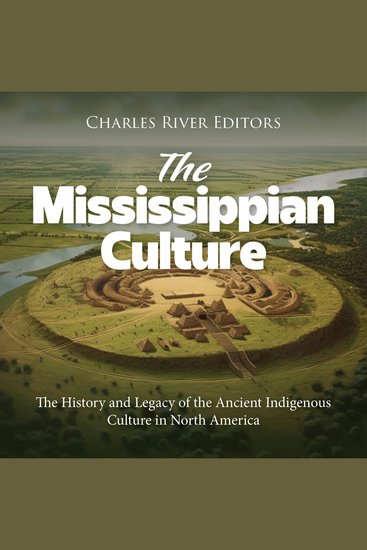
    When most people think of “ancient American civilizations,” the Aztec, Maya, or Inca cultures probably come to mind immediately, because the societies in Mesoamerica have left behind permanent structures for millions of visitors from around the world to see each year. At the same time, however, from about 1000-1500 CE, an equally complex culture formed along the banks of the Mississippi, Missouri, and Ohio Rivers. From Red Wing, Minnesota to Greenhouse, Louisiana, and from Spiro, Oklahoma to Macon, Georgia, societies built impressive mound structures that served as ritual platforms, burial sites, and residences for the elites. These mounds also served as the focal points of urban areas of varying sizes that were connected to each other through trade and ideology, forming a culture that modern historians have since designated the “Mississippian culture.”  
    	It has only been recently that modern archaeological, anthropological, and historical methods were utilized to create a somewhat accurate image of the Mississippian culture’s reach and importance in the wider contexts of American and world history. Today, historians have a much better understanding of many aspects of Mississippian culture, including its chronology, the religion of the people, urbanization, and how the people lived, and the fact that there were fully functioning complex societies that had sophisticated forms of government and long-distance trade networks. 	The mounds they made, which continue to serve as standing testaments to their extraordinary accomplishments, continue to be studied by experts who still have plenty of questions about the societies that produced them. But one thing’s for sure: with no evidence of a written language and a high probability that the groups spoke different languages (based on the earliest lingual patterns encountered from each region), what the Mississippian culture accomplished in the span of a few centuries is nothing short of phenomenal. 
    Ver libro