Junte-se a nós em uma viagem ao mundo dos livros!
Adicionar este livro à prateleira
Grey
Deixe um novo comentário Default profile 50px
Grey
Assine para ler o livro completo ou leia as primeiras páginas de graça!
All characters reduced
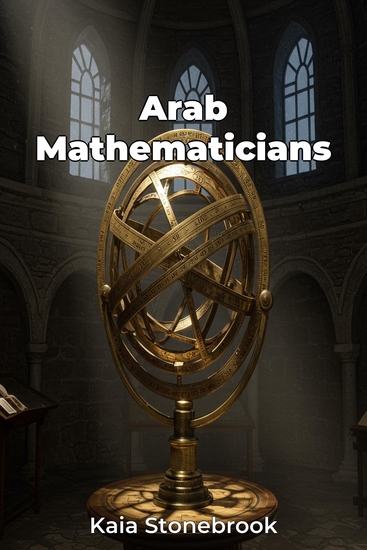
Arab Mathematicians - cover
LER

Arab Mathematicians

Kaia Stonebrook

Tradutor A AI

Editora: Publifye

  • 0
  • 0
  • 0

Sinopse

Arab Mathematicians explores the significant contributions of Middle Eastern scholars to mathematics and science during the 8th to 15th centuries. It highlights how these thinkers preserved, translated, and expanded upon the knowledge of ancient Greece and India, acting as a vital link to the European Renaissance. The book emphasizes the development of algebra, geometry, and astronomy during the Islamic Golden Age, revealing how these advancements shaped the world we know today. For instance, Muhammad ibn Musa al-Khwarizmi's work not only gave us the term "algorithm" but also laid the foundation for solving quadratic equations, which remain crucial in modern mathematics.

 
The book progresses by first establishing the historical backdrop, examining the factors that fostered intellectual growth in the Abbasid Caliphate. It then delves into specific fields like algebra, geometry (particularly the study of conic sections), and astronomy, showcasing the meticulous observations and theoretical models developed by scholars like Ibn al-Haytham. A key aspect is its focus on the collaborative, multicultural environment of scientific inquiry, challenging Eurocentric views and showcasing how these advancements were deeply intertwined with practical applications in optics, cartography, and architecture.
Disponível desde: 20/03/2025.
Comprimento de impressão: 61 páginas.

Outros livros que poderiam interessá-lo

  • Incas and Spanish Conquest The: An Enthralling Overview of the Inca Empire Conquistadors and Conquests in the Americas - cover

    Incas and Spanish Conquest The:...

    Billy Wellman

    • 0
    • 0
    • 0
    Two manuscripts in one book:The Inca Empire: An Enthralling Overview of the Incas, Their Civilization in Ancient Peru, and the Spanish ConquestThe Spanish Conquest of the Americas: An Enthralling Overview of the Conquistadors and Their Conquests of the Aztec and Inca Empires 
    In the first part of this book, you will discover:How the Inca civilization developed out of a number of preceding cultures in the Andes and Peruvian coast;How quickly the Incas were able to expand and why they needed to;How the empire was administered and how runners were able to take messages from one end of it to the other with remarkable speed;The amazing Inca infrastructure program, which included building roads through mountain ranges and across raging rivers;Why Inca cuisine included tasty guinea pigs and llama jerky;Why there were never more than a few thousand actual Inca in the Inca Empire; 
    In the second part of this book, you will learn about:Columbus and his expeditions, which encouraged other Europeans to start colonizationThe makeup of indigenous American societies, from their social hierarchies and complex cultures to diverse political structuresColonization of the Caribbean islands and the establishment of the Spanish West IndiesThe arrival of Hernán Cortés and his groundbreaking expedition into the Aztec Empire in modern-day MexicoThe conquest of the Maya civilization in the Yucatán Peninsula and the power dynamics between different power-hungry conquistador groups thereThe magnificent Inca Empire in the South American Andes and its conquest by Francisco Pizarro 
    Scroll up and click the “add to cart” button to learn more about The Incas and Spanish Conquest!
    Ver livro
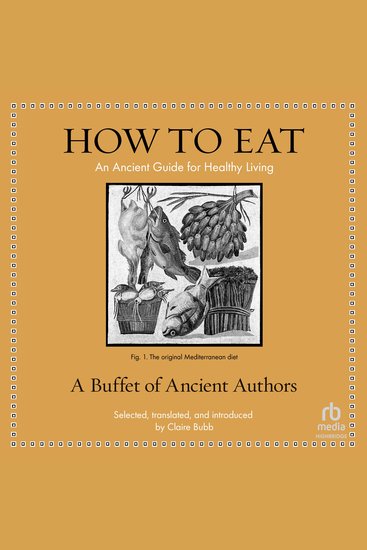
  • How to Eat - An Ancient Guide for Healthy Living - cover

    How to Eat - An Ancient Guide...

    Abigail Reno

    • 0
    • 0
    • 0
    Today, we're stuffed with dietary recommendations from every direction. Social media, advertising, food packaging, diet books, doctors—all have advice on what, how much, and when to eat. This would have been no surprise to ancient Greeks and Romans. Their doctors were intensely interested in food, offered highly prescriptive dietary advice, and developed detailed systems to categorize foods and their health effects. How to Eat is a delectable anthology of Greco-Roman writings on how to eat, exercise, sleep, bathe, and manage your sex life for optimal health. It also gathers ancient opinions on specific foods of all sorts, from how to deploy onions to cure baldness and cabbage to get sober to whether lentils are healthy and why arugula increases your sex drive. 


    With lively new translations by Claire Bubb, How to Eat features voices from medicine, philosophy, natural history, agriculture, and cooking, including Hippocrates, Pliny the Elder, Galen, Seneca, Plutarch, and Cato. 


    While medicine and science have obviously changed enormously since the classical world, and some Greco-Roman beliefs about diet now appear hilariously off the mark, How to Eat reveals that much of their advice still resonates—and all of it is fascinating.
    Ver livro
  • The Abortion Companion - An Affirming Handbook for Your Choice and Your Journey - cover

    The Abortion Companion - An...

    Becca Rea-Tucker

    • 0
    • 0
    • 0
    A warm, accepting, non-judgmental, and stigma-free companion for your abortion journey. Whether you had an abortion earlier this morning or thirty years ago, whether you’re feeling relief or grief (or both!), and even if you haven’t had an abortion but just want to untangle how you feel about it, this book is a safe and supportive resource.  With an emphasis on self-compassion, it collects reflection prompts, affirmations, conversation scripts, logistical info, self-care tips, and much more to validate and support you no matter where you fall in the full spectrum of experiences of people who have abortions. Bolstered by beautiful illustrations and the caring, confident support of author and reproductive rights advocate Becca Rea-Tucker, this book will meet you wherever you are and offer guidance for every step of your journey.
    Ver livro
  • Conversational Phrases Bulgarian Audiobook - Level 1 - Absolute Beginner - cover

    Conversational Phrases Bulgarian...

    BulgarianPod101.com, Innovative...

    • 0
    • 0
    • 0
    Are you trying to learn Bulgarian…but having trouble speaking?
     
    Do you struggle coming up with your own Bulgarian sentences?
     
    Are you tired of not understanding how Bulgarian grammar works?


    If you answered yes to any of these questions, …


    ...then the Conversational Phrases Audiobook, Level 1 - Absolute Beginner is for you!


    In this beginner-level Audiobook, you will master over 25 common sentence patterns across 25 simple lessons. By the end, you’ll be able to ask common questions and answer them in your own way, all while acquiring over 100 Bulgarian words. 


    Most importantly, you’ll be able to have real conversations in various social situations.


    How, you may ask? Each lesson introduces a new conversation reflecting a real-world situation, including casual chats between friends as well as dialogues in more formal settings. Learning is made easy with three simple steps:


    1. Get familiar: First, you get a sample conversation and its translation.
     
    2. Understand: Then, we explain an underlying sentence pattern, so you can grasp the grammar and actually understand how the Bulgarian works.
     
    3. Practice: Lastly, you create your own responses… and start speaking Bulgarian!


    Lessons in this audiobook include:
     
    - Going Sightseeing
     
    - Going to a Restaurant
     
    - Giving Directions
     
    - Going to the Movies
     
    - Renting an Apartment
     
    And much more!


    Conversational Phrases Audiobook, Level 1 - Absolute Beginner contains:
     
    - 25 Lessons 
     
    - 4 Hours+ of Content
     
    - 1 Core Pattern Per Lesson
     
    - 100+ Bulgarian Vocabulary Words
     
    - 28 Page Accompanying PDF eBook


    Download the PDF and read along
    Ver livro
  • Rise of Islam in the Balkans The: The History of the Ottoman Empire’s Islamization Efforts in Eastern Europe - cover

    Rise of Islam in the Balkans...

    Editors Charles River

    • 0
    • 0
    • 0
    In terms of geopolitics, perhaps the most seminal event of the Middle Ages was the successful Ottoman siege of Constantinople in 1453. The city had been an imperial capital as far back as the 4th century, when Constantine the Great shifted the power center of the Roman Empire there, effectively establishing two almost equally powerful halves of antiquity’s greatest empire. Naturally, the Ottoman Empire would also use Constantinople as the capital of its empire after their conquest effectively ended the Byzantine Empire. 
    In the wake of taking Constantinople, the Ottoman Empire would spend the next few centuries expanding its size, power, and influence, bumping up against Eastern Europe and becoming one of the world’s most important geopolitical players. It was a rise that would not truly start to wane until the 19th century. In fact, its decline would be brought about not just because of military setbacks and government corruption, but also because of nationalist uprisings among its multiethnic territories. The fact that the other existing multicultural empire, the Austro-Hungarian Empire, also did not survive World War I makes clear just how hard governing such a vast expanse of land can be. The Ottoman Empire’s inability to create a shared identity, a weak central state, and growing inner dissensions were some of the main factors explaining its long demise. 
    Of course, before that demise, the Ottomans brought plenty of their own cultural influence to the lands they reached, and nowhere is that more evident than in the spread of Islam. While Ottoman conflicts with European powers were often portrayed as religious conflicts, the fact is that the Ottomans managed to bring Islam with them into parts of Europe, especially the Balkans, and Islam took hold in various regions, adding even more demographic complexity to a place that already had no shortage of it.
    Ver livro
  • Prince The (Version 3) - cover

    Prince The (Version 3)

    Niccolò Machiavelli

    • 0
    • 0
    • 0
    The Prince (Italian: Il Principe) is a political treatise by the Italian diplomat, historian and political theorist Niccolò Machiavelli. From correspondence a version appears to have been distributed in 1513, using a Latin title, De Principatibus (About Principalities). But the printed version was not published until 1532, five years after Machiavelli's death. This was done with the permission of the Medici pope Clement VII, but "long before then, in fact since the first appearance of the Prince in manuscript, controversy had swirled about his writings".  
     
    Although it was written as if it were a traditional work in the Mirror of Princes style, it is generally agreed that it was especially innovative. This is only partly because it was written in the Vernacular (Italian) rather than Latin, a practice which had become increasingly popular since the publication of Dante's Divine Comedy and other works of Renaissance literature.  
     
    The Prince is sometimes claimed to be one of the first works of modern philosophy, especially modern political philosophy, in which the effective truth is taken to be more important than any abstract ideal. It was also in direct conflict with the dominant Catholic and scholastic doctrines of the time concerning how to consider politics and ethics. 
     
    Although it is relatively short, the treatise is the most remembered of his works and the one most responsible for bringing the word "Machiavellian" into wide usage as a pejorative term. It also helped make "Old Nick" an English term for the devil, and even contributed to the modern negative connotations of the words "politics" and "politician" in western countries. In terms of subject matter it overlaps with the much longer Discourses on Livy, which was written a few years later. In its use of near contemporary Italians as examples of people who perpetrated criminal deeds for politics, another lesser-known work by Machiavelli which The Prince has been compared to is the Life of Castruccio Castracani.  
     
    The descriptions within The Prince has the general theme of accepting the aims of princes; such as glory, and indeed survival, can justify the use of immoral means to achieve those ends. (Summary by Wikipedia)
    Ver livro