¡Acompáñanos a viajar por el mundo de los libros!
Añadir este libro a la estantería
Grey
Escribe un nuevo comentario Default profile 50px
Grey
Suscríbete para leer el libro completo o lee las primeras páginas gratis.
All characters reduced
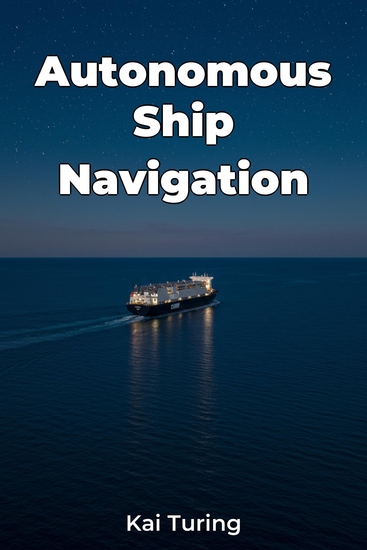
Autonomous Ship Navigation - cover

Autonomous Ship Navigation

Kai Turing

Traductor A AI

Editorial: Publifye

  • 0
  • 0
  • 0

Sinopsis

Autonomous Ship Navigation explores the groundbreaking advancements in AI and autonomous technology aimed at revolutionizing maritime transport. This book examines how unmanned ships are being developed, focusing on sophisticated AI-driven navigation systems that process vast sensor data for real-time decision-making. A key insight is how these autonomous systems will integrate into existing maritime infrastructure, ensuring seamless interaction with traditional vessels and ports. The book emphasizes the critical balance between technological advancement and adherence to maritime regulations, highlighting the challenges and opportunities in this evolving field.

 
The book progresses systematically, beginning with core concepts like sensor fusion and collision avoidance, then delves into specific AI applications such as computer vision and machine learning. It provides a data-driven analysis using real-world case studies to assess autonomous ship performance. A unique aspect is its focus on the practical challenges of integrating AI into the maritime ecosystem, including human factors and cybersecurity, presenting a balanced perspective on the benefits and risks of AI in shipping.
Disponible desde: 12/03/2025.
Longitud de impresión: 86 páginas.

Otros libros que te pueden interesar

  • The Modern Bestiary - A Curated Collection of Wondrous Wildlife - cover

    The Modern Bestiary - A Curated...

    Joanna Bagniewska

    • 0
    • 0
    • 0
    From the familiar to the improbable, the gross to the endearing, The Modern Bestiary is a compendium of curious creatures. It includes both animals that have made headlines and those you’ve probably never heard of, such as skin-eating  
    caecilians, harp sponges, or zombie worms—also known as bone-eating snot flowers.  
     
    Arranged by elements, Earth, Water and Air, The Modern Bestiary contains wellknown species told from new and unexpected angles (rats that drive cars; fish that communicate by passing wind), as well as stranger and lesser-known creatures  
    (including carnivorous mice that howl at the moon, cross-dressing cuttlefish, and antechinuses—small marsupials that literally mate themselves to death). Finally, there are the ‘aliens on Earth’—the incredible, the surreal, the magical—such as  
    tardigrades, tongue-eating lice and immortal jellyfish, creatures so astonishing that they make unicorns look rather commonplace. 
     
    Written by a zoologist with a flair for storytelling, this is a fascinating celebration of the animal kingdom.
    Ver libro
  • Changing Our System Of Land Ownership - cover

    Changing Our System Of Land...

    Martin Adams

    • 0
    • 0
    • 0
    Most people aspire to become property owners and view real estate investments as an important way to build wealth and security. Mortgages are the norm. But does this system truly serve the well-being of either the economy or the individual? Martin Adams shares a view that profiting from land ownership causes social and cultural decline as well as environmental devastation. He introduces a radically new economic model that points to a more fair and abundant reality for everyone. He says this about mortgages, “As long as it remains an ongoing reality for the majority of human beings to have to pay other human beings for the land that they’re standing on, the economic system will forever cause wealth inequality at a core level.” Tune into this dynamic dialogue in order to fully understand his vision of a more equitable economic system that takes banks out of the picture and puts community in the center of economic of wealth and prosperity. (hosted by Molly Rowan Leach)
    Ver libro
  • Man In My Head Has Lost His Mind The (What Makes Us Conscious?) - A thought experiment exploring consciousness and free will identity and the moral self - cover

    Man In My Head Has Lost His Mind...

    Carter Blakelaw

    • 0
    • 0
    • 0
    The howl of the bedside clock-radio carves through your dreams like a buzz-saw through butter, and you are awake. In another place. 
    Never mind the bright yellow sunlight that flecks your pillow and warms your face; you are rudely awake, and resent it. Gah! 
    You roll onto your side, cantilever your legs over the side of the bed and plant your feet squarely on the carpet. You rub your face. Massage your neck. Oh, what it is to be alive!--and conscious--oh oh oh, indeed. 
    But what is it to be alive, and conscious? 
    Alive, we have some inkling of; you eat, you sleep, you exercise. You stay healthy and keep your body going as best you can. But conscious? What even is that? 
    A good question is what that is, and a question for which this book has an answer. 
    So in this text, first I set the scene:Did our consciousness evolve?Does consciousness give us free will?Which animals do we think are conscious?Where does consciousness go when we sleep?How does consciousness deliver meaning?What might a theory of consciousness look like? 
    Then I propose:A model for consciousness at the macro scaleA mechanism for consciousness at the micro scale 
    Finally, I suggest some real world tests that science will one day be able to perform which will either corroborate or invalidate the theory I present here. This is a workable, testable theory. Science and philosophy demand nothing less. 
    A must-listen for the curious-minded, which you are, are you not? So listen on...
    Ver libro
  • Human-Centered Design - Crafting Meaningful and User-Friendly Experiences - cover

    Human-Centered Design - Crafting...

    Jacob Richardson

    • 0
    • 0
    • 0
    In a world where technology evolves at breakneck speed, creating products and services that truly resonate with users is more important than ever. Human-Centered Design: Crafting Meaningful and User-Friendly Experiences offers a comprehensive guide to understanding and implementing the principles of Human-Centered Design (HCD) to deliver solutions that are not only functional but also deeply satisfying to the people who use them. 
    This book delves into the essence of HCD, emphasizing the importance of empathy, collaboration, and iteration in the design process. Through detailed explanations, real-world case studies, and practical exercises, readers will learn how to:Conduct thorough user research to uncover genuine needs and pain points.Develop insightful user personas and problem statements to guide the design process.Utilize brainstorming and ideation techniques to generate innovative concepts.Create effective prototypes and conduct meaningful usability tests to refine solutions.Leverage the latest tools and technologies in digital design, prototyping, and user feedback. 
    From technology and product design to healthcare and urban planning, this book explores how HCD can be applied across various fields to achieve impactful results. It also addresses the challenges of balancing user needs with business goals and overcoming resistance to change within organizations. 
    Human-Centered Design: Crafting Meaningful and User-Friendly Experiences is an essential resource that will inspire you to put people at the heart of your design process and deliver solutions that make a difference. 
     
    Ver libro
  • Splinters of Infinity - Cosmic Rays and the Clash of Two Nobel Prize-Winning Scientists over the Secrets of Creation - cover

    Splinters of Infinity - Cosmic...

    Mark Wolverton

    • 0
    • 0
    • 0
    Set in a revolutionary era of physics and science when a series of rapid-fire discoveries was upending our understanding of the universe, Splinters of Infinity by Mark Wolverton tells a little-known story: the tale of two of America's foremost physicists, Robert Millikan (1868–1953) and Arthur Compton (1892–1962), who found themselves locked in an intense, often deeply personal, conflict about cosmic rays. Confirmed in 1912, cosmic rays—enigmatic forms of penetrating radiation—seemed to raise all new questions about the origins of the universe, but they also offered the potential to explain everything—or reveal the existence of God. 


    In engaging, accessible prose, Wolverton takes the listener through the twists and turns of the Millikan-Compton debate, one of the first major public examples of how heated the controversies among scientists could become—and the lengths that scientists would go to settle their disputes. Along the way, Wolverton probes the forever elusive question, still unanswered today, about where cosmic rays come from and what they reveal about black holes, distant galaxies, the existence of dark matter and dark energy, and the birth of the universe, concluding that these splinters of infinity may not hold the keys to the secret of creation but do bring us ever closer to it.
    Ver libro
  • EZ HTML Basics - cover

    EZ HTML Basics

    Jim Stephens

    • 0
    • 0
    • 0
    EZ HTML Basics is one of dozens of Courses Focusing On Hot Internet Marketing & Make Money Topics.
    Ver libro