Junte-se a nós em uma viagem ao mundo dos livros!
Adicionar este livro à prateleira
Grey
Deixe um novo comentário Default profile 50px
Grey
Assine para ler o livro completo ou leia as primeiras páginas de graça!
All characters reduced
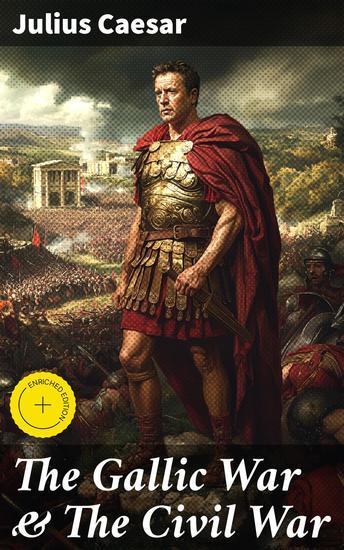
The Gallic War & The Civil War - Enriched edition Historical Account of Caesar's Military Campaign in Gaul & The Roman Civil War - cover
LER

The Gallic War & The Civil War - Enriched edition Historical Account of Caesar's Military Campaign in Gaul & The Roman Civil War

Julius Caesar

Tradutor W. A. McDevitte, W. S. Bohn

Editora: Good Press

  • 0
  • 0
  • 0

Sinopse

Julius Caesar's "The Gallic War & The Civil War" is a seminal work that intricately blends firsthand military narrative with astute political commentary. The text represents a remarkable example of historiography, where the author employs a clear and direct literary style, characterized by lucidity and precision. Caesar's detailed accounts of his campaigns against the Gallic tribes and the ensuing civil strife with Pompey showcase not only his strategic acumen but also the complexities of loyalty and ambition in the Roman political landscape. This work, situating itself within the broader context of Roman literature, offers invaluable insights into the turbulent era of the late Republic, weaving together themes of power, conflict, and governance. Caesar, a military general, statesman, and pivotal figure in Roman history, drew on his vast experiences leading legions and navigating the treacherous waters of Roman politics to craft this narrative. His dual perspective as both participant and chronicler enriches the text, providing readers with an intimate view of the motivations behind his decisions and the weight of his ambitions. His position at the helm of a tumultuous period undoubtedly informed his incisive and self-aware commentary. For scholars and casual readers alike, "The Gallic War & The Civil War" serves as a crucial primary source that illuminates the dynamics of leadership and conflict in ancient Rome. It is an essential read for anyone seeking to understand the foundational moments of Roman history, reflecting both the virtues and vices of a leader thrust into extraordinary circumstances.

In this enriched edition, we have carefully created added value for your reading experience:
- A comprehensive Introduction outlines these selected works' unifying features, themes, or stylistic evolutions.
- The Author Biography highlights personal milestones and literary influences that shape the entire body of writing.
- A Historical Context section situates the works in their broader era—social currents, cultural trends, and key events that underpin their creation.
- A concise Synopsis (Selection) offers an accessible overview of the included texts, helping readers navigate plotlines and main ideas without revealing critical twists.
- A unified Analysis examines recurring motifs and stylistic hallmarks across the collection, tying the stories together while spotlighting the different work's strengths.
- Reflection questions inspire deeper contemplation of the author's overarching message, inviting readers to draw connections among different texts and relate them to modern contexts.
- Lastly, our hand‐picked Memorable Quotes distill pivotal lines and turning points, serving as touchstones for the collection's central themes.
Disponível desde: 18/11/2023.
Comprimento de impressão: 295 páginas.

Outros livros que poderiam interessá-lo

  • Siddartha - cover

    Siddartha

    Herman Hesse

    • 0
    • 0
    • 0
    Siddhartha is a 1922 novel by Hermann Hesse that deals with the spiritual journey of self-discovery of a man named Siddhartha during the time of the Gautama Buddha. The book, Hesse's 9th novel, was written in German, in a simple, lyrical style. It was published in the U.S. in 1951 and became influential during the 1960s.    The story takes place in the ancient Nepalese kingdom of Kapilavastu. Siddhartha decides to leave his home in the hope of gaining spiritual illumination by becoming an ascetic wandering beggar of the Śamaṇa. Joined by his best friend Govinda, Siddhartha fasts, becomes homeless, renounces all personal possessions, and intensely meditates, eventually seeking and personally speaking with Gautama, the famous Buddha, or Enlightened One.
    Ver livro
  • Galactic Gnosticism - The Nag Hammadi Texts That Reveal Interstellar Overlords and Interdimensional Masters - cover

    Galactic Gnosticism - The Nag...

    Various Gnostic Writers, Tim...

    • 0
    • 0
    • 0
    What if an ancient emergency message is hiding in forgotten scrolls? 
    The immersive audio edition fuses emotive voice acting with atmospheric synth drones that evoke deep-space cathedrals.  
    Each scripture is prefaced by a 60-second explainer so you can absorb the drama without pausing to research. 
    •	Secret Book of John – Hear Sophia’s lament and the roaring birth of the Demiurge. 
    •	Hypostasis of the Archons – Pulse-pounding narration of the archons’ assault on Eden. 
    •	Allogenes & Zostrianos – Echo-laden readings guiding you through thirteen vertiginous heavens. 
    •	Trimorphic Protennoia – Triple-layered voice design representing Mind, Word, and Breath. 
    A closing round-table with scholars and futurists weighs ancient gnosis against contemporary UFO lore—perfect for binge-listening on night drives beneath unfamiliar constellations.
    Ver livro
  • We Cry Justice - Reading the Bible with the Poor People's Campaign - cover

    We Cry Justice - Reading the...

    William J Barber II

    • 0
    • 0
    • 0
    From Genesis to Revelation, the Bible proclaims justice and abundance for the poor. Yet these powerful passages about poverty are frequently overlooked and misinterpreted. Enter the Poor People's Campaign, a movement against racism, poverty, ecological devastation, militarism, and religious nationalism. In We Cry Justice, Liz Theoharis, cochair of the campaign, is joined by pastors, community organizers, scholars, low-wage workers, lay leaders, and people in poverty to interpret sacred stories about the poor seeking healing, equity, and freedom. In a world roiled by poverty and injustice, Scripture still speaks. 


    Organized into fifty-two chapters, each focusing on a key Scripture passage, We Cry Justice offers comfort and challenge from the many stories of the poor taking action together. Listen to the story of the exodus that frees people from debt and slavery, the prophets who denounce the rich and ruling classes, the stories of Jesus's healing and parables about fair wages, and the early church's sharing of goods. Reflection questions and a short prayer at the end of each chapter offer the opportunity to use the book devotionally through a year. 


    The Bible cries for justice, and we do too. It's time to act on God's persistent call to repair the breach and fight poverty, not the poor.
    Ver livro
  • Psychodynamic Therapy - Uncovering the Past to Heal the Present - cover

    Psychodynamic Therapy -...

    Vivian Westlake

    • 0
    • 0
    • 0
    Psychodynamic therapy is an approach to psychological treatment rooted in the ideas and concepts developed by Sigmund Freud and his followers. It emphasizes the importance of unconscious processes and early childhood experiences in shaping an individual's thoughts, emotions, and behaviors. This therapy aims to bring these unconscious factors into conscious awareness, helping individuals gain insight and resolve internal conflicts that may be contributing to current psychological difficulties. 
    The history of psychodynamic therapy traces back to the early 20th century when Freud, a neurologist, developed his theories of the unconscious mind, defense mechanisms, and the structure of the psyche. Freud’s ideas on human development, sexuality, and the role of unconscious drives sparked both widespread debate and fascination, establishing the foundation for psychodynamic therapy. Over time, various schools of thought and modifications emerged within psychodynamic theory, influenced by key figures such as Carl Jung, Melanie Klein, and Erik Erikson. Despite these developments, the core principles of psychodynamic therapy remain grounded in understanding how unconscious thoughts and past experiences shape present behavior. 
    Central to psychodynamic therapy is the belief that much of human behavior is influenced by internal, unconscious forces. These forces are often formed in early childhood and can result in unresolved conflicts, repressed memories, or unmet emotional needs. By exploring these unconscious factors, psychodynamic therapy seeks to uncover hidden patterns and help individuals develop a deeper understanding of themselves. The therapeutic relationship itself plays a vital role in this process, as the dynamics between the therapist and the client often mirror significant interpersonal relationships from the client’s past.
    Ver livro
  • Campus Free Speech - A Pocket Guide - cover

    Campus Free Speech - A Pocket Guide

    Cass R. Sunstein

    • 0
    • 0
    • 0
    Free speech is indispensable on college campuses: allowing varied views and frank exchanges of opinion is a core component of the educational enterprise. But free speech does not mean a free-for-all. The First Amendment prohibits "abridging the freedom of speech," yet laws against perjury or bribery, for example, are still constitutional. In the same way, valuing freedom of speech does not stop a university from regulating speech when doing so is necessary for its educational mission. So where is the dividing line? How can we distinguish reasonable restrictions from impermissible infringement? 


    In this pragmatic, no-nonsense explainer, Cass Sunstein takes us through a wide range of scenarios involving students, professors, and administrators. He discusses why it's consistent with the First Amendment to punish students who shout down a speaker, but not those who chant offensive slogans; why a professor cannot be fired for writing a politically charged op-ed, yet a university might legitimately consider an applicant's political views when deciding whether to hire her. He explains why private universities are not legally bound by the First Amendment yet should, in most cases, look to follow it. And he addresses the thorny question of whether a university should officially take sides on public issues or deliberately keep the institution outside the fray.
    Ver livro
  • Pearl and Bessie - A baby abandoned on a rubbish dump and the woman who saved her - cover

    Pearl and Bessie - A baby...

    Julia Bishop, Andy Bull

    • 0
    • 0
    • 0
    On the rubbish dump, a baby cried.  
    The cry was weak, and fading. The wild dogs had picked up the cries, and the scent, and were circling, closing in. 
    Bessie walked towards the sound and found a day-old baby girl. She had been abandoned because of her sex. It happened often here, in south west China. 
    If Bessie did nothing, the baby would be torn to pieces. So she picked her up, carried her to safety, and later adopted her. Yet, in saving her life, did Bessie condemn the baby she named Pearl to a life of fear and persecution? 
    This is Pearl’s story, and that of Bessie, plus Alf – Bessie’s then fiancé, later husband – and John, a second Han Chinese child the couple adopted. 
    Bessie and Alf were Methodists missionaries in Yunnan province, China, in the first half of the twentieth century. They lived through momentous times, including the Japanese occupation, the Second World War, the civil war, the Communist takeover and the Cultural Revolution. 
    This book follows their personal stories against the backdrop of a turbulent century.
    Ver livro