¡Acompáñanos a viajar por el mundo de los libros!
Añadir este libro a la estantería
Grey
Escribe un nuevo comentario Default profile 50px
Grey
Suscríbete para leer el libro completo o lee las primeras páginas gratis.
All characters reduced
The Gallic War - Including "The Civil War" - cover

The Gallic War - Including "The Civil War"

Julius Caesar

Traductor W. A. McDevitte, W. S. Bohn

Editorial: DigiCat

  • 0
  • 0
  • 0

Sinopsis

In "The Gallic War," Julius Caesar presents a detailed account of his military campaigns against the Gallic tribes from 58 to 50 BCE. Written in an incisive, direct style, the work is characterized by its clarity and vivid descriptions, effectively drawing the reader into the complexities of warfare. Employing the third person, Caesar not only documents his strategic decisions but also reflects on the sociopolitical landscape of Gaul, offering insights into the cultures of the tribes he encountered. This text serves as an early example of a political-military narrative, merging the genres of autobiography and historical documentation while articulating themes of power, conquest, and leadership amidst the backdrop of Roman expansionism. Julius Caesar, a prominent figure in Roman history, was not only a military general but also a skilled orator and statesman. His unique position allowed him to witness firsthand the events he chronicled. The personal nature of his narrative suggests an intent to bolster his political standing in Rome, countering rivals and humanizing the commander in the eyes of his contemporaries. His profound understanding of military strategy and governance contributes significantly to the work's authenticity and enduring relevance. I highly recommend "The Gallic War" to readers interested in military history, leadership, and classical literature. It invites us to explore the nuanced interplay between power and identity while providing a fascinating glimpse into the intricacies of ancient warfare. This seminal text not only enriches our understanding of Roman history but also serves as a timeless commentary on the nature of ambition and authority.
Disponible desde: 11/10/2022.
Longitud de impresión: 295 páginas.


Otros libros que te pueden interesar

  • The Death of Stalin - cover

    The Death of Stalin

    Sheila Fitzpatrick

    • 0
    • 0
    • 0
    When Joseph Stalin died in 1953, he had been the unchallenged leader of the Soviet Union for over twenty years, having presided over the ruthless modernisation of the early 1930s, the Great Purges later in the decade, the near-catastrophe and ultimate victory of World War II, and the country's postwar emergence as a superpower. He was surrounded by a cult that made him seem godlike; no successors were in sight. His death was bound to be a deeply unsettling event, both in the Soviet Union and elsewhere.In The Death of Stalin, Sheila Fitzpatrick draws on her unparalleled knowledge of Stalin's circle and Soviet society to tell a tale that blends black comedy with forensic analysis of the problems and opportunities – often missed – created by the death of the dictator. The final chapter deals with Stalin's eventful afterlife, including his recent resurrection in Putin's Russia. This is both a riveting read and a salutary one.---Great Events is a new series of short, scholarly and accessible books on major moments in modern history.
    Ver libro
  • The Road to Serfdom - cover

    The Road to Serfdom

    Friedrich Hayek

    • 0
    • 0
    • 0
    A classic work in political philosophy, intellectual history and economics, The Road to Serfdom has inspired and infuriated politicians and scholars for half a century. Originally published in 1944, it was seen as heretical for its passionate warning against the dangers of state control over the means of production. For Hayek, the collectivist idea of empowering government with increasing economic control would lead not to a utopia but to the horrors of Nazi Germany and Fascist Italy.
    Ver libro
  • Summary: The Seven Principles for Making Marriage Work - A Practical Guide from the Country’s Foremost Relationship Expert By John M Gottman PhD and Nan Silver: Key Takeaways Summary & Analysis - cover

    Summary: The Seven Principles...

    Brooks Bryant

    • 0
    • 0
    • 0
    DISCLAIMER: THIS IS NOT THE OFFICIAL BOOK. 
    This is a summary, & it does not accompany the official 
    'The Seven Principles for Making Marriage Work' by Dr. John M. Gottman and Nan Silver is a comprehensive guide based on extensive, groundbreaking research into the habits of married couples. Dr. Gottman, a psychology professor and director of the Seattle Marital and Family Institute, has spent years analyzing the components of healthy, successful marriages. This book encapsulates his life's work and presents seven key principles that are critical for the longevity and harmony of a marital relationship. These principles, practical yet powerful, offer innovative strategies to help couples enhance their connection. The book emphasizes the importance of everyday interactions and thoughtfulness, providing a robust foundation for managing conflicts effectively and navigating unresolved issues. It is an essential resource for those seeking to elevate their relationship to its utmost potential.
    Ver libro
  • Healthy Living - Balancing Mind Body and Soul in Everyday life (2 Titles) - cover

    Healthy Living - Balancing Mind...

    Anna Bridges

    • 0
    • 0
    • 0
    This title contains these books: 
    Mind-Body Connection: The mind-body connection is a profound and dynamic relationship that has captured the attention of scientists, healthcare professionals, and individuals seeking a deeper understanding of their health. This connection underscores how our thoughts, emotions, and mental states influence our physical well-being. From the nervous energy before an important event to the physical toll of chronic stress, it is clear that the mind and body communicate in ways that shape our overall health. This book aims to explore that intricate connection, shedding light on the role emotions play in shaping not just our mental state but also our physical health. 
    Self-Care for Well-Being: In today's fast-paced world, it’s easy to become overwhelmed by the demands of daily life. The constant pressures of work, family, relationships, and personal expectations can quickly take a toll on our well-being. In the midst of this, self-care often falls to the bottom of our priority lists, overshadowed by the urgent needs of others or the never-ending tasks on our to-do lists. Yet, self-care is not a luxury; it is a necessity for maintaining physical, emotional, and spiritual health. Self-care is the conscious practice of taking care of oneself—physically, mentally, and emotionally—by engaging in activities that promote well-being. It is about recognizing the need for balance and nurturing our whole self. When we engage in self-care, we are actively choosing to invest in our health and happiness, which in turn enhances our ability to care for others and handle life’s challenges. It’s a practice that requires time, effort, and commitment, but its benefits are immeasurable.
    Ver libro
  • How to Overcome Depression Fear Anxiety and Worry with CBT DBT & ACT - CBT Workbook Dialectical Behavior Therapy Acceptance and Commitmet Therapy - cover

    How to Overcome Depression Fear...

    Sarah Z. Murphy

    • 0
    • 0
    • 0
    Discover proven strategies to conquer depression, fear, anxiety, and worry with this powerful guide to CBT (Cognitive Behavioral Therapy), DBT (Dialectical Behavior Therapy), and ACT (Acceptance and Commitment Therapy). This comprehensive audiobook offers practical tools and techniques rooted in the latest psychological research to help you break free from the cycle of negative emotions and thought patterns. 
    Inside, you’ll learn:How CBT helps you challenge and reframe unhelpful thoughts, reducing the impact of anxiety and depression.The core principles of DBT, including emotional regulation and mindfulness, to manage overwhelming feelings and improve relationships.How ACT encourages acceptance of difficult emotions while committing to actions that align with your values, fostering a more meaningful life.Effective strategies for managing fear, anxiety, and worry with a focus on practical application and real-life scenarios. 
    Whether you’re dealing with everyday stress or more intense mental health challenges, this audiobook offers a clear roadmap to healing and personal growth. Empower yourself with the tools to transform your mindset and live a life free from the grip of anxiety and depression. Start your journey toward emotional well-being today!
    Ver libro
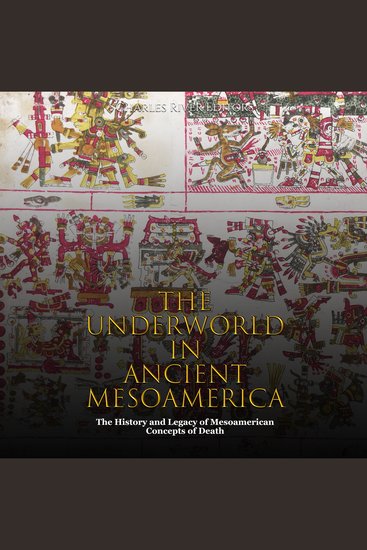
  • Underworld in Ancient Mesoamerica The: The History and Legacy of Mesoamerican Concepts of Death - cover

    Underworld in Ancient...

    Editors Charles River

    • 0
    • 0
    • 0
    The concept of death can be viewed from different perspectives. In general terms, it can be defined as the end of life, but a more spiritual interpretation would describe it as the separation of the soul from the body. Regardless of the definition, death implies change and transformation, even if only on a physical level. The idea of transcendence has served as a source of comfort for humanity that is usually represented in the belief of an afterlife which takes place in another realm. 
    	Since the beginning of history, understanding and explaining it has been a large concern for people all over the world. Death is both a daily occurrence and an irreversible condition, and countless efforts have been made to avoid or postpone it. The constant struggle to transcend its permanence has led cultures to create the idea of an afterlife; of a place or world where life carries on after its end on earth. In ancient Mesoamerica, this concept of an afterlife greatly permeated the worldview of the many pre-Hispanic cultures that developed all throughout the region. 
    	Among Mesoamericans, life and death were closely related and often deeply integrated, and the two conditions were perceived to exist in an opposition that was at once dynamic and complementary. Described later by the Aztecs as the state of nepantla, life and death were viewed by the indigenous people of Mesoamerica as yet another example of the “back and forth” fluctuations common to human life. 
    Ver libro