¡Acompáñanos a viajar por el mundo de los libros!
Añadir este libro a la estantería
Grey
Escribe un nuevo comentario Default profile 50px
Grey
Suscríbete para leer el libro completo o lee las primeras páginas gratis.
All characters reduced
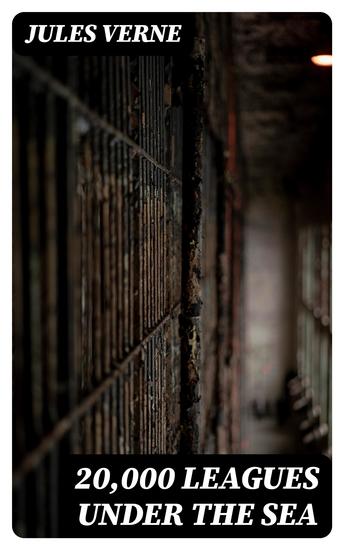
20000 Leagues Under the Sea - Illustrated Edition - cover

20000 Leagues Under the Sea - Illustrated Edition

Jules Verne

Editorial: DigiCat

  • 0
  • 0
  • 0

Sinopsis

In "20,000 Leagues Under the Sea," Jules Verne masterfully combines adventure with scientific inquiry, crafting a narrative that explores the depths of the ocean through the enigmatic figure of Captain Nemo aboard the Nautilus. Written during the Victorian era, a time when scientific exploration was burgeoning, Verne uses meticulous attention to detail and vivid descriptions to immerse readers in an underwater odyssey filled with wonder and peril. The novel's pioneering blend of science fiction and maritime adventure not only captivates the imagination but also challenges contemporary understandings of technology and humanity's relationship with nature. Jules Verne, often hailed as the father of science fiction, was deeply influenced by the rapid advancements in science and technology during the 19th century. His background in engineering and his fascination with exploration shaped his writing, infusing it with both realism and a visionary quality. The ideologies of the time, especially regarding human ingenuity and the mysteries of the natural world, resonate throughout this seminal work, reflecting Verne's desire to push the boundaries of knowledge. "20,000 Leagues Under the Sea" is a timeless exploration of human curiosity, adventure, and the ethical implications of scientific exploration. I highly recommend this classic to readers who seek not only an exhilarating adventure but also profound reflections on the human condition and our place in the universe.
Disponible desde: 25/05/2022.
Longitud de impresión: 468 páginas.

Otros libros que te pueden interesar

  • Begging-letter Writer The (Unabridged) - cover

    Begging-letter Writer The...

    Charles Dickens

    • 0
    • 0
    • 0
    A begging letter is a letter to a rich person or organisation, usually written by a poor person, or a person claiming to be poor, begging for money or help. Examples of begging letters include where a letter is sent to a wealthy individual asking for financial assistance for orphaned children, emergency surgery, etc. The May 1850 edition of Household Words contained an article entitled The Begging-Letter Writer written by the novelist Charles Dickens. In the article Dickens describes examples of the many begging letters he had received over the years, and the ruses employed by their writers to gain funds from the recipients. Charles John Huffam Dickens (7 February 1812 - 9 June 1870) was an English writer and social critic.
    Ver libro
  • Soul of a Bishop The (Unabridged) - cover

    Soul of a Bishop The (Unabridged)

    H. G. Wells

    • 0
    • 0
    • 0
    He is known, along with Jules Verne, as one of the 19th-century fathers of logical, rational science fiction, but in this 1917 novel, H. G. Wells weaves a more intuitive tale, about a bishop haunted by strange dreams and visions that challenge his faith. Lyrical, poetic, and verging on stream-of-consciousness in places, this little-read work of one of the most enduringly popular writers of modern literature is like found treasure, offering a captivating and unexpected insight into Wells' psyche.
    Ver libro
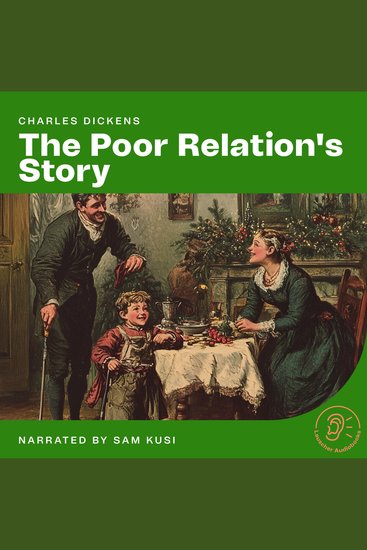
  • The Poor Relation's Story - cover

    The Poor Relation's Story

    Charles Dickens

    • 0
    • 0
    • 0
    Charles John Huffam Dickens (7 February 1812 – 9 June 1870) was an English writer and social critic. He created some of the world's best-known fictional characters and is regarded as the greatest novelist of the Victorian era. His works enjoyed unprecedented popularity during his lifetime, and by the twentieth century critics and scholars had recognised him as a literary genius. His novels and short stories enjoy lasting popularity.
    The Poor Relation's Story: He was very reluctant to take precedence of so many respected members of the family, by beginning the round of stories they were to relate as they sat in a goodly circle by the Christmas fire; and he modestly suggested that it would be more correct if "John our esteemed host" (whose health he begged to drink) would have the kindness to begin. For as to himself, he said, he was so little used to lead the way that really--But as they all cried out here, that he must begin, and agreed with one voice that he might, could, would, and should begin, he left off rubbing his hands, and took his legs out from under his armchair, and did begin.
    Ver libro
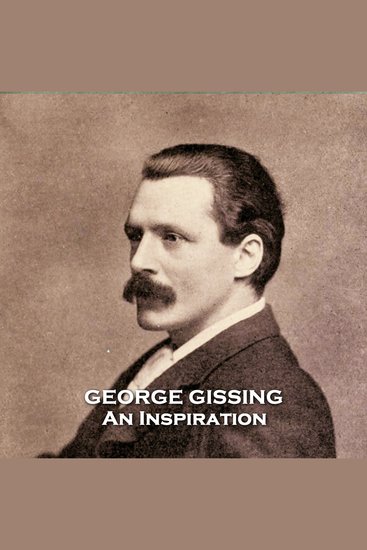
  • Inspiration An - From their pens to your ears genius in every story - cover

    Inspiration An - From their pens...

    George Gissing

    • 0
    • 0
    • 0
    George Robert Gissing was born on November 22nd, 1857 in Wakefield, Yorkshire.  
    He was educated at Back Lane School in Wakefield. Gissing loved school. He was enthusiastic with a thirst for learning and always diligent.  By the age of ten he was reading Dickens, a lifelong hero. 
    In 1872 Gissing won a scholarship to Owens College. Whilst there Gissing worked hard but remained solitary. Unfortunately, he had run short of funds and stole from his fellow students. He was arrested, prosecuted, found guilty, expelled and sentenced to a month's hard labour in 1876. 
    On release he decided to start over.  In September 1876 he travelled to the United States. Here he wrote short stories for the Chicago Tribune and other newspapers. On his return home he was ready for novels. 
    Gissing self-published his first novel but it failed to sell.  His second was acquired but never published. His writing career was static.  Something had to change.  And it did. 
    By 1884 The Unclassed was published.  Now everything he wrote was published. Both Isabel Claren-don and Demos appeared in 1886. He mined the lives of the working class as diligently as any capitalist. 
    In 1889 Gissing used the proceeds from the sale of The Nether World to go to Italy. This trip formed the basis for his 1890 work The Emancipated. 
    Gissing's works began to command higher payments. New Grub Street (1891) brought a fee of £250.  
    Short stories followed and in 1895, three novellas were published; Eve's Ransom, The Paying Guest and Sleeping Fires. Gissing was careful to keep up with the changing attitudes of his audience.  
    Unfortunately, he was also diagnosed as suffering from emphysema. The last years of his life were spent as a semi-invalid in France but he continued to write. 1899; The Crown of Life. Our Friend the Charlatan appeared in 1901, followed two years later by The Private Papers of Henry Ryecroft. 
    George Robert Gissing died aged 46 on December 28th, 1903 after catching a chill on a winter walk.
    Ver libro
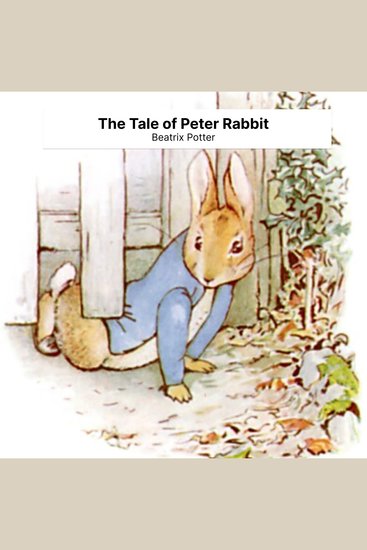
  • The Tale of Peter Rabbit - cover

    The Tale of Peter Rabbit

    Beatrix Potter

    • 0
    • 0
    • 0
    The children's story The Tale of Peter Rabbit is written by Beatrix Potter. 
    The naughty bunny Peter goes into the garden of Mr. McGregor even though his mother told him not to. He gets lost and he almost gets caught by Mr. McGregor! 
    A short, funny story for young kids. Great story to listen to before going to bed.
    Ver libro
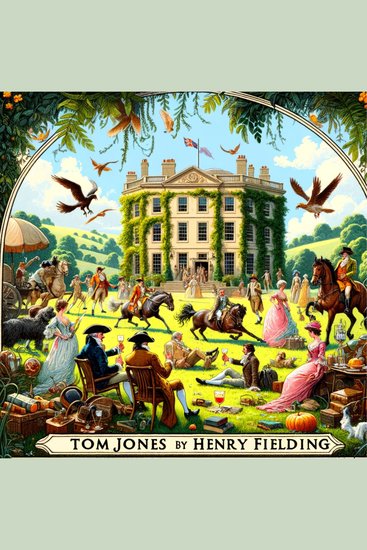
  • Tom Jones - cover

    Tom Jones

    Henry Fielding

    • 0
    • 0
    • 0
    "Tom Jones" is a classic novel by Henry Fielding, published in 1749. Officially titled "The History of Tom Jones, a Foundling," it is a comic novel that follows the life and adventures of the title character, Tom Jones, from his birth to his eventual marriage. The story unfolds in the context of Fielding's satire of 18th-century British society, manners, and morality. It is known for its vibrant characters, intricate plot, and the author's direct engagement with the reader, which was innovative for its time.
    Ver libro