Junte-se a nós em uma viagem ao mundo dos livros!
Adicionar este livro à prateleira
Grey
Deixe um novo comentário Default profile 50px
Grey
Assine para ler o livro completo ou leia as primeiras páginas de graça!
All characters reduced
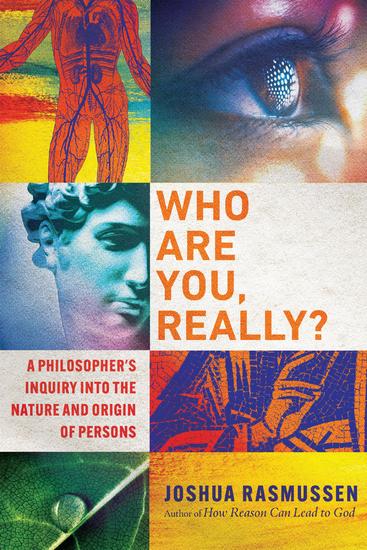
Who Are You Really? - A Philosopher's Inquiry into the Nature and Origin of Persons - cover
LER

Who Are You Really? - A Philosopher's Inquiry into the Nature and Origin of Persons

Joshua Rasmussen

Editora: IVP Academic

  • 0
  • 0
  • 0

Sinopse

What does it mean to be human? What is a person? Where did we come from?
Many answers have been offered throughout history in response to these perennial questions, including those from biological, anthropological, sociological, political, and theological approaches. And yet the questions remain.
Philosopher Joshua Rasmussen offers his own step-by-step examination into the fundamental nature and ultimate origin of persons. Using accessible language and clear logic, he argues that the answer to the question of what it means to be a person sheds light not only on our own nature but also on the existence of the one who gave us life.
Disponível desde: 21/03/2023.
Comprimento de impressão: 304 páginas.

Outros livros que poderiam interessá-lo

  • The Power of Days - A Story of Resilience Dignity and the Fight for Women's Equity - cover

    The Power of Days - A Story of...

    Celeste Mergens

    • 0
    • 0
    • 0
    In 2008, Celeste Mergens was working with an overcrowded orphanage on the outskirts of Nairobi, Kenya, when she learned that menstruating girls sat on cardboard in their rooms for several days each month. 


    This set into motion a simple idea—combining a washable, long-lasting pad with taboo-breaking education—that became a catalyst for an unlikely global movement for equity. 


    Written in short, evocative chapters, The Power of Days tells the story of Mergens's quest to rally a global response to elevate menstrual health, increase universal access to menstrual supplies, shatter stigma through education, and advocate for global policy change. Raised in poverty by a mentally ill parent, Mergens learned early on that building the life she wanted would take equal parts determination and humility, traits that led her to create the kinds of inclusive conversations and solutions she is known for around the globe. 


    The challenges Mergens faced and the lessons she learned, personally and professionally, and the triumphs and resourcefulness of leaders all over the globe are illuminating to all who wish to make a difference and create a more equitable world. 


    This enhanced audio recording features an audio-exclusive Q&A between Days for Girls cofounders Celeste and Don Mergens.
    Ver livro
  • Fascinating Facts About Money - You'll Love To Share - cover

    Fascinating Facts About Money -...

    SYED BOKHARI

    • 0
    • 0
    • 0
    If you're seeking amazing and fascinating facts to learn and share, look no further., you came to the right place! 
    THIS BOOK HAS SOME AMAZING FACTS, AND I AM CONFIDENT THAT YOU WILL ENJOY SHARING THEM! 
    This is a short read from the BOOK: FASCINATING FACTS YOU'LL LOVE TO SHARE 
    Focusing JUST ON : MONEY Facts 
    Did you know?Germans once used their money as wallpapers and playthings.In any given year, it turns out that more monopoly money is produced rather than the entire world’s hard-cash money.To avoid having pests and bugs in your garden, bury some pennies in there. Those are known to repel such things.Making some pennies today will cost you more than the penny itself.Money isn’t paper. Even though it is called paper money, it actually isn’t. That thing is cotton and linen. 
    Scroll up, Click on “Buy Now with 1-Click”, and Grab a Copy of “Fascinating Facts You'll Love to Share” Today!
    Ver livro
  • Powerful Questioning - Strategies for improving learning and retention in the classroom - cover

    Powerful Questioning -...

    Michael Chiles

    • 0
    • 0
    • 0
    Foreword by John Hattie.
    Questioning is a staple feature of a teacher's toolkit across all phases of education. Classrooms are awash with explanation, modelling and feedback, but of all the pedagogical strategies at a teacher's disposal, questioning is one of the most important. It is the heartbeat of a classroom. While the art of asking a question seems relatively straightforward, to what extent do teachers consider the types of questions they're using? Are the questions they ask students actually helping to support learning? InPowerful Questioning,Michael Chiles delves into the complexity of asking questions and how best to use this pedagogical tool as a powerful springboard to support learning in the classroom.
    Teachers are described by many as 'professional question-askers' and the use of questioning in the teaching and learning process dates back to one of the most influential users and developers of questions, the Greek philosopher Socrates. Socrates believed that by asking questions we encourage reflection, and that their use is most effective when we create a continual loop of dialogue between the asker and the receiver, to allow movement from surface to deeper level thinking.Powerful Questioningtakes inspiration from this, providing original theory that relates back to the historical use of questioning in the classroom throughout.
    Offering a fresh perspective on how questioning can be engineered to support effective learning,Powerful Questioningexamines the reasons behind the questions we ask and reveals the power of asking the right questions, in the right way, at the right time. It details a set of core principles, recommendations and classroom-based practical examples that can be used to implement powerful questioning both in the classroom and wider school.
    Michael's aim is to help teachers become research-informed on the theories around the use of questioning in the classroom, whilst also providing a wide range of practical classroom-based strategies. Readers will take away specific examples from a broad range of case studies in which teachers at different phases of education (from Key Stages one to five) share how they use questioning to improve learning and retention.
    Essential reading for all teachers and school leaders.
    Ver livro
  • Quit the Alcohol Trap - "Transform your life! Unlock compelling audio lessons to help you escape the alcohol trap today!" - cover

    Quit the Alcohol Trap -...

    Remington Marwood

    • 0
    • 0
    • 0
    Quit the Alcohol Trap 
    ⭐⭐ A Simplified Guide & Essential Explanations ⭐⭐ 
    Are you ready to transform your life and reshape your relationship with alcohol? Looking for a straightforward resource that equips you with everything needed to empower yourself and make lasting changes? 
    Your search ends here! 
    This guide acts as your essential companion for gaining insight, applying practical strategies, and participating in interactive exercises. With this, you’ll be on the path to positive transformation. 
    Updated to reflect current insights and approaches. 
    Key Features of This Comprehensive Guide: 
    - In-depth understanding of alcohol-related challenges 
    - Clear explanations of strategies for redefining your relationship with alcohol 
    - Effective techniques for personal empowerment and overcoming obstacles 
    Our guide stands out with its thorough content, which is crucial for your personal journey. We dive deeply into concepts rather than just scratching the surface. 
    Please note that this guide is an independent resource and is not affiliated with any official entity regarding alcohol-related matters. 
    Crafted with a logical structure and straightforward language, our guide ensures seamless transitions between topics. Say goodbye to complicated jargon and welcome clear, concise, and accurate content. 
    So, why wait? Click the BUY NOW button, secure your guide, and start your journey towards redefining your relationship with alcohol!
    Ver livro
  • On Gaslighting - cover

    On Gaslighting

    Kate Abramson

    • 0
    • 0
    • 0
    "Gaslighting" is suddenly in everyone's vocabulary. It's written about, talked about, tweeted about, even sung about. It's become shorthand for being manipulated by someone who insists that up is down, hot is cold, dark is light—someone who isn't just lying about such things, but trying to drive you crazy. The term has its origins in a 1944 film in which a husband does exactly that to his wife, his crazy-making efforts symbolized by the rise and fall of the gaslights in their home. In this timely and provocative book, Kate Abramson examines gaslighting from a philosophical perspective, investigating it as a distinctive moral phenomenon. 


    Gaslighting, Abramson writes, is best understood as a form of interpersonal interaction, a particular way of fundamentally undermining someone. The gaslighter, Abramson argues, aims to make his target experience herself as incapable of reasoning, perceiving, or reacting in ways that would allow her to form appropriate beliefs, perceptions, or emotions in the first place. He seeks not only to induce in her this unmoored sense of herself but also to make it a reality. Using examples and analysis, Abramson gives an account of gaslighting and its immorality, and argues that such a discussion can help us understand other aspects of social life—from racism and sexism to the structure of interpersonal trust.
    Ver livro
  • The Rise and Fall of Brazil's Economic Giants - cover

    The Rise and Fall of Brazil's...

    Anya Solace

    • 0
    • 0
    • 0
    Brazil’s industrial foundations were shaped by its colonial past, rich natural resources, and evolving economic policies. The country’s transition from an agrarian economy to an industrial powerhouse was a long and complex process influenced by global trade dynamics, government intervention, and social changes. Understanding these foundations provides insight into the rise and fall of Brazil’s economic giants. 
    The origins of Brazil’s economy date back to the colonial period under Portuguese rule. Initially, the country’s economic activities were centered around agriculture, particularly the production of sugarcane, which became the backbone of Brazil’s early commerce. The Portuguese established large sugar plantations, or engenhos, along the northeastern coast, relying heavily on enslaved labor from Africa. This agricultural-based economy set the stage for Brazil’s role as a key exporter of raw materials, a trend that would persist for centuries. As global demand for sugar declined in the 17th and 18th centuries, Brazil’s economy diversified into gold mining, particularly in the state of Minas Gerais. The discovery of gold and diamonds attracted European settlers and boosted trade, but much of the wealth was extracted by the Portuguese crown, limiting local reinvestment. The reliance on commodity exports, without substantial industrial development, created a pattern that continued into modern times. 
    Brazil’s shift toward industrialization began in the late 19th and early 20th centuries, spurred by the decline of slavery, urbanization, and increasing foreign investment. The abolition of slavery in 1888 led to significant demographic changes, with many freed individuals moving to urban centers in search of work. Around the same time, European immigrants arrived in large numbers, bringing skills that contributed to Brazil’s growing workforce. The coffee boom of the late 19th century played a crucial role in financing Brazil’s early industries.
    Ver livro