¡Acompáñanos a viajar por el mundo de los libros!
Añadir este libro a la estantería
Grey
Escribe un nuevo comentario Default profile 50px
Grey
Suscríbete para leer el libro completo o lee las primeras páginas gratis.
All characters reduced
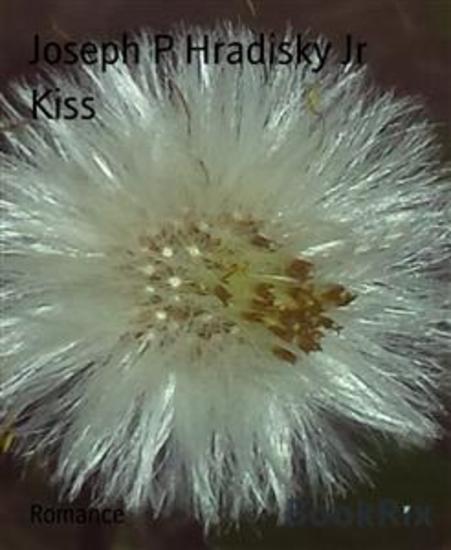
Kiss - cover

Kiss

JOSEPH P HRADISKY JR

Editorial: BookRix

  • 0
  • 0
  • 0

Sinopsis

The Kiss 
  
The touching of two lips, between two people, can tell each all they will ever need to know about each one – herein lies the truth for which neither can deny – it is either right or it is not – no grey area of confusion – life may contain so much to keep each one apart but when the first kiss occurs then there is nothing which can – not even time - keep them apart
Disponible desde: 21/12/2023.
Longitud de impresión: 27 páginas.

Otros libros que te pueden interesar

  • Short Stories Set on Holiday - A mix of happy sad and downright terrifying short stories set on vacation - cover

    Short Stories Set on Holiday - A...

    John Buchan

    • 0
    • 0
    • 0
    The expected joy that a few days in a different setting can, and most probably will, make is one of life’s most pleasant pleasures.  Usually.  But in this volume our classic authors including John Buchan, Edith Wharton, E M Delafield, M R James and a host of others really do seem to want to make some of those few days of indolent pleasure into something rather unpleasant. 
     
    1 - Short Stories Set on Holiday  - An Introduction 
    2 - Roman Fever by Edith Wharton 
    3 - The Golden Honeymoon by Ring Lardner 
    4 - An Alpine Divorce by Robert Barr 
    5 - No Man's Land by John Buchan 
    6 - Oh Whistle and I'll Come to You My Lad by M R James 
    7 - The Blank Cheque by Lewis Carroll 
    8 - A Little Holiday by Oswald Sickert 
    9 - Strychnine for Village Dogs by Arthur Gask 
    10 - The Green Bowl by Sarah Orne Jewett 
    11 - The Vampire by Jan Neruda 
    12 - Holiday Group by E M Delafield 
    13 - Christmas Eve at a Cornish Manor House by Clara Venn 
    14 - The Vampire Maid by Hume Nisbet
    Ver libro
  • The Wendigo - cover

    The Wendigo

    Algernon Blackwood

    • 0
    • 0
    • 0
    Step into the heart of the Canadian wilderness, where isolation and ancient folklore blur the line between sanity and terror. The Wendigo by Algernon Blackwood is a chilling early 20th-century supernatural tale that explores mankind’s most primal fears. When a hunting expedition veers into the unknown, whispers of an ancient spirit turn into a terrifying reality. Atmospheric and psychologically intense, this novella is a masterclass in slow-building horror that lingers long after the final page.
    Ver libro
  • Chelkash by Maxim Gorky - A small time thief is caught up in a larger scheme testing his willpower and showing the dangers of greed - cover

    Chelkash by Maxim Gorky - A...

    Maxim Gorky

    • 0
    • 0
    • 0
    Alexei Maximovich Peshkov was born on 28th March 1868, in Nizhny Novgorod, Russia. 
     
    Better known as Maxim Gorky he was orphaned at 11 and ran away from home at 12.  At 19 he had already attempted suicide and thereafter travelled, by foot, across the Russian Empire for 5 years. 
     
    His first book ‘Essays & Stories’ in 1898 was a sensation and so began a long career as an author of short stories, novels and plays.  Gorky saw writing as a moral and political act that would help to change the unjust world around him.  He was an ardent early advocate of the emerging Marxist movement and publicly opposed the Tsarist regime leading several times to his arrest.  
     
    In 1904 he began his own theatre but the censor banned every play and Gorky was forced to abandon the project. 
     
    But Gorky was a financially successful author, editor, and playwright and gave monies to political parties as well as for civil rights and social reform.  The brutal shooting of workers, which set in motion the Revolution of 1905, pushed Gorky more decisively toward radical solutions.  
     
    In 1906 he went to the United States to raise funds for the Bolsheviks. Those experiences including a scandal over travelling with his lover and not his wife deepened his contempt for the ‘bourgeois soul.’ 
     
    Gorky now moved to Capri in Italy, both for health reasons and to escape the increasingly repressive times in Russia.  
     
    An amnesty for the 300th anniversary of the Romanov dynasty saw him return to Russia in 1914. His politics remained close to the Bolshevik cause.  But soon, after the 1918 revolution, his essays referred to Lenin as a tyrant for his senseless arrests and repression.  He was soon appealing to the outside world for food aid after the catastrophic crop failure. 
     
    In October 1921 Gorky returned to Italy, now in Fascist hands, and settled in Sorrento until 1932.  His health worsened with the onset of tuberculosis. 
     
    He wrote several successful books there but now decided to find an understanding with the communist regime. Stalin invited him home and his return was hailed as a major propaganda victory.  He was decorated with the Order of Lenin, and a province, a park, and various streets re-named in his honour. 
     
    But he had his faults too.  In 1933, Gorky co-edited a book on the White Sea-Baltic Canal and denied even a single prisoner died during its construction, but thousands had. As well, knowing that some Nazis were homosexual, a phrase was attributed to him that said ‘exterminate all homosexuals and fascism will vanish’.  Although he was himself was quoting another he was decidedly homophobic. 
     
    With the increase of Stalinist repression in 1935 Gorky was placed under unannounced house arrest. 
     
    Maxim Gorky died on the 18th June 1936 from pneumonia.  He was 68. 
     
    Stalin and Molotov were among those who carried Gorky's urn of ashes at his funeral.  
     
    In Gorky’s story, a thief, Chelkash, ensnares a young man into his scheme to steal silk from a ship.  When he then sells the stolen goods he is set upon by the young accomplice.  What happens then is as unexpected as it is remarkable.
    Ver libro
  • The Short Stories of Jack London - Turn of the century social activist and heralded American author - cover

    The Short Stories of Jack London...

    Jack London

    • 0
    • 0
    • 0
    John Griffith Chaney was born on January 12th, 1876 in San Francisco.   
     
    His father, William Chaney, was living with Flora Wellman when she became pregnant.  Chaney insisted she have an abortion.  Flora's response was to turn a gun on herself.  Although her wounds were not severe the trauma made her temporarily deranged. 
     
    In late 1876 his mother married John London and the young child was brought to live with them as they moved around the Bay area, eventually settling in Oakland where now, calling himself Jack, he completed grade school. 
     
    Jack worked hard at several jobs, sometimes 12-18 hours a day, but his dream was university.  He studied hard and borrowed the money to enrol in the summer of 1896 at the University of California in Berkeley. 
     
    In 1897, at 21, Jack searched out newspaper accounts of his mother's suicide attempt and for the name of his biological father. He wrote to Chaney, then living in Chicago, who claimed he could not be Jack’s father because he was impotent and casually asserted that London's mother had relations with other men.  Jack, devastated by the response, quit Berkeley and went to the Klondike. Other accounts suggest that his dire finances presented Jack with the excuse he needed to leave. 
     
    In the Klondike Jack began to gather material for his writing but also accumulated many health problems, including scurvy, which together with hip and leg problems he would carry for the rest of his life. 
     
    During the late 1890's Jack was regularly publishing short stories and by the turn of the century full blown novels. 
     
    By 1904 Jack had married, fathered two children and was now in the process of divorcing.  A stint as a reporter on the Russo-Japanese war of 1904 was equal amounts trouble and experience. But that experience was always put to good use in a continuing and remarkable output of work. 
     
    In 1905 he married Charmian Kittredge who at last was a soul and companion who brought him some semblance of peace despite his advancing alcoholism and his incurable wanderlust. 
     
    Twelve years later Jack had amassed both wealth and a literary reputation through such classics as ‘The Call of the Wild’, ‘White Fang’ and many others. He had a reputation as a social activist and was a tireless friend of the workers.   
     
    Jack London died suffering from dysentery, late-stage alcoholism and uremia, aged only 40, on November 22nd 1916 at his property in Glen Elen in California. 
    01 - Jack London - A Short Story Collection - An Introduction 
    02 - To Build a Fire by Jack London 
    03 - A Wicked Woman by Jack London 
    04 - The Unparallelled Invasion by Jack London 
    05 - A Thousand Deaths by Jack London
    Ver libro
  • The Heroic Slave - cover

    The Heroic Slave

    Frederick Douglass

    • 0
    • 0
    • 0
    In the hush between history and myth, some voices refuse to fade.
    One of them rises beneath the pines of Virginia—speaking not to a crowd, but to the wind. Shackled in body, unbroken in spirit. A man, not yet a symbol. A voice, not yet remembered. But already unforgettable.
    The Heroic Slave is Frederick Douglass at his most daring—blending fact and fiction into something fiercer than either. In Madison Washington, he shapes more than a character: he channels the rhythm of revolt, the breath of those who ran, and the silence of those who couldn't.
    This is not a tale polished for comfort. It is hunger and hope, iron and prayer. It moves in murmurs and outcries. It carries the weight of chains—and the sound of them breaking. What you hear may not be history as it was written. But it is history as it was felt.
    Listen closely.
    Some voices were never meant to go quiet.
    Ver libro
  • Ligeia; Morella; The Oval Portrait - cover

    Ligeia; Morella; The Oval Portrait

    Edgar Allan Poe

    • 0
    • 0
    • 0
    Ligeia; Morella; The Oval Portrait are a short stories in the Gothic horror genre by 19th-century American author and critic Edgar Allan Poe. Poe's short story 'Ligeia' offers the account of an opium-addled narrator who believes that he has seen the resurrection of his beloved first wife, Ligeia, after the death of his second wife, Rowena. "Morella" by Edgar Allan Poe is about a woman who seemingly dies and gives birth to a daughter who looks just like her. Her husband loves the daughter, but she dies when he names her the same as her mother, implying that mother and daughter were the same person. Edgar Allan Poe's Gothic horror story "The Oval Portrait" is among his shortest narratives. As it recounts the story of the death of a painter's young wife,"The Oval Portrait" is actually the 1845 revision of a longer story, "Life in Death," which Poe wrote in 1842, shortly after his beloved young wife, Virginia, first fell ill with the tuberculosis that would kill her five years later. Poe was terrified at the prospect of losing Virginia, and the death of beautiful young women was a frequent topic in his work at this time. In his 1846 essay "The Philosophy of Composition," he even called this the most poetic of all subjects.
    Ver libro