¡Acompáñanos a viajar por el mundo de los libros!
Añadir este libro a la estantería
Grey
Escribe un nuevo comentario Default profile 50px
Grey
Suscríbete para leer el libro completo o lee las primeras páginas gratis.
All characters reduced
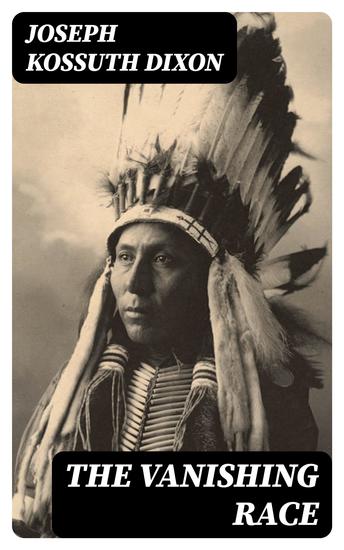
The Vanishing Race - cover

The Vanishing Race

Joseph Kossuth Dixon

Editorial: DigiCat

  • 0
  • 0
  • 0

Sinopsis

In "The Vanishing Race," Joseph Kossuth Dixon embarks on a poignant exploration of Native American cultures at the turn of the 20th century. The book intricately weaves together personal observations, historical accounts, and vivid descriptions of Indigenous life, highlighting the conflicts arising from colonial encroachment. Dixon's literary style is characterized by a blend of poetic prose and anthropological insight, inviting readers to contemplate the profound transformations faced by Native communities in a rapidly changing world. This work sits within the broader literary context of early American ethnography, where the romanticized notion of the 'vanishing Indian' serves both as a critique of American expansionism and a celebration of Native heritage. Dixon's background as a naturalist and his deep engagement with Indigenous peoples inform his narrative, allowing him to approach the subject with a blend of empathy and scholarly rigor. His firsthand experiences and conversations with Native tribes provide a unique vantage point, positioning him as a respectful observer of cultures often misrepresented in literature. His passion for understanding and preserving Indigenous stories echoes throughout the text. Readers seeking a deeper understanding of Indigenous life in America will find "The Vanishing Race" an essential addition to their collection. Dixon's work not only documents the struggles faced by Native Americans but also honors their resilience and cultural richness. This book is an urgent reminder of the importance of preserving Indigenous narratives in the face of historical erasure.
Disponible desde: 13/11/2022.
Longitud de impresión: 178 páginas.
Otros libros que te pueden interesar

  • Samurai! - cover

    Samurai!

    Saburo Sakai

    • 0
    • 0
    • 0
    Samurai! is the gripping autobiography of Saburō Sakai, one of Japan’s most renowned fighter pilots during World War II. Co-written with Fred Saito and Martin Caidin, the book chronicles Sakai’s rise from a poor rural upbringing to becoming an elite Zero pilot in the Imperial Japanese Navy. With vivid detail and unflinching honesty, he recounts harrowing dogfights, the horrors of war, and his legendary 1,000-mile flight back to base after being grievously wounded. More than just a war memoir, Samurai! offers rare insight into the mindset, discipline, and honor of a warrior shaped by both tradition and global conflict.
    Ver libro
  • Darko - cover

    Darko

    Kenny G Down

    • 0
    • 0
    • 0
    The girl’s birth was a gift from God……and her life might change the world.Will King Dylan be able to help her survive New Orleans? In a poor neighborhood rife with drugs, gangs, and crime, two children set out to make a difference. King loves the little girl from the moment he sees her. He knows she’s special and knows what he must do - become a father, brother, provider, protector, student, companion, and friend. As Johanee grows into a teenager and people are drawn to her. She starts the Sacred Heart movement. Not everyone wants change and they’re willing to do anything to stop her.Author Kenny G. Down, became a spiritual leader after fighting his own demons in recovery. His enlightened purpose – ‘to help us find solutions tothe problems in our lives through the application of spiritual principles and how these have practical application in today’s social justice movements.’This is the parable you need. You’ll love this New Thought Prophecy story, because if there ever was a time when our world needed healing, this is the moment.Get it now.
    Ver libro
  • Our Tortured Souls - The 29th Infantry Division in the Rhineland November–December 1944 - cover

    Our Tortured Souls - The 29th...

    Joseph Balkoski

    • 0
    • 0
    • 0
    The acclaimed WWII historian continues his in-depth chronicle of the 29th Infantry Division as it made its brutal push into Germany. By November of 1944, the U.S. 29th Infantry Division had stormed Omaha Beach on D-Day and embarked on an epic and arduous path toward Allied victory. In Our Tortured Souls, acclaimed military historian Joseph Balkoski picks up the story of the 29th on the eve of the all-out offensive intended to carry the Allies to the Rhine River by Christmas and end the war soon afterward.  The plan for the 29th seemed simple enough. As part of General William Simpson’s Ninth Army, the division was to drive ten miles eastward, breaking through several German strongpoints, crossing the Roer, and seizing Jülich, beyond which lay the Rhine and Germany’s heartland.   The offensive encountered problems from the very beginning, on November 16th, when it took days to crack the German’s first line of defense. By the time the offensive was halted on the banks of the Roer three weeks later, the 29th Infantry Division had suffered 2,600 casualties and fallen short of its objectives. Balkoski reconstructs this tragic chapter in the division’s history with his trademark combination of meticulous research and vivid st
    Ver libro
  • Human All Too Human - cover

    Human All Too Human

    Friedrich Nietzsche

    • 0
    • 0
    • 0
    Ranging from a few words to a few pages, the aphorisms in Human, All Too Human present Friedrich Nietzsche's thoughts on a variety of subjects, including the nature of reality (metaphysics); moral feelings, especially the concepts of good and evil; the argument that great art is the product of hard work as opposed to 'genius' and inspiration; free-thinking; the evolution of men, women and children; and the limitations that people put on their own thoughts and reasoning.
     
    The first of what became three volumes, Human, All Too Human not only represented a change in style for Nietzsche after the break-up of his friendship with the composer Richard Wagner and his rejection of Schopenhauer's influence, but also a move towards the views of the Enlightenment philosophers, particularly Voltaire and La Rochfoucauld. Human, All Too Human marks Nietzsche's decision to embrace new concepts and a fascinating turning point in the work of one of the 19th century's greatest philosophers.
    Ver libro
  • The Cultural Revolution - China's Radical Change - cover

    The Cultural Revolution -...

    Nova Ashford

    • 0
    • 0
    • 0
    The Cultural Revolution, which took place in China from 1966 to 1976, was one of the most tumultuous and transformative periods in the country’s history. Initiated by Mao Zedong, the founding father of the People’s Republic of China, the movement sought to preserve Chinese communism by removing capitalist, traditional, and cultural elements from Chinese society. At its core, the Cultural Revolution aimed to enforce Maoist ideology, reaffirm his leadership, and transform the cultural, social, and political fabric of China. It was a radical attempt to reshape Chinese society by addressing perceived corruption and ideological impurity within the Communist Party and broader society. 
    Mao’s motivations for launching the Cultural Revolution were multifaceted. After the failure of the Great Leap Forward (1958-1962), which had resulted in widespread famine and economic chaos, Mao’s position within the Communist Party had been weakened. The Cultural Revolution provided Mao with an opportunity to reassert his control over the party and eliminate rivals, many of whom were seen as too moderate or resistant to his vision of a truly communist society. It also reflected Mao’s concern that China was veering away from the revolutionary ideals that had initially driven the Communist Party. 
    The movement was largely propelled by the Red Guards, a youth-based movement that encouraged the younger generation to challenge authority and remove perceived counter-revolutionary influences. Under the banner of Maoism, the Red Guards sought to destroy the "Four Olds"—old customs, old culture, old habits, and old ideas. This led to widespread destruction of cultural heritage, including temples, books, and artworks. Intellectuals, teachers, and perceived enemies of the revolution were subjected to violent persecution, public humiliation, and forced labor, with many being sent to the countryside for "re-education."
    Ver libro
  • Lyrics & Lines by "Carolus" - cover

    Lyrics & Lines by "Carolus"

    J.P. Parkinson

    • 0
    • 0
    • 0
    Written under the pseudonym "Carolus", Lyrics & Lines is a book of poems written, probably circa 1890 - 1900, as a gift to one he had loved and lost. 
    Love, Humour, Moralisation and the Macabre all come together in a most readable and enjoyable manner.  
     Who he was, when and exactly where he lived and his age at the time he wrote this book are unknown. That he was a modest man can be gleaned from his description of himself as "..a poetaster".  
    Beautifully written; these poems should not only appeal to lovers of poetry but to those who would never normally consider reading verse.
    Ver libro