Junte-se a nós em uma viagem ao mundo dos livros!
Adicionar este livro à prateleira
Grey
Deixe um novo comentário Default profile 50px
Grey
Assine para ler o livro completo ou leia as primeiras páginas de graça!
All characters reduced
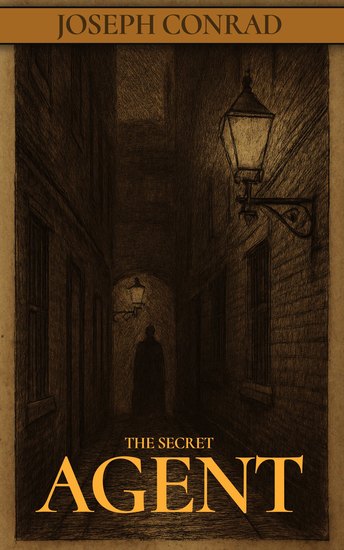
The Secret Agent - cover
LER

The Secret Agent

Joseph Conrad

Editora: CLXBX

  • 0
  • 0
  • 0

Sinopse

The Secret Agent is Joseph Conrad's darkly ironic and unsettling novel of espionage, terrorism, and political hypocrisy, set in the heart of late Victorian London. Blending psychological insight with grim satire, the novel exposes the emptiness of extremist ideologies and the devastating human cost of political manipulation.

The story centers on Adolf Verloc, a seemingly idle shopkeeper who secretly works as an informant and agent provocateur. Pressured by foreign officials to commit an act of political violence, Verloc becomes entangled in a plot that spirals beyond his control. At the center of the tragedy is his wife, Winnie Verloc, whose quiet endurance and unspoken strength mask a life shaped by sacrifice and moral compromise.

Told through a fragmented, non-linear narrative, Conrad reveals events from multiple perspectives, deepening the novel's atmosphere of inevitability and dread. London itself becomes a character—fog-bound, indifferent, and oppressive—mirroring the moral darkness of the plot unfolding within it.

Rather than glorifying revolution or espionage, The Secret Agent dismantles the romantic myths surrounding political violence. Conrad portrays anarchists, officials, and ordinary citizens alike as trapped in systems of fear, deception, and self-interest. The novel's chilling climax underscores the destructive consequences of apathy, fanaticism, and moral blindness.

Sharp, provocative, and disturbingly relevant, The Secret Agent stands as one of the earliest and most penetrating novels about modern terrorism. It is a masterwork of political fiction and psychological realism that continues to resonate in a world still shaped by ideological conflict and hidden power.
Disponível desde: 07/02/2026.
Comprimento de impressão: 323 páginas.


Outros livros que poderiam interessá-lo

  • King Solomon's Mines - cover

    King Solomon's Mines

    H. Rider Haggard

    • 0
    • 0
    • 0
    "King Solomon's Mines" is a classic adventure novel written by H. Rider Haggard. The story follows the journey of Allan Quatermain, a hunter and explorer, as he leads a small expedition into the uncharted interior of Africa in search of the legendary diamond mines of King Solomon. The novel was first published in 1885 and has since become one of the best-known adventure novels of the 19th century.
    Ver livro
  • Metropolis - A City Divided A Future Forged - cover

    Metropolis - A City Divided A...

    Thea von Harbou

    • 0
    • 0
    • 0
    "Metropolis," penned by Thea von Harbou in the late 1920s, is a gripping science fiction novel that transports readers to a dazzling yet dystopian urban expanse in the year 2026 A.D. Within this sprawling cityscape, themes of class struggle, the relentless march of technology, and humanity's intricate bond with machinery resonate profoundly.  
    The narrative centers on Freder, the young heir of a powerful industrial ruler, who finds himself ensnared in the throes of unrequited longing for a captivating woman who embodies the indomitable spirit of the downtrodden working class. From the very beginning, "Metropolis" plunges readers into a riotous tapestry of sights and sounds, opening with Freder playing an ornate grand organ that reverberates through the vast halls, echoing amidst the cosmic ballet of twinkling stars. He is enveloped in an overwhelming sense of yearning for an elusive figure whose presence haunts his dreams. 
    However, the veneer of his privileged existence is soon shattered by a harrowing vision of the laborers toiling in the depths of the city—a stark, bitter reminder of the human toll exacted by the glorified machine age. As Freder descends from his lofty perch in the opulent workshop, the harsh realities of his father's iron-fisted industrial regime come into sharp focus. Thrust into a tumultuous clash of ideals, he begins to question the very foundations of the oppressive systems that sustain the metropolis. 
    This intricate interplay between man, machine, and society unfurls with rich, evocative symbolism, prompting deep moral inquiries about the nature of progress and the heavy sacrifices it demands. Each scene pulsates with life, as the stark contrasts within the city illuminate the struggles rooted in its core, inviting readers to contemplate the cost of ambition in a rapidly mechanized world.
    Ver livro
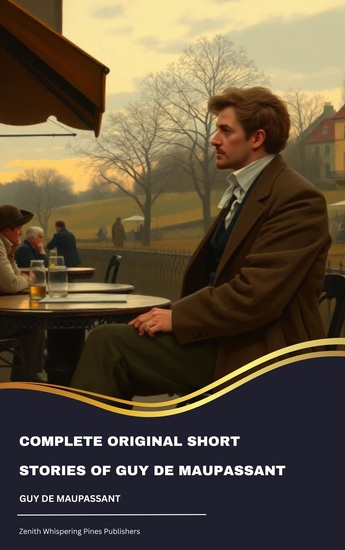
  • Complete Original Short Stories of Guy De Maupassant - cover

    Complete Original Short Stories...

    Guy de Maupassant

    • 0
    • 0
    • 0
    Experience the Unflinching Eye of a Literary Master.
    
    Guy de Maupassant was the protégé of Gustave Flaubert and a titan of French literature who perfected the art of the short story. Known for his economical style and startling "twist" endings, he captured the entirety of human experience—from the vanity of the Parisian elite to the brutal hardships of the Franco-Prussian War. This comprehensive collection brings together his complete output, showcasing the sharp irony and deep empathy that redefined modern fiction.
    
    Inside this monumental collection, you will discover:
    
    The Architect of the Modern Story: Witness the birth of the modern short story structure, characterized by its objective tone, psychological precision, and narrative efficiency.
    
    The Irony of Fate: Explore his signature themes of social hypocrisy and the cruel tricks of destiny, where a single moment of vanity or a chance encounter can alter a life forever.
    
    A Panorama of 19th-Century France: Journey from the fashionable boulevards of Paris to the rugged farms of Normandy, meeting a cast of characters that spans every social class.
    
    Tales of the Supernatural and the Mind: Delve into Maupassant's later, more haunting works that explore obsession, paranoia, and the thin line between reality and madness.
    
    Maupassant's influence on the world of literature is immeasurable, paving the way for writers like Somerset Maugham, O. Henry, and Chekhov. Whether you seek a biting satire of society or a chilling psychological study, this volume is an essential cornerstone for any library of world literature and classic fiction.
    
    Own the masterpiece of brevity and brilliance. Buy the "Complete Short Stories of Guy de Maupassant" today and see the world through a master's lens.
    Ver livro
  • Midsummer Night's Dream A - William Shakespeare - cover

    Midsummer Night's Dream A -...

    William Shakespeare

    • 0
    • 0
    • 0
    The play is set in Athens and consists of several subplots that revolve around the marriage of Theseus and Hippolyta. One subplot involves a conflict among four Athenian lovers. 
    Ver livro
  • A Dead Woman's Secret - From their pens to your ears genius in every story - cover

    A Dead Woman's Secret - From...

    Guy de Maupassant

    • 0
    • 0
    • 0
    Henri René Albert Guy de Maupassant was born on August 5th, 1850 near Dieppe in France.  
    Maupassant’s early life was badly torn when at age 11 (his younger brother Hervé was then five) his mother, Laure, a headstrong and independent-minded woman, risked social disgrace in order to obtain a legal separation from her husband. 
    After the separation, Laure kept custody of her two boys. With the father now forcibly absent, Laure became the most influential and important figure in the young boy's life.   
    Maupassant’s education was such that he rebelled against religion and other societal norms but a developing friendship with Gustave Flaubert began to turn his mind towards creativity and writing. 
    After graduation he volunteered for the Franco-Prussian war. With its end he moved to Paris to work as a clerk in the Navy Department.  Gustave Flaubert now took him under his wing.  Acting as a literary guardian to him, he guided the eager Maupassant to debuts in journalism and literature.  For Maupassant these were exciting times and the awakening of his creative talents and ambitions. 
    In 1880 he published what is considered his first great work, ‘Boule de Suif’, (translated as as ‘Dumpling’, ‘Butterball’, ‘Ball of Fat’, or ‘Ball of Lard’) which met with a success that was both instant and overwhelming.  Flaubert at once acknowledged that it was ‘a masterpiece that will endure.’ Maupassant had used his talents and experiences in the war to create something unique.  
    This decade from 1880 to 1891 was to be the most pivotal of his career.  With an audience now made available by the success of ‘Boule de Suif’ Maupassant organised himself to work methodically and relentlessly to produce between two and four volumes of work a year.  The melding of his talents and business sense and the continual hunger of sources for his works made him wealthy. 
    In his later years he developed a desire for solitude, an obsession for self-preservation, and a fear of death as well as a paranoia of persecution caused by the syphilis he had contracted in his youth.  
    On January 2nd, 1892, Maupassant tried to commit suicide by cutting his throat.  Unsuccessful he was committed to the private asylum of Esprit Blanche at Passy, in Paris.  It was here on July 6th, 1893 that Henri René Albert Guy de Maupassant died at the age of only 42.
    Ver livro
  • The Red Badge of Courage - cover

    The Red Badge of Courage

    Stephen Crane

    • 0
    • 0
    • 0
    Stephen Crane's "The Red Badge of Courage" is a powerful exploration of the psychological and emotional toll of war. Set against the backdrop of the American Civil War, the novel follows the journey of Henry Fleming, a young and inexperienced soldier eager to prove his courage on the battlefield. Faced with the harsh realities of war, Henry grapples with fear, doubt, and the complexities of heroism.
    As Henry confronts the chaos and brutality of battle, he undergoes a profound internal struggle, questioning his own motives and struggling to reconcile his romanticized notions of warfare with the harsh truths he encounters. The narrative skillfully delves into the intricacies of human nature and the transformative impact of war on an individual.
    Crane's vivid and evocative prose captures the raw intensity of combat, immersing readers in the gritty details of soldier life. "The Red Badge of Courage" is a timeless examination of the human condition, offering a poignant reflection on courage, identity, and the cost of glory. This classic work continues to resonate with readers, providing a poignant and thought-provoking exploration of the complexities of war and the indomitable spirit of the individual.
    Ver livro