Rejoignez-nous pour un voyage dans le monde des livres!
Ajouter ce livre à l'électronique
Grey
Ecrivez un nouveau commentaire Default profile 50px
Grey
Abonnez-vous pour lire le livre complet ou lisez les premières pages gratuitement!
All characters reduced
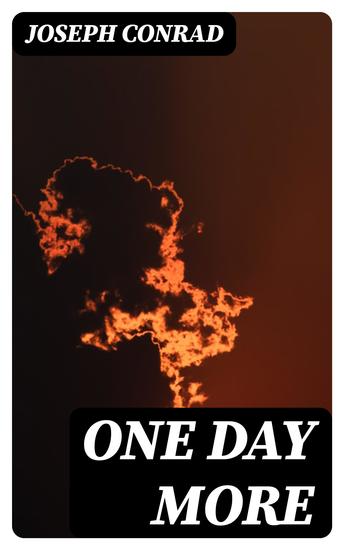
One Day More - A Play In One Act - cover

One Day More - A Play In One Act

Joseph Conrad

Maison d'édition: DigiCat

  • 0
  • 0
  • 0

Synopsis

In "One Day More," Joseph Conrad intricately weaves a narrative that explores the themes of existentialism, morality, and human resilience. With his characteristic stylistic precision, Conrad employs a rich, atmospheric prose that immerses readers in the psychological turmoil of his characters. Set against a backdrop where time is both a prison and a liberator, the novel compels readers to ponder the precarious balance between hope and despair, encapsulated in the poignant and often haunting experiences of its protagonists. The literary context of this work links it to the broader modernist movement, incorporating elements of introspection and fragmented time that reflect the complexities of the human condition in the early 20th century. Joseph Conrad, a Polish-born author who navigated the turbulent waters of the human experience both personally and professionally, brings a profound understanding to this text. His experiences at sea, coupled with his deeply ingrained philosophical inquiries, influence the moral quandaries faced by the characters in "One Day More." Conrad's unique lens, drawn from his diverse life experiences, informs the narrative's depth and the existential questions it raises. For readers seeking an exploration of the core human emotions and struggles against the inexorable passage of time, "One Day More" is a compelling choice. It invites readers to reflect on their own lives while navigating the beautifully crafted prose of one of literature's greatest minds.
Disponible depuis: 15/09/2022.
Longueur d'impression: 21 pages.

D'autres livres qui pourraient vous intéresser

  • The Man in the Iron Mask - cover

    The Man in the Iron Mask

    Alexandre Dumas

    • 0
    • 0
    • 0
    Athos, Porthos, Aramis, and D'Artagnan— the four musketeers— find themselves caught between conflicting loyalties. Deep inside the Bastille, a young prisoner called merely "Philippe" has languished for eight long years, completely unaware of his real name or the nature of his crime. But Aramis knows his secret— a secret so dangerous that it could change the face of the French monarchy and topple the King from his throne! Will Aramis' cause divide the once indivisible band of musketeers? A tale of mystery, adventure, and political intrigue, this conclusion to the musketeer saga is based on the true story of a masked prisoner who dwelled in the Bastille during Louis XIV' s reign.
    Voir livre
  • Viy - cover

    Viy

    Nikolai Gogol

    • 0
    • 0
    • 0
    "Viy" by Nikolai Gogol is a haunting tale that delves into the supernatural. The story follows Khoma, a skeptical seminary student, who is tasked with saying prayers over the deceased witch princess. As Khoma faces a nightmarish encounter with the reanimated corpse, the narrative unfolds into a chilling exploration of fear, folklore, and the clash between the mortal and supernatural realms. Gogol weaves a tale of horror and the macabre, leaving readers on the edge of their seats as the boundary between the living and the dead blurs in the mysterious night.
    Voir livre
  • A Slav Soul - From their pens to your ears genius in every story - cover

    A Slav Soul - From their pens to...

    Alexander Kuprin

    • 0
    • 0
    • 0
    Alexander Kuprin was born in Narovchat, Penza in Russia on 7th September 1870. 
    At 3 his Father died and he and mother moved to Moscow. By 10 he was enrolled at the Second Moscow Military High School and there his interest in literature began. The Alexander Military Academy followed and two years later he was a sub-lieutenant and posted to an Infantry Regiment for a further four years. 
    Despite his duties he was a now a keen writer and published his first short story at this time. His military duties also garnered him experiences for his breakthrough work ‘The Duel’.  Leaving the military he left for Kiev to work for local newspapers.  He continued to publish both stories and novels and by 1901 he was in St Petersburg becoming part of a group that included Chekhov, Ivan Bunin, Maxim Gorky and Leonid Andreyev.  
    In the years that followed further controversial works and acclaim followed.  His comments on the regime meant he was also put under secret police surveillance.   
    As World War I erupted, Kuprin opened a military hospital but was then given command of an infantry company in Finland. He was soon discharged on grounds of ill health.  
    The October Revolution saw him praise Lenin, but he warned that the Bolsheviks threatened Russian culture and might cause further widespread suffering to the peasants.  As Civil War raged he took his family to Helsinki and then on to Paris. 
    Exile saw his talents decline further and his succumbing to alcoholism. He became lonely and withdrawn. The family's poverty increased his malaise.   
    In May 1937, the Kuprin’s returned to Moscow.  He now saw his work published but wrote almost nothing new.  In 1938 his health rapidly deteriorated.  Already suffering from a kidney problems and sclerosis, he had now developed cancer of the oesophagus.  
    Alexander Kuprin died on 25th August 1938.
    Voir livre
  • The Poison Belt - cover

    The Poison Belt

    Arthur Conan Doyle

    • 0
    • 0
    • 0
    A follow up to Arthur Conan Doyles well known novel, The Lost World, the Poison Belt is a short story set over a single 24 hour span of time.On the Anniversary of their momentous trip to the Plateau, as depicted in The Lost World, the irascible Professor Challenger calls his companions to his home in Rochester with a curious directive: "Bring Oxygen". What can it mean? Does it have anything to do with his dire warnings printed in the Times that morning? Can it truly be, as he says... The End of the World?Written by Arthur Conan Doyle in 1913 and Narrated here by Michael Ward.
    Voir livre
  • From the Memoirs of Satan - From their pens to your ears genius in every story - cover

    From the Memoirs of Satan - From...

    William Hauff

    • 0
    • 0
    • 0
    The bookshelves of European literature are incredible collections that have gathered together centuries of very talented authors.  From this continent their fame spread and whilst among their number many are now forgotten or neglected their talents endure.  Among them is William Hauff.
    Voir livre
  • A Passion in the Desert - From their pens to your ears genius in every story - cover

    A Passion in the Desert - From...

    Honoré de Balzac

    • 0
    • 0
    • 0
    Honoré de Balzac was born on the 20th May, 1799 in the French city of Tours into an upper middle class family.  
    At birth Balzac was wet-nursed and often then schooled away from home by parents who seemed remote.  So difficult was life that at 15 he attempted suicide. The family’s intention was for him to have a career in law but Balzac preferred literature.  An avid reader, he began writing but his early attempts showed little promise.  
    He thereafter settled in Paris and began to publish anonymously across political, philosophical, and historical novels. 
    In 1825, Balzac purchased a printing house.  He was soon bankrupt and forced to return to writing in order to reduce his debts.  But his literary fortunes had changed, and his writing was now to achieve considerable success.  He was accepted among the city’s literary élites and its salons and would play an important role in establishing the copyright law in France.  
    Balzac often worked on more than one project at a time and in his magnus opus ‘The Human Comedy’ all types of texts were collected to offer a rare narrative of different classes and social stereotypes of society.  For many Balzac is considered the father of French realism, yet his works also cover philosophical and psychological questions.  His writing was a fundamental source of inspiration for many distinguished and later writers such as Flaubert, Zola and Proust.  
    Balzac also tried his hand at magazine publication with ‘La Chronique de Paris’ and ‘La Revue Parisienne.’  Although he was partnered with others such as Victor Hugo, it was another complete financial failure.  
    As a committed Catholic, Balzac’s stories also dealt with themes of mysticism, esotericism and spirituality, as well as universality and humanism.  
    In politics, he was a staunch defender of the French Crown but unlike his contemporaries he was not an implacable enemy of the republicans.  He often presented disagreements between royalists and republicans as a tolerable difference in political opinion.  
    Despite many relationships Balzac married only towards the end of his life and it was in 1833 that he met the Polish Countess Hanska, who only became his wife 17 years later after an extensive relationship by correspondence and, by then, his health was ruinously bad.  
    Honoré de Balzac died on 18th August 1850 in Paris.  He was 51.
    Voir livre