¡Acompáñanos a viajar por el mundo de los libros!
Añadir este libro a la estantería
Grey
Escribe un nuevo comentario Default profile 50px
Grey
Suscríbete para leer el libro completo o lee las primeras páginas gratis.
All characters reduced
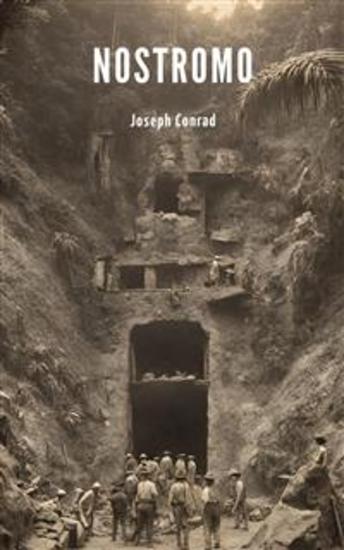
Nostromo (Annotated) - cover

Nostromo (Annotated)

Joseph Conrad

Editorial: Jason Nollan

  • 0
  • 0
  • 0

Sinopsis

"Nostromo," the literary tour de force penned by Joseph Conrad, unfolds with an epic sweep, inviting readers into a mesmerizing tapestry of political machinations, moral complexities, and the irresistible allure of a silver-laden landscape. Set against the backdrop of the fictional South American nation of Costaguana, this masterpiece is an immersive exploration of the human psyche in the face of power, ambition, and the ever-shifting currents of fate.
At the narrative helm is Nostromo, the enigmatic Italian expatriate whose presence looms large over the story. Like a complex symphony, Conrad orchestrates a cacophony of characters whose lives intersect and collide, revealing the intricate dance between personal desire and the relentless march of historical forces. The characters, vividly painted with Conrad's masterful strokes, become embodiments of universal human struggles, each wrestling with their own moral dilemmas in the shadow of the towering silver mine that casts both literal and metaphorical reflections on their destinies.
Conrad's prose is a rich mosaic, a linguistic ballet that transports readers to the lush landscapes and bustling port cities of Costaguana. Through his meticulous craftsmanship, the narrative becomes a sensory experience, with every page resonating with the palpable heat, the scents of exotic flora, and the echo of footsteps on cobblestone streets. The silver mine itself becomes a character in this opulent drama, its veins pulsating with wealth and mirroring the multifaceted aspirations and tribulations of those who seek to possess it.

As the political winds of Costaguana swirl, Conrad unfurls a narrative tapestry that captures the zeitgeist of an era marked by tumultuous change. The novel, published in 1904, remains a timeless commentary on the consequences of unchecked power, the complexities of identity, and the indomitable spirit of individuals caught in the maelstrom of historical forces.

The allure of "Nostromo" lies not only in its grand themes but also in its intimate exploration of the human condition. Conrad delves into the psychological depths of his characters, peeling back layers of their personalities to reveal the intricate interplay of motivations and fears. Nostromo himself emerges as a complex and charismatic figure, embodying the contradictions and passions that define humanity.
In the grand tradition of literary masterpieces, "Nostromo" beckons readers to embark on a profound journey—one that transcends the boundaries of time and space. It is a novel that invites contemplation, a narrative labyrinth that rewards those who navigate its twists and turns with a deeper understanding of the intricacies of life, power, and the perennial quest for meaning.

As readers traverse the pages of "Nostromo," they find themselves immersed in a world where the stakes are high, the emotions are visceral, and the allure is irresistible. Conrad's magnum opus is not just a novel; it is an odyssey into the human soul, a captivating exploration of the inexorable forces that shape our destinies, and a testament to the enduring power of storytelling.
Disponible desde: 06/01/2024.


Otros libros que te pueden interesar

  • Scents of Love: A Chromatic Affair - cover

    Scents of Love: A Chromatic Affair

    Ella Stories

    • 0
    • 0
    • 0
    A renowned male perfumer, known for crafting the most intoxicating scents, inexplicably loses his sense of smell. Devastated and ready to abandon his life's work, he is saved by the riveting woman with synesthesia, who can smell colors. United by their extraordinary olfactory capabilities, they embark on a passionate journey, redefining love and scent while he rediscovers his craft through her eyes.
    Ver libro
  • The Man That Corrupted Hadleyburg - cover

    The Man That Corrupted Hadleyburg

    Mark Twain

    • 0
    • 0
    • 0
    The Man That Corrupted Hadleyburg is a short story by Mark Twain and was published in 1899. It tells the story of the destruction of a small town (known as Hadleyburg), which is known far and wide as an honest and moral community. The people of the town enjoy the reputation of being honest. They isolated themselves and their babies from outsiders; when their children are still babies, keeping them sheltered from any kind of temptation.However, a mysterious stranger - who has a grudge against the town during the past year for an unnamed, unrequited offence – decides to get his revenge by corrupting the town and proves that its nineteen most well-respected members are immoral and dishonest. He gives a sack - which contains $40,000 gold - to the bank cashier and leaves him a note that explains how the bank cashier should spend it.This version of the book is translated by Farideh Eizadi to Persian (Farsi) and narrated by Bahram Sarvarinejad. The Persian version of The Man That Corrupted Hadleyburg’s audiobook is published by Maktub worldwide.
    Ver libro
  • Dr Heidigger's experiment - From their pens to your ears genius in every story - cover

    Dr Heidigger's experiment - From...

    Nathaniel Hawthorne

    • 0
    • 0
    • 0
    Nathaniel Hawthorne was born on 4th July 1804 in Salem, Massachusetts, a town synonymous with the earlier Salem Witch Trials. It was instrumental in Hawthorne’s later use of American Gothic and dark romanticism in his writing. 
    He was a mere four years old when his father died and his mother took him and his two sisters to live with her family and then on to their own home in Raymond, Maine. The young Hawthorne had a passion for fiction and poetry and voraciously read the works of Ann Radcliffe, Henry Fielding and Lord Byron.  
    He was sent to college at his maternal uncle’s insistence. During these years he met and befriended Henry Wadsworth Longfellow and future U S president Franklin Pierce. These friendships were lifelong and to have a crucial impact on his writings and career.  
    At college Hawthorne had made attempts at writing short stories and essays but without opportunities to publish. It was only in 1828 that he finally published his novel ‘Franshawe’ to little success and so he began work as editor for the American Magazine of Useful and Entertaining Knowledge.  
    Hawthorne’s short stories were first published in magazines but in 1837 were collected and published as ‘Twice-Told Tales’. A steady literary career still did not come his way and so he worked in a good position at Salem’s port and married the love of his life Sophia Peabody. They moved to live in ‘The Old Manse’ at Concord, Massachusetts.   
    Finally. in 1850 came spectacular literary and commercial success with ‘The Scarlet Letter’ followed by ‘The House of the Seven Gables’ the following year.  
    In 1852, Hawthorne published a biography of presidential candidate Franklin Pierce. After Pierce’s victory he was appointed consul in Liverpool, a position that offered prestige, money and fame. At the end of this appointment he returned several times to Europe before settling in Massachusetts and resuming writing and publication. 
    During the early 1860’s his health declined and on 19th May 1864 during a trip to Plymouth, New Hampshire. He was 59 and was buried in Sleepy Hollow Cemetery in Concord, Massachusetts.
    Ver libro
  • Mutiny - A womans quest for social advancement meets a reporter investigating the truth aboard a ship - cover

    Mutiny - A womans quest for...

    Dorothy Edwards

    • 0
    • 0
    • 0
    Dorothy Edwards, an only child, was born on the 18th August 1902 at Ogmore Vale in Glamorgan. 
     
    Her father was a headmaster and an early activist in the Independent Labour Party.  At age 9 Dorothy, dressed in red, welcomed Keir Hardy on to the stage at Tonypandy during the national coal strike of 1912. She was taught that revolution was at hand, that class barriers would be a thing of the past. 
      
    Dorothy won a scholarship and boarded at Howell's School for Girls in Llandaff before moving to University College of South Wales and Monmouthshire where she read Greek and philosophy. 
     
    Her early hopes to be an opera singer were set to one side after graduating and the death of her father. Instead she took on part-time work to supplement her mother’s pension with whom she now lived. 
     
    Dorothy managed to write a number of short stories which appeared in the literary journals of the day.  She spent several months with her mother in Vienna, all the time revising or writing before embarking on ‘Winter Sonata’, a short novel published in 1928. 
     
    Introductions to several members of the Bloomsbury Group meant a move to London and a division of her time between child-care for the family of Bloomsbury author David Garnett and the promise of an advance payment for her work on a new volume of stories. 
     
    However, Dorothy’s life was starting to spiral out of control; she was attracted to the Welsh nationalist movement but felt that her Welsh provincialism made her, in London at least, feel socially inferior. Leaving her mother dependent on a hired companion consumed her with guilt as did the end of an affair with a married musician. 
     
    On the 5th January 1934, having spent the morning burning her papers, Dorothy Edwards threw herself in front of a train near Caerphilly railway station.  
     
    Her suicide note read: "I am killing myself because I have never sincerely loved any human being all my life. I have accepted kindness and friendship and even love without gratitude, and given nothing in return."
    Ver libro
  • More of This World or Maybe Another - Stories - cover

    More of This World or Maybe...

    Barb Johnson

    • 0
    • 1
    • 0
    The lives of four unlikely friends intersect on the backstreets of New Orleans. Living amid poverty and violence, these fragile heroes of the American underclass redefine our notions of family, redemption, and love.
    Ver libro
  • Puppy Love Thanksgiving - cover

    Puppy Love Thanksgiving

    C. Coal

    • 0
    • 0
    • 0
    Sometimes Thanksgiving doesn't go the way you want it to. When Katie's entire family cancels on her she finds a way to still share good food with good company and maybe make a love match or two in the process.This story is part of the Puppy Love series of short stories that involve cute puppies bringing people together and helping them find love. It will also be available in the Puppy Love Holiday Collection which is a quartet of holiday-themed Puppy Love stories
    Ver libro