¡Acompáñanos a viajar por el mundo de los libros!
Añadir este libro a la estantería
Grey
Escribe un nuevo comentario Default profile 50px
Grey
Suscríbete para leer el libro completo o lee las primeras páginas gratis.
All characters reduced
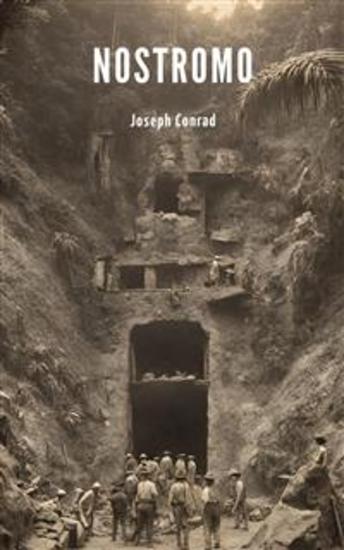
Nostromo (Annotated) - cover

Nostromo (Annotated)

Joseph Conrad

Editorial: Jason Nollan

  • 0
  • 0
  • 0

Sinopsis

"Nostromo," the literary tour de force penned by Joseph Conrad, unfolds with an epic sweep, inviting readers into a mesmerizing tapestry of political machinations, moral complexities, and the irresistible allure of a silver-laden landscape. Set against the backdrop of the fictional South American nation of Costaguana, this masterpiece is an immersive exploration of the human psyche in the face of power, ambition, and the ever-shifting currents of fate.
At the narrative helm is Nostromo, the enigmatic Italian expatriate whose presence looms large over the story. Like a complex symphony, Conrad orchestrates a cacophony of characters whose lives intersect and collide, revealing the intricate dance between personal desire and the relentless march of historical forces. The characters, vividly painted with Conrad's masterful strokes, become embodiments of universal human struggles, each wrestling with their own moral dilemmas in the shadow of the towering silver mine that casts both literal and metaphorical reflections on their destinies.
Conrad's prose is a rich mosaic, a linguistic ballet that transports readers to the lush landscapes and bustling port cities of Costaguana. Through his meticulous craftsmanship, the narrative becomes a sensory experience, with every page resonating with the palpable heat, the scents of exotic flora, and the echo of footsteps on cobblestone streets. The silver mine itself becomes a character in this opulent drama, its veins pulsating with wealth and mirroring the multifaceted aspirations and tribulations of those who seek to possess it.

As the political winds of Costaguana swirl, Conrad unfurls a narrative tapestry that captures the zeitgeist of an era marked by tumultuous change. The novel, published in 1904, remains a timeless commentary on the consequences of unchecked power, the complexities of identity, and the indomitable spirit of individuals caught in the maelstrom of historical forces.

The allure of "Nostromo" lies not only in its grand themes but also in its intimate exploration of the human condition. Conrad delves into the psychological depths of his characters, peeling back layers of their personalities to reveal the intricate interplay of motivations and fears. Nostromo himself emerges as a complex and charismatic figure, embodying the contradictions and passions that define humanity.
In the grand tradition of literary masterpieces, "Nostromo" beckons readers to embark on a profound journey—one that transcends the boundaries of time and space. It is a novel that invites contemplation, a narrative labyrinth that rewards those who navigate its twists and turns with a deeper understanding of the intricacies of life, power, and the perennial quest for meaning.

As readers traverse the pages of "Nostromo," they find themselves immersed in a world where the stakes are high, the emotions are visceral, and the allure is irresistible. Conrad's magnum opus is not just a novel; it is an odyssey into the human soul, a captivating exploration of the inexorable forces that shape our destinies, and a testament to the enduring power of storytelling.
Disponible desde: 06/01/2024.

Otros libros que te pueden interesar

  • Landor's Cottage - cover

    Landor's Cottage

    SAMPI Books, Edgar Allan Poe

    • 0
    • 0
    • 0
    "Landor's Cottage" is a short story by Edgar Allan Poe that describes in detail the bucolic landscape and architecture of a charming country house encountered by the narrator during a walk. The tale is notable for its rich visual description and serene atmosphere, contrasting with Poe's darker works.
    Ver libro
  • Life of Ma Parker - cover

    Life of Ma Parker

    Katherine Mansfield

    • 0
    • 0
    • 0
    "Life of Ma Parker” is a 1921 short story by Katherine Mansfield. It was first published in The Nation and Atheneum on 26 February 1921: The gentleman opens his door to his charwoman, who tells him that her grandson has died. Through an analepsis, the grandson asks his grandmother for money, which she says she does not have.
    Ver libro
  • The Shamraken Homeward Bounder - From their pens to your ears genius in every story - cover

    The Shamraken Homeward Bounder -...

    William Hope Hodgson

    • 0
    • 0
    • 0
    William Hope Hodgson was born in Essex, England on November 15th, 1877. 
    Over his short career he produced a large body of work which explored and covered many genres. From horror, to science fiction, to stories on the sea, where he had spent much of his early life. 
    In 1899, at the age of 22, he opened W. H. Hodgson's School of Physical Culture, in Blackburn offering tailored exercise regimes for personal training.  
    Eventually the business shut down and he immersed himself in writing.  An article in 1903 ‘Physical Culture versus Recreative Exercises’ led the way into fiction writing.  In 1904 came his first short story ‘The Goddess of Death’.  It was the beginning of an intensely creative period in his life. 
    He wrote novels, poetry and many, many short stories including series on the Sargasso Sea and Captain Gault. 
    One of his most memorable creations was his Carnacki, Supernatural Detective creation.  This fused together his passion for sleuthing and interest in the Occult.  It was a memorable success. 
    When war drew its shadow over Europe Hodgson received a commission as a Lieutenant in the Royal Artillery. In 1916 he was thrown from a horse and suffered a serious head injury; he received a mandatory discharge, and returned to writing. 
    Hodgson recovered sufficiently to re-enlist but at the Battle of Ypres in April 1918 he was killed by an artillery shell.
    Ver libro
  • At "Lehmann's" - cover

    At "Lehmann's"

    Katherine Mansfield

    • 0
    • 0
    • 0
    In At Lehmann’s by Katherine Mansfield we have the theme of innocence, vulnerability, appearance, confusion and desire. Taken from her In a German Pension collection the story is narrated in the third person by an unnamed narrator and from the beginning of the story the reader realises that Mansfield may be exploring the theme of innocence. Sabina believes Hans’ story about why his hands are so dirty even though the story is exceptionally far-fetched and borders on the impossible. What is also interesting about Hans’ story is that because Sabina believes Hans she pities him which may be important as it highlights how good natured Sabina is. She is unable to see any bad in Hans even though he is lying.
    Ver libro
  • The Jungle Book - cover

    The Jungle Book

    Rudyard Kipling

    • 0
    • 0
    • 0
    "The Jungle Book," published in 1894, is a collection of stories by English author Rudyard Kipling. The tales are fables, featuring animals that possess human characteristics, and they are set in the Indian jungle. The most famous stories within the book revolve around Mowgli, a boy who is raised by wolves and learns the laws of the jungle with the help of his animal friends: Baloo the bear, Bagheera the black panther, and Kaa the python. The stories explore themes of belonging, societal rules, and the intricate balance of nature.
    Ver libro
  • A Dead Woman's Secret - From their pens to your ears genius in every story - cover

    A Dead Woman's Secret - From...

    Guy de Maupassant

    • 0
    • 0
    • 0
    Henri René Albert Guy de Maupassant was born on August 5th, 1850 near Dieppe in France.  
    Maupassant’s early life was badly torn when at age 11 (his younger brother Hervé was then five) his mother, Laure, a headstrong and independent-minded woman, risked social disgrace in order to obtain a legal separation from her husband. 
    After the separation, Laure kept custody of her two boys. With the father now forcibly absent, Laure became the most influential and important figure in the young boy's life.   
    Maupassant’s education was such that he rebelled against religion and other societal norms but a developing friendship with Gustave Flaubert began to turn his mind towards creativity and writing. 
    After graduation he volunteered for the Franco-Prussian war. With its end he moved to Paris to work as a clerk in the Navy Department.  Gustave Flaubert now took him under his wing.  Acting as a literary guardian to him, he guided the eager Maupassant to debuts in journalism and literature.  For Maupassant these were exciting times and the awakening of his creative talents and ambitions. 
    In 1880 he published what is considered his first great work, ‘Boule de Suif’, (translated as as ‘Dumpling’, ‘Butterball’, ‘Ball of Fat’, or ‘Ball of Lard’) which met with a success that was both instant and overwhelming.  Flaubert at once acknowledged that it was ‘a masterpiece that will endure.’ Maupassant had used his talents and experiences in the war to create something unique.  
    This decade from 1880 to 1891 was to be the most pivotal of his career.  With an audience now made available by the success of ‘Boule de Suif’ Maupassant organised himself to work methodically and relentlessly to produce between two and four volumes of work a year.  The melding of his talents and business sense and the continual hunger of sources for his works made him wealthy. 
    In his later years he developed a desire for solitude, an obsession for self-preservation, and a fear of death as well as a paranoia of persecution caused by the syphilis he had contracted in his youth.  
    On January 2nd, 1892, Maupassant tried to commit suicide by cutting his throat.  Unsuccessful he was committed to the private asylum of Esprit Blanche at Passy, in Paris.  It was here on July 6th, 1893 that Henri René Albert Guy de Maupassant died at the age of only 42.
    Ver libro