¡Acompáñanos a viajar por el mundo de los libros!
Añadir este libro a la estantería
Grey
Escribe un nuevo comentario Default profile 50px
Grey
Suscríbete para leer el libro completo o lee las primeras páginas gratis.
All characters reduced
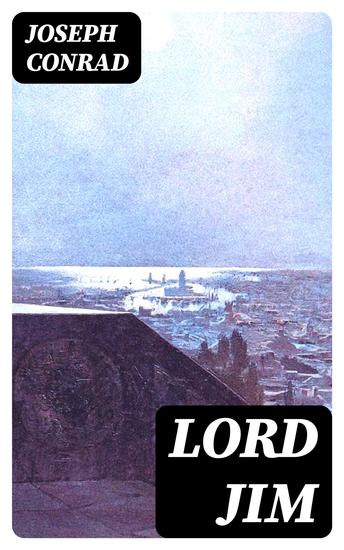
Lord Jim - cover

Lord Jim

Joseph Conrad

Editorial: DigiCat

  • 0
  • 0
  • 0

Sinopsis

Joseph Conrad's "Lord Jim" is a profound exploration of honor, guilt, and the human condition, set against the backdrop of maritime adventure. The novel employs a richly descriptive prose style, characterized by introspective narration and a deep psychological analysis of its protagonist, Jim, who grapples with his ideals and the stark reality of failure. Through an intricate narrative structure that oscillates between action and reflection, Conrad delves into themes of heroism and the complexities of moral integrity, prompting readers to question the nature of courage and redemption in the face of societal expectations. Conrad, a Polish-born writer who navigated the world's seas before becoming a leading literary figure, drew inspiration from his own experiences as a sailor. His keen insights into the psychological depths of his characters stem from a life marked by displacement and existential inquiry. "Lord Jim," inspired by tales of maritime misfortune and honor, reflects Conrad's understanding of the ambiguities of human motivation and the conflicts between societal norms and personal ideals, which resonate closely with his own tumultuous life. This novel is highly recommended for readers interested in themes of moral complexity and psychological depth. Its rich narrative style and profound thematic content not only captivate but also challenge readers to reflect on the intricacies of heroism and the human spirit. "Lord Jim" is an essential work that remains relevant for anyone seeking to understand the nuances of identity and crisis.
Disponible desde: 13/11/2022.
Longitud de impresión: 450 páginas.

Otros libros que te pueden interesar

  • Since I Died - From their pens to your ears genius in every story - cover

    Since I Died - From their pens...

    Elizabeth Stuart Phelps

    • 0
    • 0
    • 0
    Mary Gray Phelps was born on 31st August 1844 in Boston, Massachusetts. 
    Her mother, who wrote the Kitty Brown children’s book series, died when she was only 8.  The young girl asked to be renamed in honor of her mother. 
    Two years later her father married her mother's sister, Mary Stuart, also a writer, but she died of tuberculosis only 18 months later. A mere six months later he married for a third time to Mary Ann Johnson, and they had two sons. 
    Phelps received an upper-class education through her attendance at the Abbot Academy and Mrs. Edwards' School for Young Ladies. She had a natural gift for story-telling and at 13 she had a story published in Youth's Companion and other stories in various Sunday School publications. 
    In most of her writings she used her mother's name ‘Elizabeth Stuart Phelps’ as a pseudonym, even after her marriage in 1888 to Herbert Dickinson Ward, a journalist (and later co-author with her) 17 years her junior. Such was her talent that she gained a wide audience from her first publications.  
    At age 19 she sent her Civil War story ‘A Sacrifice Consumed’ to Harper's Magazine. A generous payment was made together with a request for more works to be sent for publication.  
    During the 1860s she wrote her first books for children, the ‘Tiny’ series and followed up with the 4-volume ‘Gypsy Breynton’ series.   
    In 1868, three years after the Civil War, came ‘The Gates Ajar’, a controversial but best-selling Spiritualist work which told of an afterlife replete with home comforts and reunited families, and their pets, for eternity.  Its success led her to write two more books to complete the trilogy and she was wont to use the word ‘Gates’ in later book titles to allude to this success. She stated that she wrote ‘The Gates Ajar’ to comfort a generation of women devastated by the loss of their loved ones who found no comfort in traditional religion.  
    Phelps became a determined advocate through her lectures and other work for social reform, temperance, women's emancipation, and even clothing reform for women, and in 1874, urging them to burn their corsets. 
    Her deteriorating health was now restricting some of her activities and kept her contributions to mostly literary in nature rather than public appearances. 
    In 1876 Phelps was the first woman to present a lecture series at Boston University. Her presentations, ‘Representative Modern Fiction’, analyzed the works of George Eliot. 
    In 1877 she published ‘The Story of Avis’. The work focuses on many of the era’s early feminist issues, portraying a woman's struggle to balance her married life and domestic responsibilities with her longing to become a painter.  At no time did she attempt to hide, either in real life or her stories, her contempt of the inequities of the then class structure and gender disparities. Her work, ‘Mary Elizabeth’ depicts a homeless girl's choices between theft and begging as a means of survival. ‘One Way to Get An Education’ tells of a child laborer's desire for a better life than mill work offers and sees self-injuring as a way to a better education. Her work often depicted women succeeding in non-traditional careers such as physicians, ministers, and artists. 
    In 1884 came her well-regarded poetry collection ‘Songs of the Silent World’ 
    Along with her husband she wrote two Biblical romances in 1890 and 1891. Her autobiography, ‘Chapters from a Life’ was serialized and then published in book form in 1896.  
    Phelps continued to write short stories and novels up to her death and over her life authored 57 volumes of fiction, poetry and essays.  
    Elizabeth Stuart Phelps died 28th January 1911, in Newton Center, Massachusetts. She was 66.
    Ver libro
  • Classic Tales of Horror - cover

    Classic Tales of Horror

    Martin Greenberg

    • 0
    • 0
    • 0
    This collection of classic horror stories is sure to give you goosebumps, raise the hair on the back of your neck, and put some fright in your night. These dark tales from renowned authors such as Robert Bloch, Ray Bradbury, and Ramsey Campbell are sure to please everyone— from campfire storytellers to die-hard horror fans. Stories featured here are:
    
    
    • " Coin of the Realm" by Charles L. Grant (read by Louise Sorel)
    
    
    • " Something Had to be Done" by David Drake (read by John Aprea)
    
    
    • " The Graveyard Rats" by Henry Kuttner (read by Michael Gross)
    
    
    • " The Small Assassin" by Ray Bradbury (read by Roscoe Lee Browne)
    
    
    • " Calling Card" by Ramsey Campbell (read by Juliet Mills)
    
    
    • " The Words of Guru" by C.M. Kornbluth (read by Susan Anspach)
    
    
    • " Passengers" by Robert Silverberg (read by William Atherton)
    
    
    • " Yours Truly, Jack the Ripper" by Robert Bloch (read by Robert Forster)
    Ver libro
  • The Story of the Treasure Seekers - cover

    The Story of the Treasure Seekers

    E Nesbit

    • 0
    • 0
    • 0
    "I’ll tell you what, we must go and seek for treasure: it is always what you do to restore the fallen fortunes of your House..."And so begins the tales of the Bastable children (all six of them) and their attempts at treasure seeking, never with any great fiscal success, but with plenty of adventure and the making of new friends.From the author of The Railway Children, The Treasure Seekers is the first of her Bastable Children series, which has inspired writers from C.S. Lewis to Michael Moorcock. Narrated by Michael Ward.
    Ver libro
  • About Love - From their pens to your ears genius in every story - cover

    About Love - From their pens to...

    Anton Chekhov

    • 0
    • 0
    • 0
    Anton Pavlovich Chekhov was born on 29th January 1860 in Taganrog, on the south coast of Russia.  
    His family life was difficult; his father was strict and over-bearing but his mother was a passionate story-teller, a subject Chekhov warmed to. As he later said; ‘our talents we got from our father, but our soul from our mother’.  
    At school Chekhov was distinctly average. At 16 his father mis-managed his finances and was declared bankrupt. His family fled to Moscow. Chekhov remained and eked out a living by various means, including writing and selling short sketches to newspapers, to finish his schooling. That completed and with a scholarship to Moscow University obtained he rejoined his family. 
    He was able to help support them by selling satirical sketches and vignettes of Russian lifestyles and gradually obtained further commissions. In 1884, he qualified as a physician and, although it earned him little, he often treated the poor for free, he was fond of saying ‘Medicine is my lawful wife, and literature is my mistress.’ 
    His own health was now an issue as he began to cough up blood, a symptom of tuberculosis.  Despite this his writing success enabled him to move the family into more comfortable accommodation.  
    Chekhov wrote over 500 short stories which included many, many classics including ‘The Kiss’ and ‘The Lady with a Dog’.  His collection ‘At Dusk’ won him the coveted Pushkin Prize when was only 26.  
    He was also a major playwright beginning with the huge success of ‘Ivanov’ in 1887.   
    In 1892 Chekhov bought a country estate north of Moscow. Here his medical skills and money helped the peasants tackle outbreaks of cholera and bouts of famine. He also built three schools, a fire station and a clinic.  It left him with less time for writing but the interactions with real people gained him detailed knowledge about the peasantry and their living conditions for his stories.  
    His most famous work, ‘The Seagull’ was received disastrously at its premiere in St Petersburg. It was later restaged in Moscow to highlight its psychological aspects and was a huge success. It led to ‘Uncle Vanya’, ‘The Three Sisters’ and ‘The Cherry Orchard’.  
    Chekhov suffered a major lung hemorrhage in 1897 while visiting Moscow. A formal diagnosis confirmed tuberculosis and the doctors ordered changes to his lifestyle.  
    Despite a dread of weddings the elusive literary bachelor quietly married the actress Olga Knipper, whom he had met at rehearsals for ‘The Seagull’, on 25th May 1901. 
    By May 1904 with his tuberculosis worsening and death imminent he set off for the German town of Badenweiler writing cheerful, witty letters to his family and assuring them his health was improving.  
    On 15th July 1904 Anton Chekhov died at Badenweiler.  He was 44.
    Ver libro
  • Juvenilia – Volume I - cover

    Juvenilia – Volume I

    Jane Austen

    • 0
    • 0
    • 0
    Before she wrote her masterpieces, she wrote these—wild, witty stories bursting with youthful brilliance.
    In Juvenilia – Volume I, a teenage Jane Austen unleashes a world of outrageous heroines, absurd romances, sudden scandals, and wicked humor. These early sketches—bold, mischievous, and delightfully unpolished—reveal the sharp mind and sparkling wit that would later define her legendary novels. Every page offers a glimpse of Austen discovering her voice and having tremendous fun doing it.
    
    Celebrated as "a rare window into the making of a literary genius," this collection charms readers with its energy, parody, and fearless storytelling.
    
    If you love Austen's humor, clever characters, and sharp observations, these early works will make you smile, surprise you, and deepen your appreciation for her craft.
    
    Open the book—and meet Jane Austen before the world knew her name.
    Ver libro
  • The Red Badge of Courage - cover

    The Red Badge of Courage

    Stephen Crane

    • 0
    • 0
    • 0
    Stephen Crane's "The Red Badge of Courage" is a powerful exploration of the psychological and emotional toll of war. Set against the backdrop of the American Civil War, the novel follows the journey of Henry Fleming, a young and inexperienced soldier eager to prove his courage on the battlefield. Faced with the harsh realities of war, Henry grapples with fear, doubt, and the complexities of heroism.
    As Henry confronts the chaos and brutality of battle, he undergoes a profound internal struggle, questioning his own motives and struggling to reconcile his romanticized notions of warfare with the harsh truths he encounters. The narrative skillfully delves into the intricacies of human nature and the transformative impact of war on an individual.
    Crane's vivid and evocative prose captures the raw intensity of combat, immersing readers in the gritty details of soldier life. "The Red Badge of Courage" is a timeless examination of the human condition, offering a poignant reflection on courage, identity, and the cost of glory. This classic work continues to resonate with readers, providing a poignant and thought-provoking exploration of the complexities of war and the indomitable spirit of the individual.
    Ver libro