Junte-se a nós em uma viagem ao mundo dos livros!
Adicionar este livro à prateleira
Grey
Deixe um novo comentário Default profile 50px
Grey
Assine para ler o livro completo ou leia as primeiras páginas de graça!
All characters reduced
Heart of Darkness - cover
LER

Heart of Darkness

Joseph Conrad

Editora: CLXBX

  • 0
  • 0
  • 0

Sinopse

Heart of Darkness is Joseph Conrad's haunting and profoundly influential novella, a powerful exploration of imperialism, moral ambiguity, and the darkness that lies within the human soul. Framed as a seafaring tale yet unfolding as a psychological journey, the novel remains one of the most enduring works of modern literature.

The story follows Charles Marlow, a seasoned sailor who recounts his voyage up the Congo River while working for a Belgian trading company. Tasked with transporting supplies and eventually meeting the enigmatic agent Kurtz, Marlow travels deeper into the African interior, where the trappings of European "civilization" gradually dissolve. As the jungle closes in, so too does a sense of unease, revealing the brutal realities of colonial exploitation and unchecked power.

Kurtz, once celebrated as a man of exceptional promise and ideals, becomes the embodiment of moral collapse. His descent into tyranny and madness exposes the hypocrisy of imperial ambitions and challenges the belief that progress and enlightenment accompany empire. Through Marlow's reflections, Conrad interrogates the fragile boundaries between civilization and savagery, reason and obsession.

Written in Conrad's dense, evocative prose, Heart of Darkness is as much an inward journey as a physical one. The novella confronts readers with unsettling questions about human nature, greed, and responsibility, suggesting that the true "darkness" resides not in distant lands but within the hearts of men themselves.

Provocative, unsettling, and timeless, Heart of Darkness continues to inspire debate and interpretation, influencing countless writers, filmmakers, and thinkers. It is an essential work for readers seeking a profound meditation on power, conscience, and the complexities of the modern world.
Disponível desde: 07/02/2026.
Comprimento de impressão: 131 páginas.

Outros livros que poderiam interessá-lo

  • Model Millionaire The (Unabridged) - cover

    Model Millionaire The (Unabridged)

    Oscar Wilde

    • 0
    • 0
    • 0
    "The Model Millionaire" First published in The World in June 1887. Hughie Erskine is in love and wants to marry, but the girl's father will not allow it, since Erskine has no money. Erskine's friend Alan Trevor is a painter, and he visits him at his studio one day to find him with a pitiable beggar-the model for his painting. Erskine only has one coin, on which he depends for transportation, but he decides he can walk for a couple of weeks and gives the beggar the coin.
    Ver livro
  • Napoleon of Notting Hill The - Book 4 (Unabridged) - cover

    Napoleon of Notting Hill The -...

    G. K. Chesterton

    • 0
    • 0
    • 0
    In a London of the future, the drudgery of capitalism and bureaucracy have worn the human spirit down to the point where it can barely stand. When a pint-sized clerk named Auberon Quinn is randomly selected as head of state, he decides to turn London into a medieval carnival for his own amusement. One man, Adam Wayne, takes the new order of things seriously, organizing a Notting Hill army to fight invaders from other neighborhoods. At first his project baffles everyone, but eventually his dedication proves infectious, with delightful results. First published in 1904, The Napoleon of Notting Hill was Chesterton's first novel. It has been called the best first novel by any author in the twentieth century. Newly designed and typeset by Waking Lion Press.
    THE NAPOLEON OF NOTTING HILL BOOK 4: Mr. Buck, who, though retired, frequently went down to his big drapery stores in Kensington High Street, was locking up those premises, being the last to leave.
    Ver livro
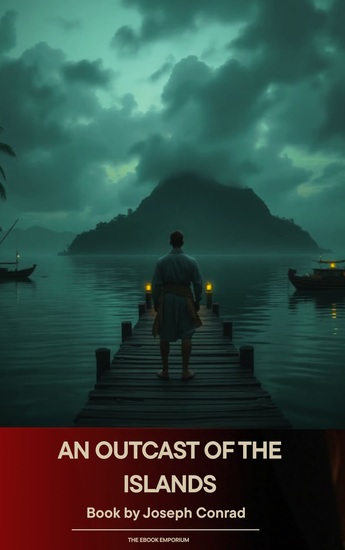
  • An Outcast of the Islands - cover

    An Outcast of the Islands

    Joseph Conrad

    • 0
    • 0
    • 0
    "He lived in the world of his own creation, and it was a world of shadows."
    
    Peter Willems is a man who believes he is destined for greatness, but his own vanity and dishonesty lead to his spectacular downfall. After embezzling funds in Makassar, he is given a second chance by the legendary Captain Lingard, who hides him in a secret trading post up a remote river in Borneo. But instead of redemption, Willems finds a new form of destruction. He becomes obsessively enamored with Aïssa, the daughter of a local blind chief, and in his desperation to possess her, he betrays Lingard's secret navigation routes to Arab traders. This act of treason triggers a violent clash of cultures and leads Willems into a spiritual and physical exile from which there is no escape.
    
    The Anatomy of a Moral Collapse: Conrad excels at stripping away the delusions of his protagonists. Willems is not a classic villain, but a weak man whose pride makes him vulnerable. The novel brilliantly captures his slow descent into madness as he realizes that he has become an "outcast" not just from society, but from his own identity.
    
    Tropical Gothic and Imperial Critique: The lush, stifling atmosphere of the Indonesian jungle acts as a character in itself. Conrad's prose is dense and atmospheric, portraying the wilderness as a mirror that reflects the internal chaos of the European colonizers. He challenges the "civilizing" myths of imperialism by showing the greed and fragility of those who seek to exploit the islands.
    
    The Fatal Romance: The relationship between Willems and Aïssa is one of the most intense and destructive in colonial literature. It is a bond built on mutual exoticism and misunderstanding, leading to a tragic finale that underscores the impossibility of truly "knowing" another person across a cultural and moral divide.
    
    Descend into the heart of the archipelago. Purchase "An Outcast of the Islands" today.
    Ver livro
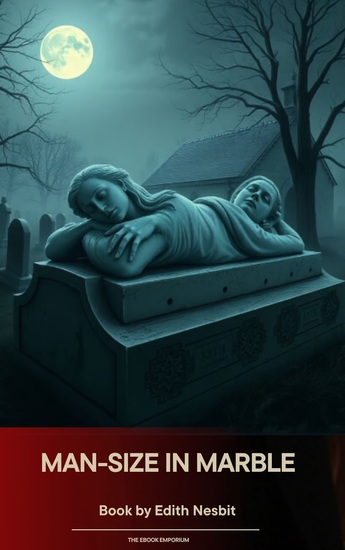
  • Man-Size in Marble - cover

    Man-Size in Marble

    Edith Nesbit

    • 0
    • 0
    • 0
    "They are only marble, Jack... they cannot move."
    
    Looking for a peaceful life of artistic inspiration, a young married couple moves into a charming cottage in the English countryside, nestled near an ancient church. The local villagers speak in hushed tones of a dark legend: every Halloween, the two life-sized marble effigies of knights in the church rise from their tombs to walk the earth once more. While the skeptical husband laughs off the "rural superstition," his wife Laura is consumed by an inexplicable dread. As All Saints' Eve approaches, the boundary between stone and flesh begins to blur with devastating consequences.
    
    A Masterclass in Gothic Suspense: Edith Nesbit, the creator of The Railway Children, showcases her darker genius in this quintessential Victorian horror. The story masterfully builds tension through the contrast between the sunny, domestic bliss of the newlyweds and the cold, subterranean malice of the church's inhabitants. It is a haunting exploration of the vulnerability of human happiness in the face of ancient, uncaring forces.
    
    The Terror of the Inanimate: Man-Size in Marble is celebrated for its shocking and visceral conclusion, which remains one of the most famous endings in ghost-story history. Nesbit plays on the primal fear of the uncanny—the idea that something made of stone could possess a sentient, murderous intent. It is a taut, atmospheric work that proves why Nesbit was admired by contemporary horror giants like H.G. Wells and Lord Dunsany.
    
    Stone cold and blood red. Purchase "Man-Size in Marble" today and experience the ultimate in Victorian dread.
    Ver livro
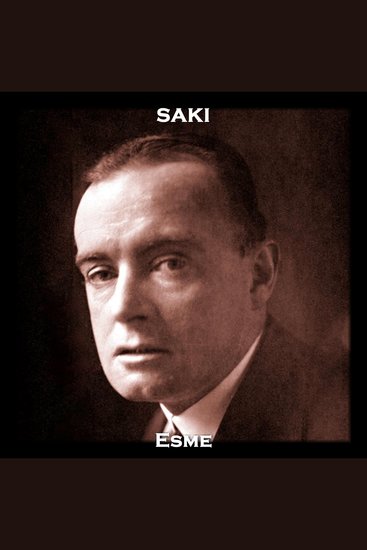
  • Esme - From their pens to your ears genius in every story - cover

    Esme - From their pens to your...

    Saki Saki

    • 0
    • 0
    • 0
    Hector Hugh Munro, more familiarly known by his pen-name ‘Saki’ was born in what was then Akyab in British Burma on 18th December 1870. His father was an Inspector General for the Indian Imperial Police, and his mother the daughter of a Rear Admiral. 
    When he was 2 his mother died and he and his siblings were sent back to England to be raised by their grandmother and paternal maiden aunts in a strict, puritanical household near Barnstaple, Devon. Educated by governesses Saki used many of these women as character models for his later writing. 
    At 17 his father retried and returned to England and then embarked on a series of European travels with Saki and his siblings. 
    After a short stint working in Burma with the Indian Imperial Police Saki decided to move to London to make a living as a writer. Initially he wrote as a journalist for a number of newspapers and magazines before attempting an historical study, ‘The Rise of the Russian Empire’, whose real value lay in directing him to writing short stories instead, the first of which, ‘Dogged’, he published in 1899. 
    From here it was a short stab of the pen to writing political satire before in 1902 he became the foreign correspondent for The Morning Post, first in the Balkans, then Russia, Paris and back to London in 1908, where 'the agreeable life of a man of letters with a brilliant reputation awaited him.'  
    Collections of his short stories full of witty, mischievous and often macabre stories that satirized Edwardian society and two novels now appeared in the years up to the Great War.  At its’ outbreak he was 43 but managed to join as an ordinary trooper. More than once he returned to the battlefield when officially too sick or injured.  
    On 14th November 1916 Hector Hugh Munro was sheltering in crater during the Battle of the Ancre, when he was shot and killed by a German sniper. According to several sources, his last words were "Put that bloody cigarette out!"
    Ver livro
  • The Autobiography of an Ex-Colored Man - cover

    The Autobiography of an...

    James Weldon Johnson

    • 0
    • 0
    • 0
    "I buried my past... but at what cost to my soul?"
    
    Our narrator is a man of dual heritage—gifted, light-skinned, and acutely observant. Born into a world defined by the "color line," he possesses the unique and dangerous ability to move between the Black and White worlds. From the smoking rooms of high-society New York to the gambling dens of the South, and from the birth of Ragtime to the horrific reality of a public lynching, his journey is a panoramic view of the American racial landscape at the turn of the century. Ultimately, he chooses to "pass" as a white man for the sake of safety and success, but he finds that his "great secret" is a burden that leaves him feeling like an unfaithful witness to his own life.
    
    A Masterclass in Irony and Ambiguity: James Weldon Johnson's narrator is not a typical hero. He is a "flâneur"—a detached observer who often prioritizes self-preservation over solidarity. This narrative choice allows the reader to see the subtle, insidious ways that systemic racism forces individuals to fragment their own identities just to survive.
    
    The Soundtrack of a Changing Nation: The novel is famous for its early and insightful treatment of Ragtime. The narrator, a talented pianist, views the music as a profound contribution to world culture, yet he eventually abandons his dream of elevating Black folk music into classical forms, choosing instead a life of quiet, white-collar invisibility.
    
    Why It Is a Revolutionary Classic: Published before the height of the Harlem Renaissance, this novel shattered the sentimental stereotypes of its time. It is a cold-eyed look at the "privilege" of whiteness and the profound sense of loss that comes with abandoning one's heritage. It remains a vital text for understanding the "double consciousness" of the American experience.
    
    Step behind the mask. Purchase "The Autobiography of an Ex-Colored Man" today.
    Ver livro