¡Acompáñanos a viajar por el mundo de los libros!
Añadir este libro a la estantería
Grey
Escribe un nuevo comentario Default profile 50px
Grey
Suscríbete para leer el libro completo o lee las primeras páginas gratis.
All characters reduced
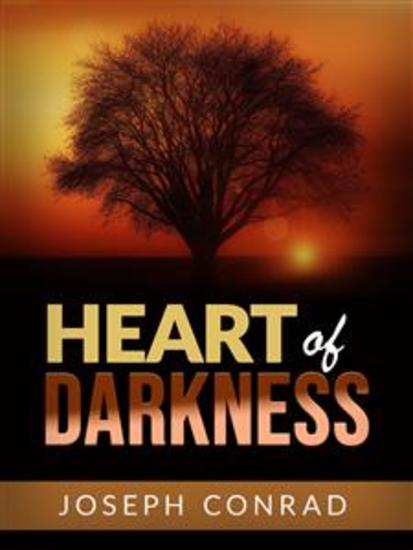
Heart of Darkness - cover

Heart of Darkness

Joseph Conrad

Editorial: Stargatebook

  • 0
  • 0
  • 0

Sinopsis

Heart of Darkness by Joseph Conrad was most famously adapted by Francis Ford Coppola in Apocalypse Now. Although that film moved the location to Vietnam, the novel is about Charles Marlow's life as an ivory transporter down the Congo River in Central Africa. It delves into the way people decide what constitutes a barbarian society and what constitutes a civilised society. It also explores attitudes on colonialism and racism that were part and parcel of European imperialism.
Disponible desde: 18/09/2024.

Otros libros que te pueden interesar

  • The Island of Doctor Moreau - cover

    The Island of Doctor Moreau

    H. G. Wells

    • 0
    • 0
    • 0
    Edward Prendick finds himself floating perilously in the ocean after having been shipwrecked. He is picked up and his life saved by the curious Dr Montgomery, a medical man travelling with a cargo of various wild animals. Prendick soon finds himself once again adrift at sea after an argument with a hostile and drunken captain. 
    For a second time Montgomery appears as his saviour and he is hauled ashore on the Island of Dr Moreau, Montgomery’s mysterious colleague and mentor. 
    As he encounters some of the deformed and bestial inhabitants on the island, Prendick soon comes to realise that he has heard of this infamous Dr Moreau before. Now begins a nightmarish existence as the full truth of Moreau’s scientific ambitions become horribly apparent. 
    Head StoriesAudio presents "The Island of Dr Moreau" by H.G. Wells. Narrated by Simon Hester. With original music.
    Ver libro
  • A Middle-Sized Artist - From their pens to your ears genius in every story - cover

    A Middle-Sized Artist - From...

    Charlotte Perkins Gilman

    • 0
    • 0
    • 0
    Charlotte Perkins Gilman was born on 3rd July 1860 in Hartford, Connecticut, to an unaffectionate mother and a father who abandoned her and her older brother to a life of poverty. 
    Inevitably her schooling was limited and by 15 she had attended seven different schools but received only four years education.  However Charlotte was resourceful and did spend time with her father’s aunts – the suffragist Isabella Beecher Hooker and the ‘Uncle Tom Cabin’s’ author, Harriet Beecher Stowe as well as many hours at the public library studying ancient civilisations. 
    In 1878, she enrolled in classes at the Rhode Island School of Design where she met Martha Luther and they developed a close relationship until Luther married in 1881. Charlotte was devastated and detested romance and love until she met and married the artist Charles Walter Stetson.  
    Their only child, Katharine Beecher Stetson, was born in 1885 but left Charlotte with post-natal depression, then often dismissed as a case of hysteria or nerves.  Unsuited to domestic life she ruptured her life and moved to California with Katherine.  She divorced in 1894 and then sent Katharine east to live with her father and his second wife confirming that his paternal rights be acknowledged and that Katherine establish a relationship with her father. 
    After her mother died in 1893, Charlotte moved back east and became involved with her first cousin, Wall Street attorney, Houghton Gilman who she married in 1900. After his death she moved back to California, where Katherine now lived.   
    Her most popular story is ‘The Yellow Wallpaper’ which touched on her own post-partum depression and underlined the need for women to be responsible for their mental and physical well-being, as the narrator is ordered by her husband/doctor to take compete rest in her room where she is isolated and becomes obsessed with the revolting yellow wallpaper.   
    She wrote other notable short stories the best of which we also include.   
    Charlotte lectured widely for social reform, wrote important non-fiction works that questioned our patriarchal system and left a legacy as a leading and positive spokesperson for feminism.  
    She was diagnosed with incurable breast cancer in 1932 and, as she wrote in her suicide note and autobiography, she ‘chose chloroform over cancer’    
    Charlotte Perkins Gilman took her own life on 17th August 1935, aged 75, in Pasadena, California.
    Ver libro
  • Anna Karenina - cover

    Anna Karenina

    Leo Tolstoy

    • 0
    • 0
    • 0
    Anna Karenina, Leo Tolstoy’s timeless masterpiece, weaves a tale of passion, betrayal, and societal pressures in 19th-century Russia. Follow the intertwined lives of characters caught in a web of love, tragedy, and morality. From the opulence of Russian aristocracy to the desolation of its rural landscapes, this profound exploration of human emotions and choices resonates across generations. Narrated with care, this audiobook brings Tolstoy's rich characters and sweeping narrative to life. Perfect for those seeking a captivating and thought-provoking experience.
    Ver libro
  • Story of the Youth Who Went Forth to Learn What Fear Was The - Story Time Episode 49 (Unabridged) - cover

    Story of the Youth Who Went...

    Brothers Grimm

    • 0
    • 0
    • 0
    A father had two sons. The dimwitted younger son, when asked by his father what he would like to learn to support himself, said he would like to learn how to shudder (as in, learn to have fear). A sexton told the father that he could teach the boy. After teaching him to ring the church bell, he sent him one midnight to ring it and came after him, dressed as a ghost. The boy demanded an explanation. When the sexton did not answer, the boy, unafraid, pushed him down the stairs, breaking his leg.
    Ver libro
  • Morphine - This story is perhaps the greatest depiction and description in literature of the human psyche going through addiction - cover

    Morphine - This story is perhaps...

    Mikhail Bulgakov

    • 0
    • 0
    • 0
    Mikhail Bulgakov was born on 15th May 1891 in Kiev, in the Kiev Governorate of the Russian Empire, into a Russian family.  He was one of seven children. 
     
    In 1901, Bulgakov attended the First Kiev Gymnasium, and developed a keen interest in Russian and European literature, theatre and opera.  After the death of his father in 1907, his mother assumed responsibility for his education.  After graduating Bulgakov entered the Medical Faculty of Kiev University and then took up a post as physician at the Kiev Military Hospital. 
     
    At the outbreak of the First World War, he volunteered as a doctor and was sent directly to the front, where he was badly injured at least twice.  To suppress chronic pain, especially in the abdomen, he injected morphine.  It took years to wean himself off. 
     
    He now took up medical posts in various towns and in 1919, he was mobilised by the Ukrainian People's Army and assigned to the Northern Caucasus.  There, he became seriously ill with typhus and barely survived.  
     
    After this illness, Bulgakov abandoned his medicine to pursue writing.  He moved to Vladikavkaz and had two plays staged there with great success.  He wrote too for various newspapers and other outlets, but his critics were many.  And growing. 
     
    When a Moscow's theatre director severely criticised Bulgakov, Stalin personally protected him, saying that a writer of Bulgakov's quality was above ‘party words’ like ‘left’ and ‘right’.   Indeed, it is said that Stalin watched ‘The Days of the Turbins’ at least 15 times. 
     
    It was not to last and by March 1929, Bulgakov's career was ruined when Government censorship stopped publication of any of his work and plays. 
     
    In despair, Bulgakov wrote a personal letter to Stalin.  He requested permission to emigrate.  He received a phone call from the Soviet leader, who asked the writer whether he really desired to leave. He replied that a Russian writer cannot live outside of his homeland.  Stalin thus gave him permission to continue working. In May 1930, he re-joined the theater, as stage director's assistant.  
     
    During the last stressful decade of his life, and in poor health, Bulgakov continued to work on ‘The Master and Margarita’, wrote plays, critical works, stories, and continued translations and dramatisations of novels.  Many of them were not published, others were derided by critics.  
     
    On 10th March 1940, Mikhail Afanasyevich Bulgakov died from nephrosclerosis.  He was 48. 
     
    ‘The Master and Margarita’ was not published in any form until the mid-1960’s 
     
    In this story Bulgakov relates the terrifying and hellish descent into addiction that seems so avoidable and yet so chillingly not.
    Ver libro
  • Study in Scarlet A (a Sherlock Holmes mystery) - cover

    Study in Scarlet A (a Sherlock...

    Arthur Conan Doyle

    • 0
    • 0
    • 0
    "A Study in Scarlet" was written by Arthur Conan Doyle in 1887, and he marks the first appearance of Sherlock Holmes and Dr. Watson, who would go on to become one of the most well-known mystery-solving duos in literature.  
    When a gruesome murder is discovered with the word "RACHE" scrawled in blood, Sherlock Holmes uses his unique powers of deduction to uncover a hidden story of passion, betrayal, vengeance and retribution.
    Ver libro