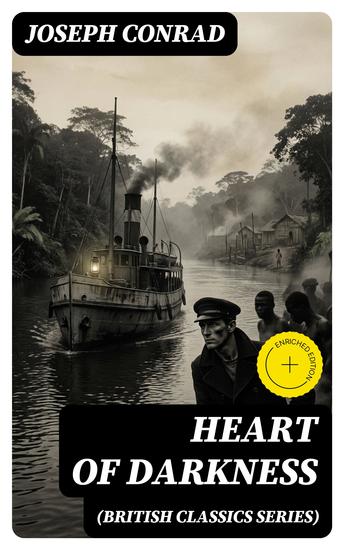
Heart of Darkness (British Classics Series) - Enriched edition Including Author's Memoirs Letters & Critical Essays
Joseph Conrad
Editorial: DigiCat
Sinopsis
In Joseph Conrad's seminal novella, "Heart of Darkness," readers embark on a profound exploration of imperialism, civilization versus savagery, and the complexities of human nature. Set against the backdrop of late 19th-century Africa, the narrative follows Charles Marlow's journey up the Congo River to meet the enigmatic Kurtz, a ivory trader whose moral decay embodies the darkness that lurks within humanity. Conrad's modernist prose is rich with symbolism, employing impressionistic descriptions that evoke the oppressive atmosphere of colonial exploitation and the psychological turmoil of his characters, thus establishing a critical lens on European imperialism while delving into existential themes. Joseph Conrad, a Polish-born writer who became a British citizen, draws upon his personal experiences as a sailor and traveler in the Congo River basin, providing a vivid, firsthand perspective on the intricacies of colonialism and its dehumanizing effects. This duality of identity—straddling cultures and languages—shapes the thematic depth of his work, as Conrad grapples with his own position between civilization and barbarism, mirroring Marlow's transformative voyage into the heart of darkness. "Heart of Darkness" is essential reading for those seeking to understand the intricate dynamics of power and morality within the context of colonialism. Its rich allegorical narrative and psychological insights resonate profoundly in today's world, making it a timeless piece that invites reflection on humanity's perpetual struggle with its own dark impulses.

In this enriched edition, we have carefully created added value for your reading experience:
- An Introduction draws the threads together, discussing why these diverse authors and texts belong in one collection.
- Historical Context explores the cultural and intellectual currents that shaped these works, offering insight into the shared (or contrasting) eras that influenced each writer.
- A combined Synopsis (Selection) briefly outlines the key plots or arguments of the included pieces, helping readers grasp the anthology's overall scope without giving away essential twists.
- A collective Analysis highlights common themes, stylistic variations, and significant crossovers in tone and technique, tying together writers from different backgrounds.
- Reflection questions encourage readers to compare the different voices and perspectives within the collection, fostering a richer understanding of the overarching conversation.
Disponible desde: 29/12/2023.
Longitud de impresión: 726 páginas.