Junte-se a nós em uma viagem ao mundo dos livros!
Adicionar este livro à prateleira
Grey
Deixe um novo comentário Default profile 50px
Grey
Assine para ler o livro completo ou leia as primeiras páginas de graça!
All characters reduced
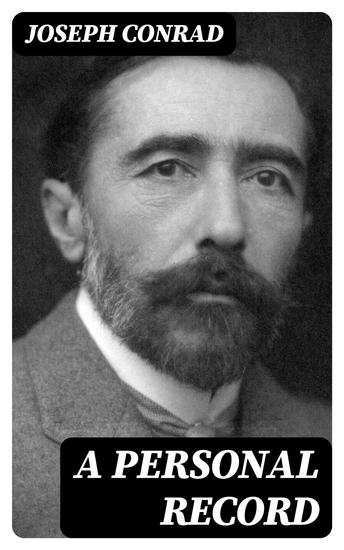
A Personal Record - cover
LER

A Personal Record

Joseph Conrad

Editora: DigiCat

  • 0
  • 0
  • 0

Sinopse

In "A Personal Record," Joseph Conrad offers a captivating exploration of his own life experiences, intertwining introspection with masterful narrative craftsmanship. The book is a blend of autobiography and philosophical reflection, enriched by Conrad's distinctive prose style—lyrical yet sharp, evocative yet precise. Set against the backdrop of late 19th-century Europe, this work not only chronicles his journey from Poland to the British Empire but also provides insight into the broader themes of identity, colonialism, and the duality of human nature, making it a vital text within the context of modernist literature. Joseph Conrad, often celebrated for his novels such as "Heart of Darkness" and "Lord Jim," drew heavily upon his own tumultuous experiences at sea and his exposure to varied cultures. His life as a sailor and expatriate profoundly shaped his worldview, imbuing his writings with a unique authenticity and depth. Conrad's keen observations of human struggles and moral ambiguities resonate through "A Personal Record," which stands as a testament to his enduring literary legacy. This remarkable work is highly recommended for readers interested in the intersection of personal narrative and social commentary. Conrad's eloquent prose invites reflection on one's own journey, making it not just a memoir but an exploration of the human condition, perfect for literary enthusiasts and scholars alike.
Disponível desde: 15/09/2022.
Comprimento de impressão: 111 páginas.

Outros livros que poderiam interessá-lo

  • I Don't Talk to Dead Bodies - The Curious Encounters of a Forensic Psychiatrist (Unabridged) - cover

    I Don't Talk to Dead Bodies -...

    Rhona Morrison

    • 0
    • 0
    • 0
    Prepare to be intrigued, amazed and astonished as you join Dr Rhona Morrison on an often funny, and at times downright bizarre, thought-provoking and eye-opening rollercoaster ride through some of the most curious encounters of her career as a leading forensic psychiatrist.
    
    Delve into the minds of real people, whose actions may shock and stun you, but who's stories have the power to challenge your assumptions and the stigma that surrounds mental illness.
    
    Travel directly into their living rooms and see behind the closed doors of hospitals, prisons and court rooms. Lift the lid on Dr Morrison's jaw-dropping experiences with murderers, stalkers and other dangerous offenders as she attempts to make sense of some highly unusual situations. Discover the true stories of the inspiring human beings who are bravely learning to live with major mental illness.
    
    I Don't Talk To Dead Bodies shines a powerful, emotional and surprisingly moving spotlight on the fascinating life of a forensic psychiatrist and the people she works with. It goes beyond the sensationalist headlines to show you just what happens in a world where mental illness occasionally makes good people do bad things.
    Ver livro
  • Geronimo's Story of His Life - cover

    Geronimo's Story of His Life

    Geronimo

    • 0
    • 0
    • 0
    Geronimo’s Story of His Life is the oral life history of a legendary Apache warrior. Composed in 1905, while Geronimo was being held as a U.S. prisoner of war at Fort Sill, Oklahoma, Geronimo’s story found audience and publication through the efforts of S. M. Barrett--Lawton, Oklahoma, Superintendent of Education, who wrote in his preface that “the initial idea of the compilation of this work was . . . to extend to Geronimo as a prisoner of war the courtesy due any captive, i.e. the right to state the causes which impelled him in his opposition to our civilization and laws.” Barrett, with the assistance of Asa Deklugie, son of Nedni chief Whoa as Apache translator, wrote down the story as Geronimo told it --beginning with an Apache creation myth. Geronimo recounted bloody battles with Mexican troopers, against whom he had vowed vengeance in 1858 after they murdered his mother, his wife, and his three small children. He told of treaties made between Apaches and the U.S. Army--and treaties broken. There were periods of confinement on the reservations, and escapes. And there were his final days on the run, when the U.S. Army put 5000 men in the field against his small band of 39 Apache.Geronimo had been a prisoner of war for 19 years when he told his story. Born in 1829, he was by then an old man, no longer a warrior, and he had come to an accommodation with many things “white,” including an appreciation of money. U.S. Bureau of Indian Affairs personnel took him to the St. Louis World’s Fair in 1904, where he roped cows in the “wild west show” and signed his name for “ten, fifteen, or twenty five cents.” By then he was perhaps the United States’ most “famous” Indian. In 1905 he was even invited to ride horseback in President Theodore Roosevelt’s inaugural parade (though still a prisoner of war!).Geronimo dedicated his book to Roosevelt with the plea that he and his people be allowed to return to their ancestral land in Arizona. “It is my land, my home, my father’s land, to which I now ask to be allowed to return. I want to spend my last days there, and be buried among those mountains. If this could be I might die in peace.” Geronimo died at Fort Sill, Oklahoma, in 1909, still a prisoner of war. (Introduction by Sue Anderson)
    Ver livro
  • Aloysha the Pot - From their pens to your ears genius in every story - cover

    Aloysha the Pot - From their...

    Leo Tolstoy

    • 0
    • 0
    • 0
    Leo Tolstoy was born in 1828 in the Russian province of Tula to a wealthy noble family. As a child, he had private tutors but he showed little interest in any formal education. When he went to the University of Kazan in 1843 to study oriental languages and law, he left without completing his courses.  Life now was relaxed and idle but with some writing also taking place.  Gambling debts forced an abrupt change of path and he joined the army to fight in the Crimean War.  He was commended for his bravery and promoted but was appalled at the brutality and loss of life.  He recorded these and other earlier experiences in his diaries which formed the basis of several of his works. 
    In 1852 ‘Childhood’ was published to immediate success and was followed by ‘Boyhood’ and ‘Youth’. 
    His experience in the army and the horrors he witnessed resulted in ‘The Cossacks’ in 1862 and the trilogy ‘Sevastopol Tales’. After the war he travelled around Europe, visiting London and Paris and meeting such luminaries as Victor Hugo and Charles Darwin.  
    It was now that Tolstoy began his masterpiece, ‘War and Peace’. Published in 1869 it was an epic work that changed literature. He quickly followed this with ‘Anna Karenina’.  
    These successes made Tolstoy rich and helped him accomplish many of his dreams but also brought problems as he grappled with his faith and the lot of the oppressed poor. These revolutionary views became so popular that the authorities now kept him under surveillance.  
    He led a life of asceticism and vegetarianism and put his socialist ideals into practice by establishing numerous schools for the poor and food programmes. He also believed in giving away his wealth, which caused much discord with his wife.  
    His writing continued to bring forth classics such as ‘The Death of Ivan Ilyich’ and many brilliant and incisive short stories such as ‘How Much Land Does A Man Need’.  
    In 1901 Tolstoy was excommunicated from the Church and controversially deselected for the Nobel Prize for Literature. 
    Whilst undertaking a pilgrimage by train in October 1910 with his daughter Aleksandra he caught pneumonia in the nearby town of Astapovo.  Leo Tolstoy died on November 9th, 1910, he was 82.
    Ver livro
  • Radiolab: Mixtape - How The Cassette Changed The World - cover

    Radiolab: Mixtape - How The...

    Radiolab

    • 0
    • 0
    • 0
    Before the podcast and the smartphone, there was the cassette tape and the Walkman — two devices that, although not considered much today, were revolutionary. They were recordable, rewritable, spliceable, compact, and mobile. For the first time, they allowed you to move through the world and listen to a voice speaking only to you. These cassette tapes brought us together, pulled us apart, and forever changed how we say those three simple words, ‘I love you.’ In five episodes from around the world, Mixtape explores the impact the cassette had and continues to have today.
    Ver livro
  • Horse-Drawn Yogurt - Stories from Total Loss Farm - cover

    Horse-Drawn Yogurt - Stories...

    Peter Gould

    • 0
    • 0
    • 0
    In the 1970s, more than a million young people moved to farms and communes all over the U.S. There was a war on, and they wanted no part of it. This is a book about those days and one of those communes, told by Peter Gould, one of Vermont's master storytellers, known for decades to fans of Burnt Toast, Gould & Stearns, A Peasant of El Salvador, and Write Naked. 
    Horse-Drawn Yogurt is an exquisite memoir of a special time: the years of the back-to-the-land movement. But it is also a magical, unfolding mystery. What could this peculiar title mean? There's one way to find out. 
    "Peter's tone-perfect narratives capture the danger, the disappointments, the joys of living a life of meaning...and the thrill of expanding the heart's perimeter to include everyone you meet. Horse-Drawn Yogurt is a great read by a fine writer. It's glorious!" -Peter Coyote  
     "Gould's prose is so intimate that you trust every word." -Yvonne Daley 
     "Vivid, honest, and well-written, not only informative but it's an important part of Vermont history." -The Brattleboro Reformer 
    "There's so much fun to be had on this ride. Peter Gould is a straight-up magician." -Tim Weed 
     "I love Peter Gould's work. We go a long way back." -U.S. Senator Patrick Leahy 
    READ BY THE AUTHOR. Second Edition, New and Revised. 
    Recorded and mastered at Guilford Sound, Guilford, Vermont.
    Ver livro
  • What the Bears Know - How I Found Truth and Magic in America's Most Misunderstood Creatures - cover

    What the Bears Know - How I...

    Steve Searles, Chris Erskine

    • 0
    • 0
    • 0
    In the late 1990s, the town of Mammoth Lakes, California, hired Steve Searles as a hunter to cull half its troublesome bear population. But as he began to prepare for the grim task, the bears soon won him over, and Searles realized there had to be a better way. He soon developed nonlethal tactics to control their behavior and overpopulation that heralded a landmark moment in the care and handling of the American black bear. But change was not without its challenges. To some, his success was dismissed due to his lack of formal academic training. Yet Searles never wavered in his commitment, and eventually became not just local folk hero but a nationally recognized expert. This high school dropout saved not just the bears, but, in many ways, his community. 


    In a tradition that runs from John Muir to Bear Grylls, Searles finds a fellowship with nature and a deeper meaning in the world of bears. Do bears understand things we don't? Are they dialed in to some greater natural force? Unlike us, bears waste little time on unreasonable fears. Bears are fully in the moment. They have an inner peace that seems to offset their power and strength. That may explain why no other animal on the planet is as revered as the bear. As Searles shares his remarkable knowledge and we become immersed in the ursine world, you'll never look at bears or nature the same way again.
    Ver livro