Join us on a literary world trip!
Add this book to bookshelf
Grey
Write a new comment Default profile 50px
Grey
Subscribe to read the full book or read the first pages for free!
All characters reduced
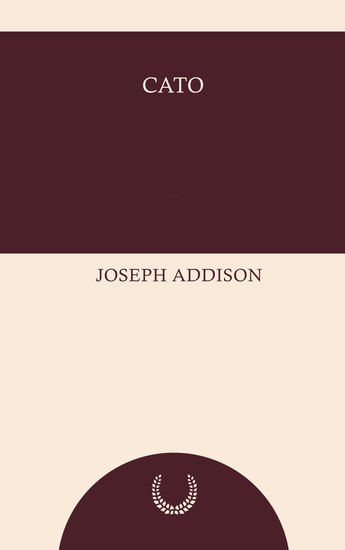
Cato - cover

Cato

Joseph Addison

Publisher: CLXBX

  • 0
  • 0
  • 0

Summary

Cato by Joseph Addison is a landmark neoclassical tragedy that explores themes of virtue, liberty, honor, and political resistance. First performed in 1713, the play quickly became one of the most influential dramatic works of its time, admired for its eloquent language, moral seriousness, and powerful philosophical ideas.

Set during the final days of Cato the Younger, the Roman statesman and Stoic philosopher, the drama unfolds against the backdrop of Julius Caesar's rise to power and the collapse of the Roman Republic. As Caesar's forces advance, Cato and his loyal supporters retreat to Utica in North Africa, where they face the inevitable defeat of their cause. Yet even in the face of political collapse, Cato remains steadfast in his commitment to republican ideals and personal integrity.

The play interweaves political conflict with personal struggles, including the romantic tensions between Cato's children, Marcia and Juba, and the internal divisions among his followers. While some characters consider surrender or compromise, Cato embodies unwavering resolve, choosing death over submission to tyranny.

Joseph Addison crafts a work rich in rhetorical brilliance and moral reflection, drawing heavily on classical ideals of Stoicism. Cato became especially significant in shaping Enlightenment thought, influencing debates on governance, liberty, and resistance to authoritarian rule. Its famous speeches were quoted by political leaders and revolutionaries on both sides of the Atlantic.

Blending philosophical depth with dramatic intensity, Cato remains a cornerstone of early 18th-century English drama. It continues to be studied for its exploration of civic virtue, ethical leadership, and the tension between personal sacrifice and political duty.

Ideal for students of literature, political philosophy, and classical theatre, Cato stands as a timeless meditation on freedom, integrity, and the price of unwavering principle.
Available since: 05/07/2026.
Print length: 62 pages.

Other books that might interest you

  • Shout - cover

    Shout

    Alexis Zegerman

    • 0
    • 0
    • 0
    'I want to connect. I want to be able to laugh and love, and be loved back... I want to be able to speak, without throwing up.'
    In a world full of words, how can Dana be herself when she can't speak? Dana has selective mutism, but that doesn't stem her vivid imagination. Because it's not just the noise you make that makes you who you are.
    Alexis Zegerman's play Shout is a funny, moving drama about anxiety, celebrating difference, and finding your voice. It wonders what exactly it takes to overcome anxiety and cope with mental health issues when you're a teenager.
    Written specifically for young people, the play formed part of the 2024 National Theatre Connections Festival and was premiered by youth theatres across the UK, including a performance at the National Theatre, London. It offers opportunities for a flexible cast of any size and mix of genders.
    Show book
  • On Hearing That Constantinople Was Swallowed Up By An Earthquake - Poem by a 18th Century female author who was also an abolitionist pioneer - cover

    On Hearing That Constantinople...

    Amelia Opie

    • 0
    • 0
    • 0
    Amelia Alderson, an only child, was born on the 12th November 1769 in Norwich, England. 
    After the death of her mother on New Year’s Eve 1784 she became her father's housekeeper and hostess. 
    The young Amelia was energetic, attractive, and an admirer of fashion.  She spent much of her youth writing poetry and plays and putting on local amateur theatricals.  At 18 she had published anonymously ‘The Dangers of Coquetry’. 
    Amelia married in the spring of 1798 to the artist John Opie at the Church of St Marylebone, in Westminster, and together they lived in Berners Street where Amelia was already living. 
    Her next novel in 1801 ‘Father and Daughter’, was very popular even though it dealt with such themes as illegitimacy, a socially difficult subject for its times.  From this point on published works were far more regular.  The following year her volume ‘Poems’ appeared and was again very popular.  Novels continued to flow and she never once abandoned her social activism and her call for better treatment of women and the dispossessed in her works.  She was also keenly involved in a love of society and its attendant frills. 
    Encouraged by her husband to write more she published Adeline Mowbray in 1804, an exploration of women's education, marriage, and the abolition of slavery.  
    Her husband died in 1807 and she paused from writing for a few years before resuming with further novels and poems.  Of particular interest was her short poem ‘The Black Man's Lament’ in 1826.  Her life now was in the main spent travelling and working for charities and against slavery.  She even helped create a Ladies Anti-Slavery Society in Norwich which organised a parliamentary petition of 187,000 names of which hers was the first name. 
    After a visit to Cromer, a seaside resort on the North Norfolk coast, she caught a chill and retired to her bedroom.  
    Amelia Opie died on the 2nd December 1853 in Norwich.  She was 84.
    Show book
  • What The Lizard Said - cover

    What The Lizard Said

    Nels Hanson, Mandana Talieh...

    • 0
    • 0
    • 0
    What the Lizard Said is the first in a series of illustrated poetry books that chronicle the adventures of Wise Dog and his younger friend, Jimmi, two dogs on a quest to learn important lessons about the world we live in. Every poem presents a different animal with different wisdom to impart to Wise Dog and Jimmi on their journey toward a greater understanding of life's challenges and opportunities. The Wise Dog and Jimmi books are designed for children and adults to read together, to encourage them to share their thoughts and feelings about the poems' central message: the variety, unity, and sanctity of all life, and our responsibility to care for the Earth's creatures. 
    The author began writing What the Lizard Said as a reading tutor at a learning clinic, to help children increase their reading and comprehension skills and to expand their vocabularies, all through the rhythms of poetry. New words are introduced within rhyming stanzas, and Wise Dog and Jimmi and the poetic animals they meet gently guide young readers through more complex sentences and grammar. 
    Wise Dog and Jimmi invite you to join them on their future adventures and to meet all the new animals waiting to help them.
    Show book
  • Dubliners - cover

    Dubliners

    James Joyce

    • 0
    • 0
    • 0
    A remarkable collection of stories that captures the emotions, routines, and hidden tensions of ordinary life in Dublin.
    
    Through a series of interconnected tales, James Joyce explores the experiences of people from different walks of life—children, workers, dreamers, and individuals facing moments of change or realization. Each story reveals quiet emotional depth beneath everyday situations.
    
    The collection examines themes of identity, isolation, ambition, and personal awakening. Joyce's subtle storytelling and sharp observations bring realism and humanity to every character, creating moments that feel intimate and deeply authentic.
    
    Rich in atmosphere and psychological insight, Dubliners paints a vivid picture of a city and its people while exploring universal emotions and struggles. Its influence on modern literature remains profound.
    
    Written by James Joyce, this classic collection continues to resonate with readers through its honesty and literary brilliance.
    
    Step into the lives, memories, and quiet revelations of Dublin—download your copy today.
    Show book
  • Rhyme A Dozen A - Heaven - 12 Poets 12 Poems 1 Topic - cover

    Rhyme A Dozen A - Heaven - 12...

    Rupert Brooke, WB Yeats, Ben...

    • 0
    • 0
    • 0
    ‘A dime a dozen’ as known in America, is perhaps equal to the English ‘cheap as chips’ but whatever the lingua franca of your choice in this series we hereby submit ‘A Rhyme a Dozen’ as 12 poems on many given subjects that are a well-rounded gathering, maybe even an essential guide, from the knowing pens of classic poets and their beautifully spoken verse to the comfort of your ears. 
     
    01 - A Rhyme A Dozen - 12 Poems, 12 Poets, 1 Topic - Heaven - An Introduction 
    02 - Heaven by Rupert Brooke 
    03 - I Would To Heaven That I Was So Much Clay by Lord Byron 
    04 - New Heaven and Earth by D H Lawrence 
    05 - He Wishes For the Cloths of Heaven by W B Yeats 
    06 - Song To Mary In Heaven by Robert Burns 
    07 - To Heaven by Ben Jonson 
    08 - I Went To Heaven by Emily Dickinson 
    09 - How I Walked Alone in the Jungles of Heaven by Vachal Lindsay 
    10 - Men Are Heavens Piers by Robert Louis Stevenson 
    11 - To One In Paradise by Edgar Allan Poe 
    12 - God Lay Dead In Heaven by Stephen Crane 
    13 - If Stars Dropped Out of Heaven by Christina Georgina Rossetti
    Show book
  • GAZA Today - Would You Turn Your Back - cover

    GAZA Today - Would You Turn Your...

    Mike Blake

    • 0
    • 0
    • 0
    GAZA Today: Would You Turn Your Back. 
    (Harmony-Join Book 4) 
    Everyone knows what Gaza is. A strip of land in the Middle East, being vociferously fought over. 
    I don't want to get into the Politics of it, but at least a brush with it is unavoidable if you attempt 
    any kind of dialogue or description of the occurrences that are happening there - truly awful. 
    This poem is a short one, and keeps to the suffering of its people, and not delving too much into sides 
    of the Political spectrum. 
    I think the suffering in a modern day scenario with instant and graphic footage of this one-sided war 
    is horrific. 
    Regardless of who did what to who, and who did it first etc, it should be focused on the humanitarian side 
    in any conflict lest we lose sight of what we maybe fighting for - I think the focus on humanity has been totally 
    lost. 
    Are we to Turn Our Back on these people. The West should push for extreme Sanctions to reign in the seemingly 
    unstoppable gungho aggression of the combatants - There is a Geneva convention you know. 
    It can only mean something if it is enforced... 
    Footnote: This Poem is all about the kids in this conflict. Whose right and whose wrong, shouldn't come into it 
    on the humanitarian field of view.
    Show book