¡Acompáñanos a viajar por el mundo de los libros!
Añadir este libro a la estantería
Grey
Escribe un nuevo comentario Default profile 50px
Grey
Suscríbete para leer el libro completo o lee las primeras páginas gratis.
All characters reduced
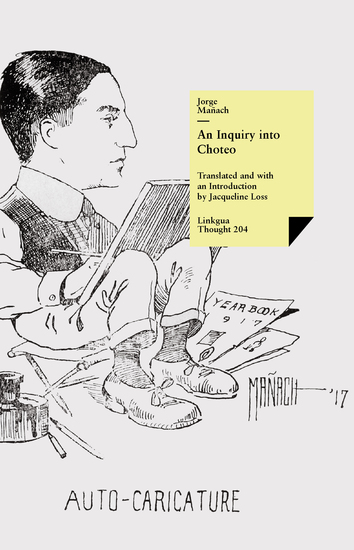
An Inquiry into Choteo - cover

An Inquiry into Choteo

Jorge Mañach Robato

Traductor Jacqueline Loss

Editorial: Linkgua

  • 0
  • 0
  • 0

Sinopsis

In the 1920s, many of Cuba's intellectuals, like Jorge Mañach, were confronted with how to deal with a new postcolonial universe whose neocolonial leanings were undeniable.
A palpable unease runs throughout An Inquiry into Choteo (first delivered as a lecture in 1928), as Mañach anxiously attempts to explain this idiosyncratic Cuban attitude or humor that he deems prevalent in the first few turbulent decades of the 20th century.
Esteemed in the Spanish-speaking world, only two of Mañach's writings, Martí: Apostle of Freedom, 1950 and Frontiers in the Americas: A Global Perspective (1970), have been published in English—a language which, as an adolescent in Massachusetts, Mañach inhabited, and from which he translated throughout his life. The fact that Mañach is a difficult figure to pin down, textually and ideologically across his life, is part of Jacqueline Loss's motivation to carry out this translation of An Inquiry into Choteo, one of the most authoritative essays in Spanish, comparable to other classic meditations on Latin American and national identity such as José Enrique Rodó's Ariel (1900, English 1988), Antonio S. Pedreira's Insularismo: An Insight into the Puerto Rican Character (1934, English 2007), and Octavio Paz's The Labyrinth of Solitude (1950, English 1962).
While Mañach suggested that the pervasiveness of choteo, with its positive and pernicious dimensions, waned by the time of his revision in 1955, An Inquiry into Choteo is all the more relevant in the 21st century, especially within a comparative context, wherein banners of ideology and egalitarianism sometimes obscure the racial and class tensions that reside right below the surface. Analysis of geopolitical maneuverings alone are insufficient to elucidate the intricacies of relationships that emerge, in such texts as Mañach's An Inquiry into Choteo.
Disponible desde: 01/12/2017.
Longitud de impresión: 104 páginas.
Otros libros que te pueden interesar

  • Understanding Machiavelli’s The Prince - cover

    Understanding Machiavelli’s The...

    Denis Collin

    • 0
    • 0
    • 0
    Machiavelli has a reputation as an immoral thinker. His most famous work, The Prince, is oftemnm criticized as being a manual for political cunning and cynicism.
    On the contrary, Machiavelli invites us to face up to political and human reality. Faced with illusions and moralistic rhetoric, we must seek the truth and adopt a scientific approach to seriously reflect upon action.
    This introduction provides us with the keys to understanding The Prince, a foundational book of modern political thought, and the relevance of its teachings for our contemporary societies.
    Ver libro
  • Silencing White Noise - Six Practices to Overcome Our Inaction on Race - cover

    Silencing White Noise - Six...

    Willie Dwayne Francois III

    • 0
    • 0
    • 0
    Racism is omnipresent in American life, both public and private. We are immersed in what prominent Black church leader Willie Dwayne Francois III calls white noise—the racist speech, ideas, and policies that lull us into inaction on racial justice. White noise masks racial realities and prevents constructive responses to microaggressions, structural inequality, and overt interpersonal racism. 


    In this book, Francois calls people of all racial backgrounds to take up practices that overcome silence and inaction on race and that advance racial repair. Drawing from his anti-racism curriculum, the Public Love Organizing and Training (PLOT) Project, Francois encourages us to move from a "colorblind" stance and mythic innocence to one that takes an honest account of our national history and acknowledges our complicity in racism as a prelude to anti-racist interventions. 


    Weaving together personal narrative, theology, and history, this book invites us to engage six "rhythms of reparative intercession." These are six practices of anti-racism that aim to repair harm by speaking up and "acting up" on behalf of others. Silencing White Noise offers concrete ways to help people wrest free from the dangers of racism and to develop lifelong Christian anti-racist practices.
    Ver libro
  • Lesbian Erotic Short Story - A Gentle BDSM Adventure - cover

    Lesbian Erotic Short Story - A...

    Amber Carden

    • 0
    • 0
    • 0
    A confident and curious 20-year-old girl, an experienced dominatrix, and a well-equipped dungeon.   
    What can go wrong? 
    If you are into lesbian and BDSM stories and like podcasts such as: The lesbian romantic, The lesbian supper club, lesbian chronicles, we’re having gay sex, lesbian sex stories, conversations with a dom, and audiobooks such as: priest, chelle bliss, throttle me, piper lawson, good girl, 50 shades, fifty shades, erotic sex stories for adults, deep fingers, irresistibly bound: the complete series, and more, get ready to buckle up! 
    Listen to the sample now.
    Ver libro
  • Don’t Call It Hair Metal - Art in the Excess of ’80s Rock - cover

    Don’t Call It Hair Metal - Art...

    Seana Kelly

    • 0
    • 0
    • 0
    A love letter to the hard-rocking, but often snubbed, music of the era of excess: the 1980s
    		 
    There may be no more joyous iteration in all of music than 1980s hard rock. It was an era where the musical and cultural ideals of rebellion and freedom of the great rock ’n’ roll of the ’50s, ’60s, and ’70s were taken to dizzying heights of neon excess. Attention to songcraft, showmanship, and musical virtuosity (especially in the realm of the electric guitar) were at an all-time high, and radio and MTV were delivering the goods en masse to the corn-fed children of America and beyond.
    		 
    Time hasn’t always been kind to artists of that gold and platinum era, but Don’t Call It Hair Metal analyzes the sonic evolution, musical diversity, and artistic intention of ’80s commercial hard rock through interviews with members of such hard rock luminaries as Twisted Sister, Def Leppard, Poison, Whitesnake, Ratt, Skid Row, Quiet Riot, Guns N’ Roses, Dokken, Mr. Big, and others.
    Ver libro
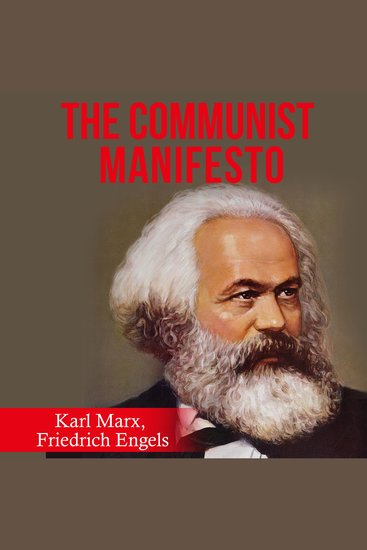
  • The Communist Manifesto - cover

    The Communist Manifesto

    Karl Marx, Friedrich Engels

    • 0
    • 0
    • 0
    The Communist Manifesto is an 1848 political pamphlet by the German philosophers Karl Marx and Friedrich Engels. It presents an analytical approach to the class struggle and the conflicts of capitalism and the capitalist mode of production, rather than a prediction of communism's potential future forms. 
    The Communist Manifesto summarizes Marx and Engels' theories concerning the nature of society and politics, namely that in their own words "the history of all hitherto existing society is the history of class struggles". It also briefly features their ideas for how the capitalist society of the time would eventually be replaced by socialism. Near the end of the Manifesto, the authors call for a "forcible overthrow of all existing social conditions", which served as the justification for all communist revolutions around the world.
    Ver libro
  • Future Presence - How Virtual Reality Is Changing Human Connection Intimacy and the Limits of Ordinary Life - cover

    Future Presence - How Virtual...

    Peter Rubin

    • 0
    • 0
    • 0
    A Wired senior editor and virtual reality expert presents a captivating, candid glimpse into the future ""realities"" of this emerging technology: how we will use it to form previously impossible relationships, explore new frontiers of intimacy, and how it will forever change human connection. 
    Heralded as the most significant technological innovation since the smartphone, virtual reality is poised to transform our very notions of life and humanity. Though this tech is still in its infancy, to those on the inside, it is the future. VR will change how we work, how we experience entertainment, how we feel pleasure and other emotions, how we see ourselves, and most importantly, how we relate to each other in the real world. And we will never be the same. 
    Peter Rubin, senior culture editor for Wired and the industry’s go-to authority on the subject, calls it an ""intimacy engine."" While once we needed another person to feel the sensations of closeness, trust, vulnerability, confidence, and titillation, VR will give us the ability to induce these sensations by ourselves for the first time in human history. This metamorphosis, Rubin argues, is going to have a powerful impact on relationships that will ripple throughout our society and our individual lives. 
    A journey into this uncertain future and a glimpse at the cultural implications and promises of a new reality, Future Presence explores a host of complex questions about what makes us human, what connects us, and what is real. Offering a glimpse into the mind-blowing things happening in universities, labs, and tech companies around the world, Rubin leads readers on an entertaining tour of the weirdest, wildest corners of this fascinating new universe. Describing this book as ""half travelogue and half crystal ball"", Rubin will:Introduce readers to the creators and consumers of VR technologyShow readers what an experience is like inside the current VR devicesExplain how this technology will upend everything we know about human connection in the future 
    At once the incredible, inevitable story of virtual reality’s rise and a look towards the future of our fantasies, Future Presence is a deeply personal examination of what connects us, and an analysis of what relationships, empathy, and sex could look like—sooner than we think.
    Ver libro