¡Acompáñanos a viajar por el mundo de los libros!
Añadir este libro a la estantería
Grey
Escribe un nuevo comentario Default profile 50px
Grey
Suscríbete para leer el libro completo o lee las primeras páginas gratis.
All characters reduced
Talk Radio Battles - cover

Talk Radio Battles

Jonathan Hawkins

Traductor A AI

Editorial: Publifye

  • 0
  • 0
  • 0

Sinopsis

Talk Radio Battles examines the significant role of talk radio hosts in shaping political discourse and influencing public opinion. In today's polarized environment, these hosts compete fiercely for listeners, often prioritizing audience engagement and ideological purity. The book investigates how this competitive landscape impacts the quality of political debate and the spread of information.

 
One intriguing fact is that the repeal of the Fairness Doctrine played a crucial role in the proliferation of partisan content on talk radio, fundamentally altering the media landscape. The book traces the evolution of talk radio from a niche medium to a dominant force in American media, unveiling the strategies employed by hosts to cultivate loyal audiences and drive political agendas. It analyzes broadcast transcripts, audience surveys, and insider interviews.

 
The narrative progresses by exploring the competitive tactics of rival hosts, their influence on political discourse, and the ethical considerations surrounding their content. Readers will gain a deeper understanding of how talk radio amplifies political sentiment, potentially impacting electoral outcomes and deepening partisan divides.
Disponible desde: 31/03/2025.
Longitud de impresión: 66 páginas.


Otros libros que te pueden interesar

  • 25 Million Sparks - The Untold Story of Refugee Entrepreneurs - cover

    25 Million Sparks - The Untold...

    Andrew Leon Hanna

    • 0
    • 0
    • 0
    25 Million Sparks takes readers inside the Za’atari refugee camp to follow the stories of three courageous Syrian women entrepreneurs: Yasmina, a wedding shop and salon owner creating moments of celebration in Za’atari; Malak, a young artist infusing color and beauty in her adoptive community; and Asma, a social entrepreneur with a storytelling initiative enriching children’s lives throughout the camp. Anchored by these three inspiring stories, as well as accompanying artwork and poetry created by Malak and Asma, the narrative expands from the intimacies of Za’atari to explore the broader refugee entrepreneurship phenomenon in more than 20 camps, cities, and towns across the globe. What emerges is a tale of power, determination, and dignity – of lighting the brightest sparks of joy, even when the rest of the world sees only the darkness.
    Ver libro
  • Late Fascism - Race Capitalism and the Politics of Crisis - cover

    Late Fascism - Race Capitalism...

    Alberto Toscano

    • 0
    • 0
    • 0
    Late Fascism turns to theories of fascism produced in the past century, testing their capacity to illuminate our moment and challenging many of the commonplaces that debate on this extremely charged term devolves into. It can be tempting for any contemporary assessment of fascism to reach for historical analogy. 


    Rather than treating fascism as an unrepeatable phenomenon or identifying it with a settled configuration of European parties, regimes, and ideologies, Toscano approaches fascism as a problem and a process, one that is intimately linked to capitalism's demands for domination. Drawing especially on Black radical and anti-colonial theories of racial fascism, Late Fascism makes clear the limits of identifying fascism simply with the political violence of bygone European regimes. From the "Great Replacement" to campaigns against critical race theory and "gender ideology," today's global far-right is launching lethal panics about the threats to traditional political, sexual, and racial regimes. Late Fascism allows us to rediscover some truly inspiring anti-fascist thinkers, rooted in their turn in largely anonymous collective practices of worldmaking against domination, traditions of the oppressed that remain a resource for those set on dismantling the hierarchies and segregations that the partisans of Order and Tradition seek to revive and reimpose.
    Ver libro
  • Rock Your Literacy Block: Mighty Moves to Organize Your Day and Optimize Student Learning - cover

    Rock Your Literacy Block: Mighty...

    Lindsay Kemeny

    • 0
    • 0
    • 0
    This audiobook is a valuable resource for any K-3 teacher.As teachers learn about the science of reading, they're gaining knowledge about the "what," but not so much the "how." In other words, they don't have a clear picture of how to implement research-backed daily reading instruction... until now! This audiobook guides listeners through the literacy block, step-by-step - from morning arrival to whole-class and small-group instruction to literacy centers, writing time, and read-aloud. Loaded with teaching, planning, and management tips, sample schedules and routines.
    Ver libro
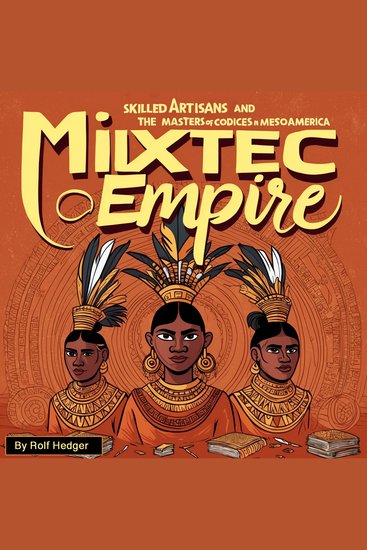
  • Mixtec Empire - Skilled Artisans and the Masters of Codices in Mesoamerica - cover

    Mixtec Empire - Skilled Artisans...

    Rolf Hedger

    • 0
    • 0
    • 0
    The Mixtec civilization, known as the Ñuu Savi or "People of the Rain," emerged in the rugged mountains and fertile valleys of what is now Oaxaca, Mexico. Their origins date back to the Preclassic period, around 1500 BCE, when small agricultural communities began to flourish in the Mixteca Alta, Mixteca Baja, and Mixteca de la Costa regions. These early settlements were shaped by the challenging geography, with steep hills and limited arable land requiring innovative farming techniques. Over centuries, the Mixtec people developed sophisticated agricultural systems, including terracing and irrigation, which allowed them to sustain growing populations and establish permanent communities. 
    Mythology played a central role in Mixtec identity, reinforcing their connection to the land and legitimizing the rule of their elite class. The Mixtec creation story, recorded in their intricate codices, tells of divine ancestors emerging from a sacred place known as Apoala, a cave associated with the origins of humanity. These ancestors, believed to be both human and divine, established the first Mixtec lineages, which would later claim authority over the various city-states. This mythology was not just a story but a political tool that reinforced the power of Mixtec rulers, linking them directly to the gods and the forces of nature. 
    The early Mixtec communities were organized into small chiefdoms, each ruled by a hereditary elite. These leaders controlled land, resources, and religious ceremonies, ensuring stability and continuity within their societies. Over time, as populations expanded and rivalries grew, these chiefdoms evolved into larger political entities, forming the foundation for the powerful Mixtec city-states that would dominate the region in later centuries.
    Ver libro
  • The Plainsman: A Story of Wild Bill Hickok - cover

    The Plainsman: A Story of Wild...

    Frank Jenners Wilstach

    • 0
    • 0
    • 0
    "In the following pages I have endeavoured to give the reader a plain, honest, homespun account of my state in life, and some few of the difficulties which have attended me along its journey, down to this time. I am perfectly aware, that I have related many small and, as I fear, uninteresting circumstances; but if so, my apology is, that it was rendered necessary by a desire to link the different periods of my life together, as they have passed, from my childhood onward, and thereby to enable the reader to select such parts of it as he may relish most, if, indeed, there is any thing in it which may suit his palate."
    Ver libro
  • Michigan POW Camps in World War II - cover

    Michigan POW Camps in World War II

    Gregory D. Sumner

    • 0
    • 0
    • 0
    During World War II, Michigan became a temporary home to six thousand German and Italian POWs. 
    At a time of homefront labor shortages, they picked fruit in Berrien County, harvested sugar beets in the Thumb, cut pulpwood in the Upper Peninsula, and maintained parks and other public spaces in Detroit. The work programs were not flawless and not all of the prisoners were cooperative, but many of the men established enduring friendships with their captors. Author Gregory Sumner tells the story of these detainees and the ordinary Americans who embodied our highest ideals, even amid a global war.
    Ver libro