¡Acompáñanos a viajar por el mundo de los libros!
Añadir este libro a la estantería
Grey
Escribe un nuevo comentario Default profile 50px
Grey
Suscríbete para leer el libro completo o lee las primeras páginas gratis.
All characters reduced
The Invasion of India by Alexander the Great - As Described by Greek Historians - cover

The Invasion of India by Alexander the Great - As Described by Greek Historians

John Watson McCrindle

Editorial: DigiCat

  • 0
  • 0
  • 0

Sinopsis

John Watson McCrindle's "The Invasion of India by Alexander the Great" offers a meticulous account of one of history's most significant military campaigns. Through a combination of primary historical texts and archaeological evidence, McCrindle presents a vivid narrative that captures both the strategic brilliance and the cultural encounters of Alexander's expedition into India. His scholarly style is marked by a richly descriptive language and an analytical approach that situates Alexander's conquests within the broader tapestry of Hellenistic history, making complex themes accessible to a diverse readership. McCrindle, a notable historian and linguist of the 19th century, dedicated much of his life to the study of ancient civilizations, particularly focusing on interactions between the East and West. His educational background in classics and languages significantly shaped his understanding of the source materials, allowing him to provide nuanced interpretations of events and motivations. McCrindle's passion for history is apparent throughout the text, drawing on his extensive research and travels in South Asia to deepen the narrative. This book is an essential read for anyone interested in ancient history, military strategy, and cultural exchanges. McCrindle's thoroughness and engaging prose not only illuminate the era but also invite readers to reflect on the enduring legacy of Alexander's journey. For scholars and casual readers alike, this account stands as a compelling exploration of conquest and its transformative effects on civilizations.
Disponible desde: 24/11/2023.
Longitud de impresión: 423 páginas.
Otros libros que te pueden interesar

  • Archaeology of the Anunnaki Sumerians - Revealing Strange Artifacts and Mesopotamia Mysteries - cover

    Archaeology of the Anunnaki...

    Faruq Zamani

    • 0
    • 0
    • 0
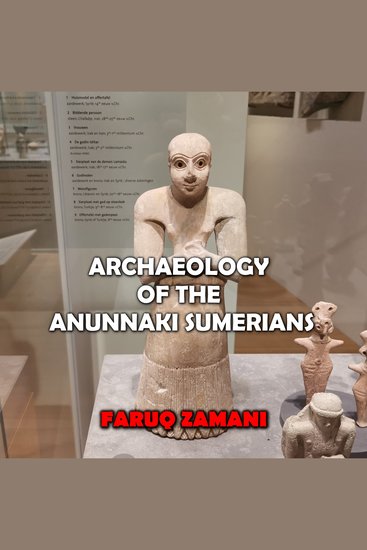
    Leonard Woolley, an archaeologist from Britain, returned to Iraq in 1922, almost 4,000 years after the nuclear ancient catastrophe, to uncover ancient Mesopotamia.An imposing ziggurat standing out in the desert plain drew him to the nearby site of Tell el-Muqayyar, where he began excavating. As old walls, artifacts, and inscriptions were unearthed, he realized he was digging up ancient Ur-Ur of the Chaldees. 
    Twelve years of his work were conducted through a joint expedition between the British Museum in London and the University of Pennsylvania Museum in Philadelphia. For those institutions, Sir Leonard Woolley found some of the most dramatic objects and artifacts in Ur. However, what he discovered may well surpass anything ever exhibited before. 
    In the course of removing layers of soil deposited by desert sands, the elements, and time from the ruins, the ancient city began to take shape-here were the walls, there were the harbors and canals, the residential quarters, the palace, and the Tummal, the elevated sacred area. Woolley's discovery of a cemetery dated thousands of years ago included unique 'royal' tombs discovered by digging at its edge is the find of the century.
    Ver libro
  • The Public and Its Problems - cover

    The Public and Its Problems

    John Dewey

    • 0
    • 0
    • 0
    "The Public and Its Problems" by John Dewey is a seminal work in political philosophy and social theory that explores the nature of democracy, the challenges it faces, and the role of the public in addressing societal problems. In this thought-provoking book, Dewey examines the relationship between democracy, individualism, and the collective responsibility of the public. Dewey begins by critiquing the traditional notion of the public as a mere aggregation of individual interests. He argues that a true understanding of the public must transcend individualism and focus on the shared concerns and aspirations that bind society together. He emphasizes the importance of public intelligence and deliberation in addressing the complex problems faced by modern democratic societies. Read in English, unabridged.
    Ver libro
  • Han Dynasty - Silk Roads Science and the Confucian Revival - cover

    Han Dynasty - Silk Roads Science...

    Rolf Hedger

    • 0
    • 0
    • 0
    The Han Dynasty, lasting from 206 BCE to 220 CE, is one of the most significant periods in Chinese history, shaping the culture, politics, and identity of China for centuries. It followed the brief but influential Qin Dynasty, which had laid the foundations for imperial rule but also faced internal strife and rebellion. The Han emerged as the new power, restoring stability and expanding China's borders, making significant contributions to science, technology, trade, and philosophy. 
    The dynasty's rise was primarily due to the leadership of Liu Bang, a former peasant who became Emperor Gaozu. He defeated his rival, Xiang Yu, and took control of the vast Qin Empire, establishing the Han Dynasty. Gaozu's leadership marked the beginning of a new era, one that would see the consolidation of power and the implementation of reforms that would shape the future of the empire. 
    The Han Dynasty’s political structure was deeply influenced by the collapse of the Qin Dynasty. Emperor Gaozu restored the decentralized feudal system of governance, but with modifications to ensure more central control. Over time, the emperors of the Han Dynasty would strengthen the centralized bureaucracy, establishing a model that would endure for centuries in imperial China. One of the key developments was the introduction of Confucianism as the state philosophy. Confucian ideals, emphasizing hierarchy, duty, and moral governance, became deeply embedded in the political and social structure of the Han Empire. Confucian scholars played an essential role in the administration, and the dynasty itself was viewed as a time when the state was governed by virtuous and learned rulers.
    Ver libro
  • Medieval Education - The Rise of Universities - cover

    Medieval Education - The Rise of...

    Harris Ropes

    • 0
    • 0
    • 0
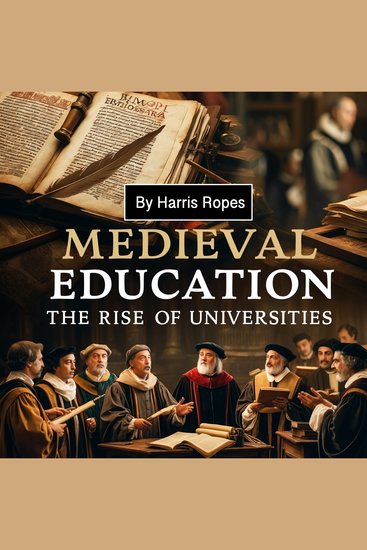
    During the early medieval period, education in Europe was primarily shaped by the influence of the Church. With the decline of the Western Roman Empire, formal education systems deteriorated, leaving monasteries and cathedral schools as the main centers of learning. These institutions preserved classical knowledge and played a crucial role in the intellectual revival of the Middle Ages. Monastic and cathedral schools provided education for clergy members and, over time, expanded their reach to include nobles and, in some cases, commoners. 
    Monastic schools were among the earliest centers of learning, with monks serving as teachers and scribes. These schools focused on religious instruction, teaching Latin, biblical texts, and theological commentaries. The goal was to prepare future clergy members for service in the Church. Monastic scriptoria were responsible for copying and preserving important texts, ensuring the transmission of classical and Christian knowledge. While most students in monastic schools were destined for religious life, some noble families sent their sons for education in literacy and administration, as the Church held significant political influence. 
    Cathedral schools emerged as a response to the growing demand for education beyond monastic settings. They were often attached to large churches or bishoprics and provided instruction to a wider audience, including future clergymen, royal officials, and scholars. These schools offered a more structured curriculum, covering subjects such as grammar, rhetoric, and logic, which formed the foundation of medieval education. Over time, cathedral schools developed into important intellectual hubs, attracting students from various regions. The presence of prominent teachers and scholars helped establish certain cathedral schools as precursors to medieval universities.
    Ver libro
  • The Kubark Counterintelligence Interrogation Manual - cover

    The Kubark Counterintelligence...

    Central Intelligence Agency

    • 0
    • 0
    • 0
    Released by the Freedom of Information Act. This document is a thorough description of how the CIA recommends interrogating a subject. To get the information that is needed there is nothing withheld short of torture. For example in "Threats and Fears," the CIA authors note that "the threat of coercion usually weakens or destroys resistance more effectively than coercion itself. The threat to inflict pain, for example, can trigger fears more damaging than the immediate sensation of pain." Under the subheading "Pain," the guidelines discuss the theories behind various thresholds of pain, and recommend that a subject's "resistance is likelier to be sapped by pain which he seems to inflict upon himself" such rather than by direct torture. The report suggests forcing the detainee to stand at attention for long periods of time. A section on sensory deprivations suggests imprisoning detainees in rooms without sensory stimuli of any kind, "in a cell which has no light," for example.
    Ver libro
  • The Consolation of Philosophy - cover

    The Consolation of Philosophy

    Boethius

    • 0
    • 0
    • 0
    Experience the profound wisdom of Boethius with "The Consolation of Philosophy," now available as an engaging audiobook. Written in the 6th century, this timeless philosophical work explores themes of fortune, happiness, fate, and free will. As Boethius faces imprisonment and eventual execution, he engages in a dialogue with Lady Philosophy, who provides solace and profound insights into the human condition. 
    This audiobook brings Boethius' masterful text to life, offering a seamless blend of prose and verse that has captivated readers for centuries. The narrator’s clear and expressive voice ensures that each philosophical argument and poetic passage resonates deeply, making complex ideas accessible and engaging. 
    "The Consolation of Philosophy" is not just a historical artifact; its themes remain relevant today. It addresses the transient nature of wealth and power, the importance of inner virtues, and the quest for true happiness. Boethius' reflections on the nature of good and evil, the limits of human understanding, and the ultimate source of happiness provide a rich tapestry of thought that continues to inspire. 
    Perfect for listeners seeking intellectual enrichment, this audiobook is ideal for commutes, long walks, or quiet moments at home. It offers a chance to delve into a work that has shaped Western thought and provided comfort to many through the ages. 
    Whether you are a student of philosophy, a lover of classic literature, or someone looking for profound insights into life's challenges, "The Consolation of Philosophy" in audiobook format is an invaluable addition to your library. The narrative performance captures the essence of Boethius' wisdom, making it a compelling and thought-provoking listening experience. 
    Start listening to "The Consolation of Philosophy" today! Discover how this philosophical masterpiece can provide solace, understanding, and a deeper appreciation of life's complexities.
    Ver libro