¡Acompáñanos a viajar por el mundo de los libros!
Añadir este libro a la estantería
Grey
Escribe un nuevo comentario Default profile 50px
Grey
Suscríbete para leer el libro completo o lee las primeras páginas gratis.
All characters reduced
Fix bayonets! - cover

Fix bayonets!

John W. Jr. Thomason

Editorial: Good Press

  • 0
  • 0
  • 0

Sinopsis

In "Fix Bayonets!", John W. Jr. Thomason crafts a vivid and visceral narrative that captures the complexities of warfare, specifically focusing on the experiences of World War I. Renowned for its stark realism and immediate emotional impact, the book employs a distinctive literary style that balances stark prose with deeply introspective moments. Thomason's intricate depictions of battle scenes and the psychology of soldiers reveal the chaotic brutality of conflict while simultaneously emphasizing themes of camaraderie, valor, and the haunting specter of mortality. This work stands as a sobering exploration of the human condition amidst the horrors of war, firmly situated within the rich tradition of war literature that includes works by Erich Maria Remarque and Ernest Hemingway. John W. Jr. Thomason, a decorated Marine and a veteran of the conflicts he portrays, infuses his narratives with authentic experiences drawn from his own military service. His unique perspective not only lends credence to the emotional depth of the story but also establishes him as a profound commentator on the tribulations faced by soldiers. Thomason's experiences fortified his dedication to telling the truth of war, resulting in an authentic portrayal that resonates with both realism and reflective thought. "Fix Bayonets!" is a must-read for anyone seeking a nuanced understanding of the psychological and emotional toll of warfare. Its unflinching honesty will resonate with both military historiographers and general readers alike, making it an essential addition to any literature enthusiast's collection. Thomason's masterful storytelling not only illuminates the battlefield but also navigates the fragile human spirit, inviting readers to contemplate the price of valor and the enduring impact of war.
Disponible desde: 24/04/2025.
Longitud de impresión: 200 páginas.
Otros libros que te pueden interesar

  • A Rare Recording of President John F Kennedy’s Cuban Missile Crisis Speech - cover

    A Rare Recording of President...

    President John Fitzgerald Kennedy

    • 0
    • 0
    • 0
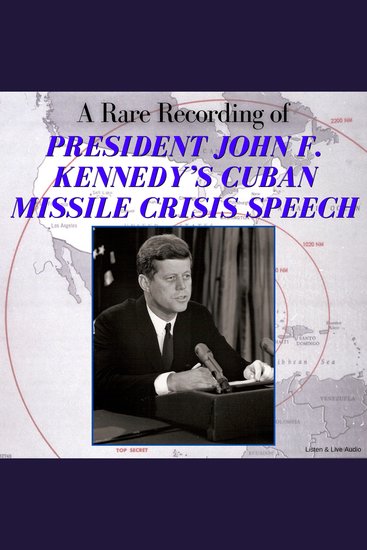
    On October 22, 1962, President John F. Kennedy gave a televised address informing the American public that the Soviet Union had installed missiles in Cuba. Kennedy announced a US naval blockade around the island to prevent further delivery of such weapons, essentially declaring that any missile launched from Cuba against the Western Hemisphere would be considered an attack by the Soviet Union, and would prompt a full US retaliatory response. Kennedy demanded the removal of the missiles from Cuba and warned of serious consequences if the Soviets did not comply.
    Ver libro
  • Cradles of African Civilization - Pioneers of Governance Art and Social Structure in Africa (5 in 1) - cover

    Cradles of African Civilization...

    Rolf Hedger

    • 0
    • 0
    • 0
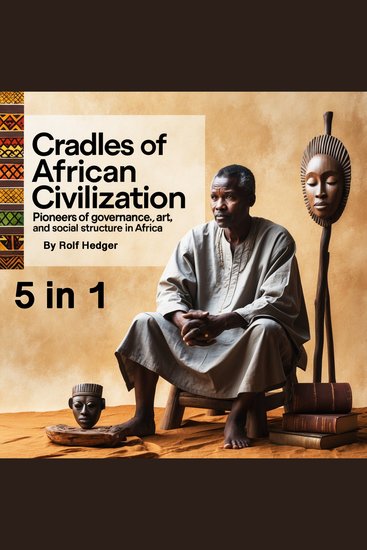
    This book consists of the following titles: 
    - Ghana Empire  
    - Kingdom of Kush  
    - Luba Empire  
    - Nok Civilization  
    - Oyo Empire  
    Get your hands on this bundle now!
    Ver libro
  • The Real Queen Charlotte - Inside the Real Bridgerton Court - cover

    The Real Queen Charlotte -...

    Catherine Curzon

    • 0
    • 0
    • 0
    Known to millions as the imperious matriarch of Bridgerton's court, Charlotte of Mecklenburg-Strelitz was still a teenager when she was chosen to be the bride of King George III. Shy, innocent, and sheltered, the orphaned princess and her groom carried the hopes of a nation on their shoulders. 


    The unassuming young couple symbolized a new beginning, but soon those hopes began to sour. Charlotte and George's marriage lasted for nearly sixty years and produced more than a dozen children, but it was beset by unrest at home, war in the colonies, and the king's encroaching madness. 


    As the royal couple battled against their critics, their political opponents, and sometimes their own family, Charlotte learned what it really meant to be queen. Locked in a bitter struggle with her eldest son for the king's future and with her daughters for their freedom, the timid young girl grew into an insular and domineering woman that few dared to cross. 


    Shouldering the burden of family disputes, ambitious courtiers, and the care of the man she adored, Charlotte of Mecklenburg-Strelitz presided over one of the most tumultuous eras that the monarchy has ever seen. This is the story of her extraordinary life.
    Ver libro
  • Second Inaugural Address - cover

    Second Inaugural Address

    Ronald Reagan

    • 0
    • 0
    • 0
    Because of extreme cold weather, Chief Justice Warren Burger administered the official oath of office in the White House on January 20, 1985. A public administration of the oath of office and the inaugural address were delayed until January 21, 1985, in the Capitol Rotunda.  
    On the 50th inauguration since George Washington’s, Reagan marvels at America’s growth and inventions, including journeying to the moon and back. “There are no limits to growth and human progress when men and women are free to follow their dreams.” Our values of faith, family, work, and neighborhood were restored “when our economy was finally freed from government’s grip”.  
    America supports "individual liberty, self-government, and free enterprise throughout the world…” We deal best with great challenges when we come “together not as Democrats or Republicans, but as Americans united in a common cause.”  
    “We must never again abuse the trust of working men and women by sending their earnings on a futile chase after the spiraling demands of a bloated Federal Establishment.” “Freedom and incentives unleash the drive and entrepreneurial genius that are the core of human progress.” 
    “We must act now to protect future generations from government's desire to spend its citizens' money and tax them into servitude when the bills come due.” Though “our heritage is one of blood lines from every corner of the Earth, we are all Americans, pledged to carry on this last, best hope of man on Earth.” 
    Rather than relying on mutual assured destruction, we need “a security shield that will destroy nuclear missiles before they reach their target” and “render nuclear weapons obsolete.”  
    We are “one people under God, dedicated to the dream of freedom that He has placed in the human heart, called upon now to pass that dream on to a waiting and hopeful world.” 
    Audio recording courtesy of the Ronald Reagan Presidential Library. 
    AspenLeafMedia.com
    Ver libro
  • Jean-Paul Sartre - Existentialism and Human Freedom - cover

    Jean-Paul Sartre -...

    Hector Davidson

    • 0
    • 0
    • 0
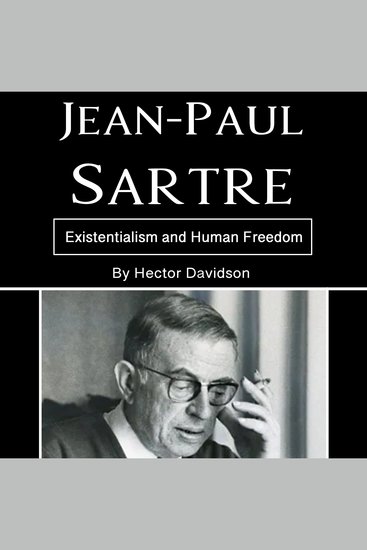
    Jean-Paul Sartre, a towering figure in 20th-century philosophy, is perhaps best known for his development of existentialism, a school of thought that emphasizes individual freedom, choice, and the creation of meaning in an otherwise indifferent universe. Sartre’s philosophy arises from the existentialist tradition but distinguishes itself through its rigorous approach to human freedom and responsibility. At the heart of Sartre's thought is the idea that human beings are condemned to be free, burdened with the constant task of making choices without any external justification or predetermined essence. 
    Born in Paris in 1905, Sartre’s intellectual journey was shaped by early encounters with phenomenology and existential philosophy, especially through the works of Edmund Husserl and Martin Heidegger. However, it was his engagement with phenomenology, along with his studies in literature and politics, that laid the groundwork for his later ideas. Sartre’s major philosophical work, Being and Nothingness (1943), is considered one of the central texts of existentialist thought, where he explores the nature of existence, consciousness, and freedom in profound detail. 
    Sartre’s existentialism diverges from traditional metaphysical perspectives by rejecting the notion of an intrinsic human nature or essence. For Sartre, existence precedes essence, meaning that individuals are not born with any predefined purpose or identity; instead, they must create their essence through their actions and choices. This concept places the responsibility for defining oneself squarely on the individual, leading to Sartre’s famous assertion that "man is nothing else but what he makes of himself."
    Ver libro
  • Nazis after Hitler - How Perpetrators of the Holocaust Cheated Justice and Truth - cover

    Nazis after Hitler - How...

    Donald M McKale

    • 0
    • 0
    • 0
    The stories of thirty war criminals who escaped accountability, from a historian praised for his “well written, scrupulously researched” work (The New York Times).   This deeply researched book traces the biographies of thirty “typical” perpetrators of the Holocaust—some well-known, some obscure—who survived World War II. Donald M. McKale reveals the shocking reality that the perpetrators were rarely, if ever, tried or punished for their crimes, and nearly all alleged their innocence in Germany’s extermination of nearly six million European Jews. He highlights the bitter contrasts between the comfortable postwar lives of many war criminals and the enduring suffering of their victims, and how, in the face of exhaustive evidence showing their culpability, nearly all claimed ignorance of what was going on—and insisted they had done nothing wrong.   “McKale ends the book with a haunting question: whether life would be different today if the Allies had pursued Holocaust criminals more aggressively after WWII. History buffs and students of the Holocaust will be fascinated.” ―Publishers Weekly   “Gripping and important reading.” —Eric A. Johnson, author of What We Knew 
    Ver libro