¡Acompáñanos a viajar por el mundo de los libros!
Añadir este libro a la estantería
Grey
Escribe un nuevo comentario Default profile 50px
Grey
Suscríbete para leer el libro completo o lee las primeras páginas gratis.
All characters reduced
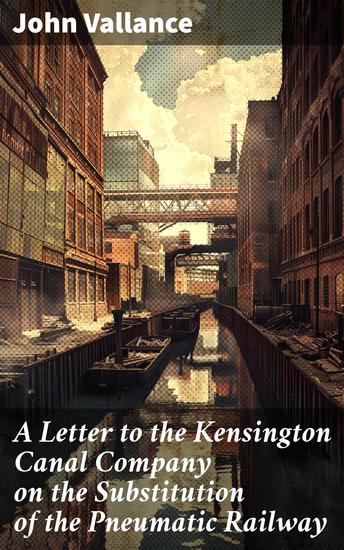
A Letter to the Kensington Canal Company on the Substitution of the Pneumatic Railway - For the Common Railway by Which They Contemplate Extending Their Line of Conveyance - cover

A Letter to the Kensington Canal Company on the Substitution of the Pneumatic Railway - For the Common Railway by Which They Contemplate Extending Their Line of Conveyance

John Vallance

Editorial: Good Press

  • 0
  • 0
  • 0

Sinopsis

In "A Letter to the Kensington Canal Company on the Substitution of the Pneumatic Railway," John Vallance presents a compelling discourse on the technological advancements of the early 19th century, focusing specifically on the innovative concept of pneumatic railways. Vallance employs a formal and persuasive literary style, appealing to both the scientific community and the general public. The work is situated within the burgeoning context of the Industrial Revolution, reflecting the era's enthusiasm for engineering marvels while addressing concerns about the future of transportation and urban infrastructure. John Vallance, an English civil engineer and advocate for modern transportation methods, wrote this letter in response to the urgent need for efficient and effective transport solutions during a time marked by rapid urbanization. His background in civil engineering and familiarity with emerging technologies uniquely positioned him to critique traditional systems, such as canal transport, and propose pneumatic railways as a robust alternative'Äîone that promised to enhance commercial connectivity and urban life. This thought-provoking pamphlet is essential reading for historians of technology and fans of engineering innovation. Vallance's insights shed light on historical discussions around urban transport, making this work not only a reflection of its time but also a pertinent commentary on modern transport debates.
Disponible desde: 19/11/2023.
Longitud de impresión: 120 páginas.
Otros libros que te pueden interesar

  • The Network - The Battle for the Airwaves and the Birth of the Communications Age - cover

    The Network - The Battle for the...

    Anónimo

    • 0
    • 0
    • 0
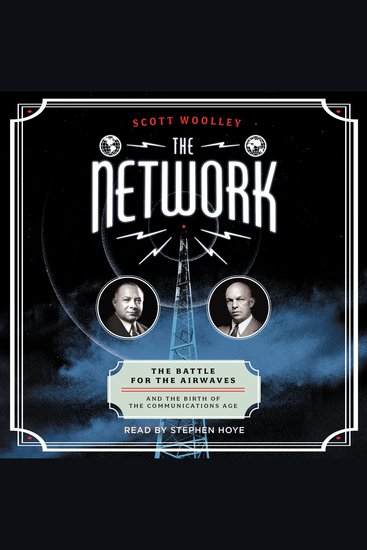
    The astonishing story of America’s airwaves, the two friends—one a media mogul, the other a famous inventor—who made them available to us, and the government which figured out how to put a price on air. 
    This is the origin story of the airwaves—the foundational technology of the communications age—as told through the forty-year friendship of an entrepreneurial industrialist and a brilliant inventor. 
    David Sarnoff, the head of RCA and equal parts Steve Jobs, Jack Welch, and William Randolph Hearst, was the greatest supporter of his friend Edwin Armstrong, developer of the first amplifier, the modern radio transmitter, and FM radio. Sarnoff was convinced that Armstrong’s inventions had the power to change the way societies communicated with each other forever. He would become a visionary captain of the media industry, even predicting the advent of the Internet. 
    In the mid-1930s, however, when Armstrong suspected Sarnoff of orchestrating a cadre of government officials to seize control of the FM airwaves, he committed suicide. Sarnoff had a very different view of who his friend’s enemies were. 
    Many corrupt politicians and corporations saw in Armstrong’s inventions the opportunity to commodify our most ubiquitous natural resource—the air. This early alliance between high tech and business set the precedent for countless legal and industrial battles over broadband and licensing bandwidth, many of which continue to influence policy and debate today.
    Ver libro
  • Counting: Humans History and the Infinite Lives of Numbers - cover

    Counting: Humans History and the...

    Benjamin Wardhaugh

    • 0
    • 0
    • 0
    WHAT DOES IT MEAN TO COUNT? WHY ARE HUMANS THE ONLY SPECIES ON EARTH THAT CAN DO IT? WHERE DID COUNTING COME FROM? HOW HAS IT SHAPED SOCIETIES ALONG THE WAY? AND WHY DOES IT MATTER? 
    Counting is an innovative, erudite, world-wrapping journey through humanity’s marvellous ability to impose numbers on things. Acclaimed historian and mathematician Benjamin Wardhaugh draws on stories from the Stone Age to cyberspace in pursuit of the elusive, fascinating, endlessly diverse history of human counting. 
    Starting with the roots of counting in human brains, bodies and environments, Wardhaugh tours us around the world and through time while exploring the different flavours of counting that have developed over millennia. We meet the makers of bead necklaces in ancient South Africa, the inventors of writing in the world ’ s first metropolis, and the ‘counter culture’ of classical Athens. We see counting used – and changed – by Indian scholars, Chinese peasants and Papuan shopkeepers; we meet the distinctive numerate agendas of Mayan kings, US governments and Korean vloggers. 
    Weaving these stories together, Wardhaugh shows how cultures have shaped counting, and how counting has shaped culture, in a rich tapestry spanning thousands of years. This is the vast story of human attempts to find some order in an unruly world; or, perhaps, to impose on a reluctant world the order that humans find within themselves. It is a history as wide, deep and tangled as that of humanity itself 
    This best non-fiction book by Wardhaugh is a deep dive into the philosophy and technology behind counting. His teaching style and comprehensive study of mathematics make this book a standout in its genre. 
    For fans of David Spiegelhalter (The Art of Uncertainty), Cat Bohannon (Eve), Rory Stewart (The Marches), Anne Applebaum (Autocracy, Inc), and Peter Frankopan (The New Silk Roads). 
    HarperCollins 2024
    Ver libro
  • Sustainable Water Management In Agriculture - Conserving a Precious Resource - cover

    Sustainable Water Management In...

    Ruchini Kaushalya

    • 0
    • 0
    • 0
    Struggling with water scarcity in agriculture? "Sustainable Water Management in Agriculture: Conserving a Precious Resource" is your solution. This comprehensive audiobook offers groundbreaking insights and effective strategies for sustainable water management. Learn from industry experts how to optimize water usage, improve crop yields, and save costs while contributing to environmental preservation. 
    Benefits:Expert Knowledge: Gain insights from seasoned professionals.Improved Yields: Optimize water usage for better crop production.Cost Savings: Reduce water wastage and save money.Environmental Impact: Contribute to a sustainable future. 
    What You’ll Gain:Practical Solutions: Easy-to-implement, tailored strategies.Case Studies: Real-life examples of successful practices.Sustainable Farming: Ecological and economic benefits.Latest Technology: Discover cutting-edge water conservation tools. 
    Ready to transform your agricultural practices? Click "Buy Now" and start your journey towards a sustainable future today!
    Ver libro
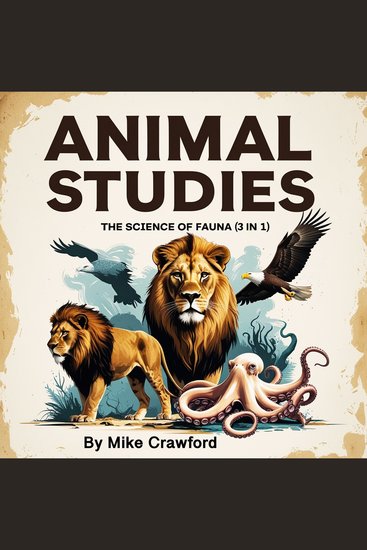
  • Animal Studies - The Science of Fauna (3 in 1) - cover

    Animal Studies - The Science of...

    Mike Crawford

    • 0
    • 0
    • 0
    This bundle dives deep into the fascinating world of animals through three focused disciplines. Whether you're a student of biology or simply passionate about wildlife, this book offers a structured journey through the diversity, behavior, and classification of animals on land, in water, and in the air. 
    Start with Mammalogy, the study of mammals, where you'll discover what makes this class of warm-blooded animals unique. Explore their evolutionary history, anatomy, reproduction, habitats, and behaviors—from lions and elephants to bats and marine mammals. 
    In Ichthyology, you’ll plunge into the underwater realm of fish. Learn about gill structures, sensory systems, spawning behaviors, and adaptations that allow fish to thrive in environments ranging from coral reefs to the darkest ocean depths. This section covers both bony and cartilaginous fishes, including sharks, rays, and eels. 
    Lastly, Entomology opens the miniature world of insects—the most diverse group of animals on Earth. Discover how insects breathe, communicate, and interact with their ecosystems. From the anatomy of butterflies to the colony structure of ants, this section uncovers the critical role of insects in pollination, decomposition, and as indicators of environmental health. 
    Ideal for learners of all levels, this 3-in-1 guide brings together key areas of zoology in one volume, making it an excellent resource for classrooms, libraries, or curious minds eager to understand the life forms that share our planet.
    Ver libro
  • Radiolab: Journey Through The Human Body - cover

    Radiolab: Journey Through The...

    Radiolab

    • 0
    • 0
    • 0
    Radiolab invites you to join us on a scientific journey through the body. Our bodies are so complex that many processes can go unnoticed. In this audiobook, not only do we notice, but we explore how our anatomy has shaped the human experience. These five chapters explore your guts, private parts, womb, butt, and brain. We’ll hear stories from scientists, anthropologists, professors, doctors, mothers, fathers, and storytellers. We answer questions like what organ is a baby's best friend and the mother's worst nightmare, what is the evolutionary reason for our butts, and how does your brain know that you, are you?
    Ver libro
  • Introduction to Quantum Mechanics - Basic Principles and Applications - cover

    Introduction to Quantum...

    Mark Hedges

    • 0
    • 0
    • 0
    Quantum mechanics arose in the early 20th century to explain phenomena that classical physics could not. Observations at the atomic scale revealed that matter and energy exhibit discrete and probabilistic behaviors, leading to the development of a new theoretical framework. The necessity for quantum mechanics became evident through several key experiments and discoveries. 
    One of the earliest quantum breakthroughs came from Max Planck’s study of blackbody radiation. Classical physics predicted an infinite energy output at short wavelengths, known as the ultraviolet catastrophe. Planck resolved this by proposing that energy is emitted in discrete packets called quanta, introducing the idea that energy levels are not continuous. This marked the birth of quantum theory. 
    Albert Einstein extended this concept with his explanation of the photoelectric effect, where light ejects electrons from a metal surface. Classical wave theory could not explain why light below a certain frequency fails to release electrons, regardless of intensity. Einstein proposed that light consists of photons, with energy proportional to their frequency. This established the particle-like nature of light and won him the Nobel Prize in 1921. 
    Louis de Broglie later proposed wave-particle duality, suggesting that particles like electrons also behave as waves. His hypothesis was experimentally confirmed by the Davisson-Germer experiment, which demonstrated electron diffraction. This showed that matter exhibits both wave and particle properties, depending on how it is measured.
    Ver libro