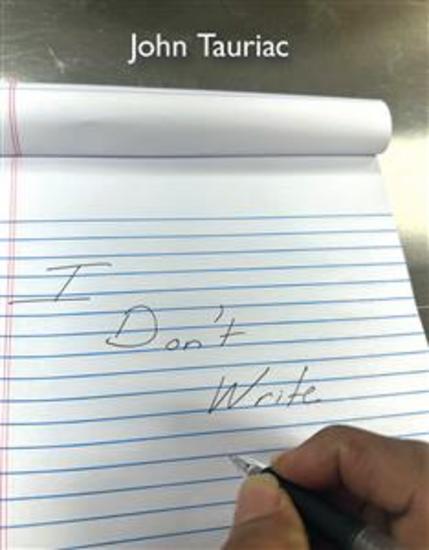
I don't write
John Tauriac
Editora: BooxAi
Sinopse
I Don’t Write Is a must read. There’s definitely something inside that will give you the necessary strand courage to keep moving forward. Pain doesn’t last forever.
Editora: BooxAi
I Don’t Write Is a must read. There’s definitely something inside that will give you the necessary strand courage to keep moving forward. Pain doesn’t last forever.
Imagine finding a dusty, water-stained journal in an abandoned subway station before realizing it was written 20 years in the future. No robot maids or air cars, just capital L, “Life,” through X-ray specs, and don’t hold the band-aid ripping or bemused outrage. There are a thousand novels herein. (Buddy Woodward) Time for My Generation to DIE from poet and balladeer E.D. Evans takes no prisoners. Evans uses her sparkling, prickly verse to pluck out mournful, bleak, and violent tableaus. Each of her poems—Ballad or not—Is deserving of a hard-strummed guitar and some harmonica across the bridge. This is distilled country and southwestern, sans redemption, sans chaser.(Sean McCollum) Here we will find necessary truths—Honest evidence of a transformative journey, amusing and disturbing, disarming with a hip, wry wit of personal insight. A reminder of poetry as event, where you will find your lips mouthing the vowels. A nod, and a wink never too far behind, Evans’ artistry holds your hand through the odyssey and the rhyme.(Henry Long) Pssssst! Hey, You, Yes… YOUR Generation (whichever that may be). Are you looking for:Saccharin love sonnets? Maudlin two-line musings? Droning co-opted hip hop lyrics? - You won't find that here. Do you desire:Trite overbaked sentiment? Foolish masturbatory banter? Inscrutable word salad? - You won't find that here. What you WILL find here is an epitaph, of sorts, laced with:Dark humor, Snide observations, Stark realism, Morbid landscapes, Gamblers and junkies & Punks and thugs. An epitaph for MY forgotten generation - Generation Jones - who:Relish obscure banalities, Prefer pencil on paper, Revel in audacious irony and Eschews ‘the good old days’. It’s no longer time for any of these things.It’s simply:… Time for my Generation to Die. E.D. Evans is a lifelong poet. Having spent time in both London and New York during Punk’s original heyday in the late ‘70s and early ‘80s...Ver livro
“In poetic prose, I revisit the scars of childhood abuse, molding me into a hollow shell of womanhood. Navigating immigrant pressures, cultures clash, tugging me in divergent paths. Unraveling buried trauma, self-destruction consumed, shattering false identities. Intuition emerges as my guide, leading through mystical realms to rebirth. From unworthiness to purpose-seeking, I rise, embracing happiness, truth, and destiny’s dance.” —From the author This is the author’s poetic recollection of being abused as a child and how the aftermath shaped her to live her life as a shell of a woman. She takes the reader through the front seat of her mind as she navigates the pressures of being the daughter of brown immigrants and how the clash of cultures pushed and pulled her in different directions. Discovering the trauma stored in her body, self-destruction from the inside led to the inevitable death of her false self. Learning to trust her intuition and the universe, getting lost and found in the world of magic and her prophetic dreams, ultimately guided her to the rebirth of an awakened identity. She went from not feeling worthy enough to live, to searching for her purpose, pulling herself out of the hole, finding her happiness, and never looking back. She learned to live her truth, love herself, and instinctively play with her fate.Ver livro
Amelia Alderson, an only child, was born on the 12th November 1769 in Norwich, England. After the death of her mother on New Year’s Eve 1784 she became her father's housekeeper and hostess. The young Amelia was energetic, attractive, and an admirer of fashion. She spent much of her youth writing poetry and plays and putting on local amateur theatricals. At 18 she had published anonymously ‘The Dangers of Coquetry’. Amelia married in the spring of 1798 to the artist John Opie at the Church of St Marylebone, in Westminster, and together they lived in Berners Street where Amelia was already living. Her next novel in 1801 ‘Father and Daughter’, was very popular even though it dealt with such themes as illegitimacy, a socially difficult subject for its times. From this point on published works were far more regular. The following year her volume ‘Poems’ appeared and was again very popular. Novels continued to flow and she never once abandoned her social activism and her call for better treatment of women and the dispossessed in her works. She was also keenly involved in a love of society and its attendant frills. Encouraged by her husband to write more she published Adeline Mowbray in 1804, an exploration of women's education, marriage, and the abolition of slavery. Her husband died in 1807 and she paused from writing for a few years before resuming with further novels and poems. Of particular interest was her short poem ‘The Black Man's Lament’ in 1826. Her life now was in the main spent travelling and working for charities and against slavery. She even helped create a Ladies Anti-Slavery Society in Norwich which organised a parliamentary petition of 187,000 names of which hers was the first name. After a visit to Cromer, a seaside resort on the North Norfolk coast, she caught a chill and retired to her bedroom. Amelia Opie died on the 2nd December 1853 in Norwich. She was 84.Ver livro
Winner of the 2023 Illumination Book Awards Winner of the 2022 International Book Awards Third Place 2023 Catholic Media Association's Book Awards Begin with a Question explores how the life of faith is a continuous voyage, launched anew each bright day of the spirit or dark night of the soul. This is a book of contemplation and motion, a journey—often in stops and starts—toward the Divine, a pilgrimage paved with prayer, praise, pause, penitence, and (of course) questions. Urgent and universal, joyful or joyless, tinged with doubt or rinsed with hope, here are honest queries that probe, lift, and lead to discovery. Begin with a Question keeps us moving, seeking, reaching, lifting us out of ourselves to something beyond. Using a variety of fixed forms and free verse, the poet examines our relationship to the one who asks, "Who do you say that I am?" A book for seekers, doubters, and believers alike, these poems bring us face to face with anguish, anger, awe, and adoration. They give us permission not to demand answers, but to follow the questions that lead to the Alpha and Omega, to the I AM that keeps us spiraling along this twisting path toward God. Begin with a Question is published under Paraclete Press's "Iron Pen" imprint. In the book of Job, a suffering man pours out his anguish to his Maker. From the depths of his pain, he reveals a trust in God's goodness that is stronger than his despair, giving humanity some of the most beautiful and poetic verses of all time. Paraclete's Iron Pen imprint is inspired by this spirit of unvarnished honesty and tenacious hope.Ver livro
‘A dime a dozen’ as known in America, is perhaps equal to the English ‘cheap as chips’ but whatever the lingua franca of your choice in this series we hereby submit ‘A Rhyme a Dozen’ as 12 poems on many given subjects that are a well-rounded gathering, maybe even an essential guide, from the knowing pens of classic poets and their beautifully spoken verse to the comfort of your ears. 01 - A Rhyme A Dozen - 12 Poems, 12 Poets, 1 Topic - Birds - An Introduction 02 - Ode To A Nightingale by John Keats 03 - To a Skylark by Percy Bysshe Shelley 04 - The First Swallow by Charlotte Smith 05 - The Eagle by Alfred Lord Tennyson 06 - The Peacock's Eye by Gerald Manley Hopkins 07 - Cuckoo Song by Rudyard Kipling 08 - The Pelican Chorus by Edward Lear 09 - The Kingfisher by W H Davis 10 - The Darkling Thrush by Thomas Hardy 11 - The Owl by Alfred Lord Tennyson 12 - The Nightingale Has a Lyre of Gold by Wiliam Ernest Henley 13 - The Raven by Edgar Allan PoeVer livro
Edwin Arlington Robinson was born on the 22nd December 1869 in Tide in Lincoln County, Maine. His childhood was described by him as ‘stark and unhappy’. His name was drawn out of a hat from a fellow vacationer from Arlington Massachusetts when fellow holiday makers decided that his parents had waited long enough at 6 months to name him. It was a name he despised and reflects the station to which his parents had placed him; their great hope at his birth were that he was a girl to complement their two sons. His pessimistic mood carried him to adulthood and a doomed encounter with Emma Loehen Shepherd who constantly encouraged his poetry. Edwin was thought too young to be her companion and so his elder, middle brother, Herman was assigned to her. It was a great blow to Edwin and during their marriage on February 12th, 1890, he stayed home and wrote ‘Cortege’ In the fall of 1891 Edwin entered Harvard, taking classes in English, French and Shakespeare. He felt at ease with the Ivy League and made great efforts to be published in one of the Harvard literary journals. Indeed, the Harvard Advocate published ‘Ballade of a Ship’ but then his career appeared to stall. His father died and although he returned to Harvard for a second year it was to be his last but also the start of some life-long friendships. In 1893 he returned to Gardiner Maine as the man of the household. Herman by this time had become an alcoholic, having suffered business failures, and was now to become estranged from Emma. Edwin began farming whilst he wrote and quickly developed a close relationship with Emma who had now moved back to Gardiner after Herman’s death with her children. Although he proposed twice, he was rejected and in consequence moved to New York to start afresh. But it was a salutary experience. Although surrounded by artists he had little money and life was difficult. In 1896 he published his own book, ‘The Torrent and the Night Before’, paying 100 dollars for 500 copies. Edwin wanted it to be a surprise for his Mother, but days before its arrival she died of diphtheria. His second volume, ‘The Children of the Night’, had a wider circulation. At the behest of President Roosevelt, whose son was an avid admirer, he was given a job in 1905 at the New York Customs Office although it appears his real job was “to help American letters”. Either way his success began to widen and his influence proper. During the 1920s he won the Pulitzer Prize for Poetry on three separate occasions. In 1922 for ‘Collected Poems’ again in 1925 for ‘The Man Who Died Twice’ and finally in 1928 for ‘Tristram’. During the last twenty years of his life he became a regular summer resident at the MacDowell Colony in New Hampshire, where he became the object of fascination by several women. But he never married. Edwin Arlington Robinson died of cancer on the 6th April 1935 in the New York Hospital in New York. He was 65.Ver livro