Junte-se a nós em uma viagem ao mundo dos livros!
Adicionar este livro à prateleira
Grey
Deixe um novo comentário Default profile 50px
Grey
Assine para ler o livro completo ou leia as primeiras páginas de graça!
All characters reduced
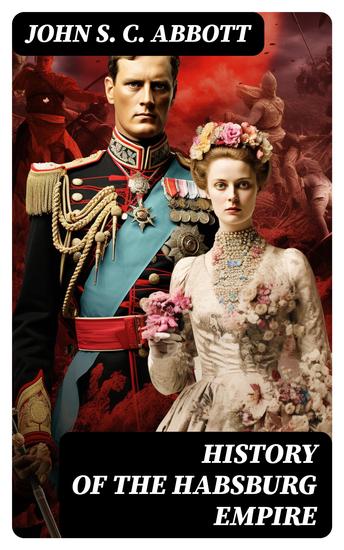
History of the Habsburg Empire - cover
LER

History of the Habsburg Empire

John S. C. Abbott

Editora: DigiCat

  • 0
  • 0
  • 0

Sinopse

In "History of the Habsburg Empire," John S. C. Abbott delivers a sweeping narrative that chronicles the rise and fall of one of Europe's most influential dynasties. Abbott's literary style, rich in detail and infused with a captivating storytelling approach, effectively blends historical analysis with accessible prose. He keenly situates the Habsburgs within the larger context of European power struggles, highlighting pivotal events from the empire's expansion to its eventual decline, while examining the intricate web of political, religious, and cultural dynamics that shaped its legacy. John S. C. Abbott was an accomplished historian and writer, widely recognized for his ability to synthesize complex historical themes into coherent narratives. His deep interest in the socio-political ramifications of European monarchies, coupled with a commitment to historical accuracy, undoubtedly inspired him to document the Habsburg Empire, illuminating its far-reaching impact on global history. Abbott's background in education and storytelling reflects in his efforts to engage a diverse readership, aiming to both inform and intrigue. This book is highly recommended for history enthusiasts, students, and scholars seeking a profound understanding of the Habsburg Empire's multifaceted influence. Abbott's meticulous research and engaging style serve as an invitation to explore the complexities of royal legacy and its implications for modern Europe, making it an essential addition to any historical library.
Disponível desde: 14/12/2023.
Comprimento de impressão: 400 páginas.


Outros livros que poderiam interessá-lo

  • Speaking Across Generations - Messages That Satisfy Boomers Xers Millennials Gen Z and Beyond - cover

    Speaking Across Generations -...

    Darrell E. Hall

    • 0
    • 0
    • 0
    Different generations communicate differently. If you are speaking across generations, you need to understand how different generations hear. Pastor Darrell Hall (a millennial) harnesses the insights of generational science to explore how generations are distinct people groups with their own cultures and languages. With fresh research from the Barna Group on how generations communicate, Hall sheds light on how each generation receives verbal messages, from boomers and Xers to millennials and Gen Z and those not yet named.
    Discover how generational science can equip you to communicate effectively. Bridge the communication gap between speaker and listener so people of all generations can hear clearly.
    Ver livro
  • Friends and Foes in the Indo-Pacific - Multilateralism Out Minilateralism In? - cover

    Friends and Foes in the...

    Axel Berkofsky, Guido Alberto...

    • 0
    • 0
    • 0
    Minilateralism is already among us, and it is here to stay. The well-known shortcomings of the multilateral system of governance are pushing individual states in the Indo-Pacific to come up with new and different solutions to deal with the security and prosperity issues that current institutions are unable to tackle. Amid growing geopolitical rivalries and the uncertainty provoked by the re-election of Donald Trump, this report aims to shed some clarity on an emerging trend that is already affecting the foreign policy of great powers in a region that is central to global affairs.
    Ver livro
  • Marbury v Madison - cover

    Marbury v Madison

    Various

    • 0
    • 0
    • 0
    This program is read by an AI-based synthesized voice.
    Ver livro
  • How America Worksand Why It Doesn't - A Brief Guide to the US Political System - cover

    How America Worksand Why It...

    William Cooper

    • 0
    • 0
    • 0
    Twenty-first-century America isn’t working the way it’s supposed to. 
    This book explains why. 
    Americans in the twenty-first century are becoming increasingly untethered from both reality and the essential principles and traditions that have shaped the nation’s historic success. A big part of why America isn’t working is because far too many Americans neither know nor care how it’s supposed to work. 
    “William Cooper presents an insightful, sensitive, and accessible account of the trials that face American democracy in the twenty-first century. This fair- and broad-minded volume makes compelling reading for those who are looking to build a better democracy.” Alexander Yen, Department of Politics and International Relations, University of Oxford 
    “Partisanship fuels personal convictions more than ever in our society, and convictions fuel mysided thinking and other cognitive biases. At no time have we needed this discussion of bias and partisan thinking more than now.” Keith E. Stanovich, author of The Bias That Divides Us 
    “William Cooper logically and authoritatively takes you step by step through all the reasons a President Trump couldn’t imprison his enemies, pardon his friends, overrule judges, weaponize the Department of Justice, prosecute Joe Biden, or order the military to enforce his unconstitutional actions” Cleveland Plain Dealer 
    “William Cooper is an insightful and thought-provoking writer about US politics. He deserves to be widely read.” Thomas Plate, former Editorial Page Editor, Los Angeles Times 
    "In How America Works . . . and Why It Doesn’t, William Cooper gives a thoughtful, readable guide to what ails American democracy. Required reading for any student of political science.” Uri Kaufman, author of Eighteen Days in October 
    "A must-read. His well-written and brief book covers a lot of important ground in a learned but accessible manner. Probably most noteworthy, though, is his astute and fair judgment―the book is not a polemic for the left or the right, but rather a fair appraisal of the strengths and weaknesses of both. I highly recommend reading it―it is an enjoyable tour of key aspects of history (as well as current events), ethics, political philosophy, constitutional law, environmental science, and cognitive psychology―all told in a lucid, efficient way." William O'Donohue, PhD, Professor, University of Nevada, Reno
    Ver livro
  • Treasure - cover

    Treasure

    Jemima Foxtrot

    • 0
    • 0
    • 0
    "religion's been cruel to people like usthe darkwood sluts      the good time girlsbut god as my witnesssome of us           we're just trying to wrangle our powerback from the species that took it"
    Jemima Foxtrot's Treasure is a shining work of alchemy and liberation which explores power dynamics, sex work, desire, and female friendship with a fresh and playful perspective. Foxtrot investigates shimmering sexualities, the economies of desire, the theft of childhood and pathways towards reclaiming it. Her language is lush: intimate, intricate, full of fertile earth's possibility. The poems of Treasure live up to its name: showing us where the gold is—the joy—how to feed it into the soil of our lives.
    "Treasure is an aptly chosen title for this collection, both as a noun (that quantity of precious ore dug from the stuff of experience) and as a verb (the imperative to seek out, sing, and cherish joy through the sharing of it). Foxtrot is a savvy, sometimes savage, sensualist; her poetic speakers alert to injustice, but alive to pleasure in every way that counts. These are superbly tactile poems, poems of being-in-the-body, and being-in-the-world; they are full of wit, vigour and feminist jouissance. These are also formally exciting poems, poems that showcase a beautifully bold and oddly tender lyric defiance." Fran Lock, Hyena, T.S. Eliot Prize Shortlist
    Ver livro
  • Into the Dark - What darkness is and why it matters - cover

    Into the Dark - What darkness is...

    Jacqueline Yallop

    • 0
    • 0
    • 0
    Can you remember the first time you encountered true darkness? The kind that remains as black and inky whether your eyes are open or closed? Where you can't see your hand in front of your face? 
     
    Jacqueline Yallop can. It was in an unfamiliar bedroom while holidaying in Yorkshire as a child, and ever since then she has been fascinated by the dark, by our efforts to capture or avoid it, by the meanings we give to it and the way our brains process it. 
     
    Taking a journey into the dark secrets of place, body and mind, she documents a series of night-time walks, exploring both the physical realities of darkness and the psychological dark that helps shape our sense of self. Exploring our enduring love-hate relationship with states of darkness, she considers how we attempt to understand and contain the dark, and, as she comes to terms with her father's deteriorating Alzheimer's, she reflects on how our relationship to the dark can change with time and circumstance. 
     
    Darkness captivates, baffles and appals us. It's a shifty thing of many textures, many moods, a state of fascination and of horror, an absence and a presence, solace and threat, a beginning and an end. Into the Dark is the story of the many darks that fascinate and assail us. It faces the darkness full on in all its guises and mysteries, celebrating it as a thing of beauty while peering into the void.
    Ver livro