Junte-se a nós em uma viagem ao mundo dos livros!
Adicionar este livro à prateleira
Grey
Deixe um novo comentário Default profile 50px
Grey
Assine para ler o livro completo ou leia as primeiras páginas de graça!
All characters reduced
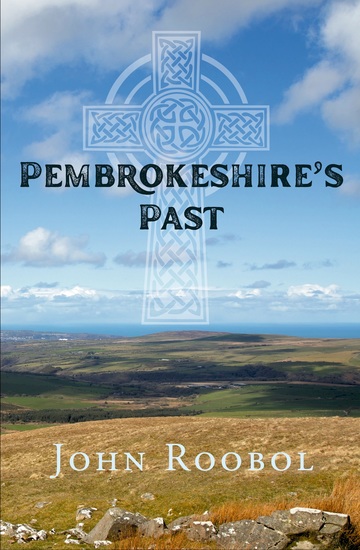
Pembrokeshire's Past - cover
LER

Pembrokeshire's Past

John Roobol

Editora: The Conrad Press

  • 0
  • 0
  • 0

Sinopse

‘Pembrokeshire’s Past’ vividly and unforgettably brings to life the boisterous and turbulent history of this little-known Welsh peninsula jutting out into the Irish Sea. The book is a fascinating and unforgettable read. A great glacier overrode the mountains in the north and produced the blue stones of Stonehenge. Upper Palaeolithic mammoth hunters sheltered in limestone caves. As the climate warmed, Mesolithic people were followed by Neolithic people who left their spectacular stone burial chambers. Rising sea levels produced sunken forests around the coast. Bronze Age people left stone circles and burial mounds. Iron Age Celtic settlers left many hill forts. Turbulence followed with Roman, Irish, Viking and Norman invasions. The latter left the great stone castles. The Civil War was strongly contested. Lord Palmerston built many forts in the south. A great naval shipbuilding yard operated in Pembroke Dock. For beach walkers, the flora and fauna from the Amazon and Caribbean that wash ashore are described in all their remarkable and colourful detail.
Disponível desde: 15/03/2024.


Outros livros que poderiam interessá-lo

  • How To Analyze People: Read People Like a Book and Speed Read Their Body Language With Dark Psychology Secrets Manipulation Emotional Intelligence Persuasive Communication and NLP Techniques! - cover

    How To Analyze People: Read...

    Vincent McDaniel

    • 0
    • 0
    • 0
    YOUR GUIDE TO HELPING YOU UNLOCK THE SECRETS BEHIND EVERY PERSON IS HERE! 
    Do you want to know the hidden secrets of reading people like a book and speed read their body language with dark psychology secrets, manipulation, emotional intelligence, persuasive communication, and NLP techniques? 
    If so, then this is the audiobook for you! 
    It's hard to know what people are thinking, especially if you're trying to build a relationship with them.  
    Even if you think you know someone, do you really understand their motives? What about their hidden desires or fears? 
    The world is full of manipulators who are trying their best every day just so they can take advantage of others for personal gain or pleasure. If only there was a way for us all to protect ourselves from these evil-doers... Well, now there is! 
    With this audiobook, you'll be able to get inside other people's heads and better relate to them. 
    This is not just another self-help audiobook - it’s an actionable guide that will teach you how to analyze people and use their body language against them! 
    Once you know what makes them tick, it becomes easy for you to influence their thoughts and actions so they do exactly what you want them to do! 
    By learning these simple yet powerful techniques in this audiobook, anyone can become an expert at reading body language and using it against others when necessary. 
    It doesn't matter if your goal is simply understanding others better or manipulating them into doing whatever it is that's important for you - either way, this information will be invaluable in helping achieve your goals quickly and easily! 
    SCROLL UP, GET THIS AUDIOBOOK, AND START LISTENING!
    Ver livro
  • The Rosicrucian Mysteries - An Elementary Exposition of Their Secret Teachings - cover

    The Rosicrucian Mysteries - An...

    Max Heindel

    • 0
    • 0
    • 0
    Max Heindel is recognized as one of the greatest western mystics of the 20th century and he is the founder of the Rosicrucian Fellowship and author of a number of essential Rosicrucian works.  
    First published in 1916, Heindel's "The Rosicrucian Mysteries" is regarded as a classic work providing a guide for students to understand basic Rosicrucian teachings. 
    Max Heindel's mysticism is set firmly in the western tradition of the Gnosis. Following a series of disappointments and ill health, Heindel claims to have been visited by a Spiritual Being, who he identified as an Elder Brother of the Rosicrucian Order. From this entity he received a compelling explanation of the spiritual evolution of both the Cosmos and Humanity, couched in terms best suited to the logical, linear mind of western culture. 
      
    "The Rosicrucian Mysteries" is an elementary exposition of these teachings and training methods, and a perfect introduction to the philosophy of this important teacher of the Western Mystery Tradition.
    Ver livro
  • Criminal Justice in Divided America - Police Punishment and the Future of Our Democracy - cover

    Criminal Justice in Divided...

    David A. Sklansky

    • 0
    • 0
    • 0
    How a broken criminal justice system has fueled the crisis of American democracy, and how we can address both problems together.Criminal Justice in Divided America shows how police, courts, and prisons helped to break American democracy and how better approaches to public safety and criminal accountability can help to repair it. Engaging critically with concerns from both the left and the right, Sklansky lays out a clear and deeply researched agenda for reforming police departments, prosecutors' offices, criminal trials, and punishment. Sklansky seeks pragmatic solutions that take account of political realities: the lofty ideal of empowering "the people" or "the community" can mean little when members of the public or the community disagree. While efforts to "defund" the police have exacerbated political conflicts without addressing the underlying problem of how and when force should be used to protect public safety, reforms aimed at improving police accountability, restraining prosecutorial power, and expanding the role of juries can bring together warring parties who share a concern for justice.Ultimately, Sklansky argues, reform must be rooted in a strong commitment to pluralism―bridging political divides rather than worsening them, strengthening democracy, and securing the broad support that enables durable change.
    Ver livro
  • The Revolutionary Self - Social Change and the Emergence of the Modern Individual 1770-1800 - cover

    The Revolutionary Self - Social...

    Lynn Hunt

    • 0
    • 0
    • 0
    An illuminating exploration of the tensions between self and society in the age of revolutions. 


    The eighteenth century was a time of cultural friction: individuals began to assert greater independence and there was a new emphasis on social equality. In this surprising history, Lynn Hunt examines women's expanding societal roles, such as using tea to facilitate conversation between the sexes in Britain. In France, women also pushed boundaries by becoming artists, and printmakers' satiric takes on the elite gave the lower classes a chance to laugh at the upper classes and imagine the potential of political upheaval. Hunt also explores how promotion in French revolutionary armies was based on men's singular capabilities, rather than noble blood, and how the invention of financial instruments such as life insurance and national debt related to a changing idea of national identity. Wide-ranging and thought-provoking, The Revolutionary Self is a fascinating exploration of the conflict between individualism and the group ties that continues to shape our lives today.
    Ver livro
  • Self-Censorship - cover

    Self-Censorship

    Glenn C. Loury

    • 0
    • 0
    • 0
    There is no such thing as free, unconstrained speech. Laws and constitutions may protect us from the state when we speak our minds. But the state is just one possible constraint. Glenn Loury, one of America's most outspoken and important intellectuals, provides a provocative and dazzling analysis of the powerful social forces that can prevent speakers from voicing unpopular views in public forums.Every society, Loury notes, has norms to enforce. That can be a good thing: There ought to be social sanctions for, say, compulsive liars. When, however, a society shows a low degree of tolerance for speech about matters of political importance, self-censorship proliferates and public discourse and policy suffer. The answer, Loury argues, is for as many of us as possible to be braver and more human—to take a risk and unapologetically "live within the truth".Loury first presented these ideas in the 1990s in a celebrated and prophetic essay about "political correctness." In Self-Censorship he expands and updates the account, deploying his analytical powers and psychological acuity to diagnose our current political climate. The result illuminates prevailing social dynamics with the same brilliant and startling effect that made the paper an instant classic thirty years ago.
    Ver livro
  • Why War? - cover

    Why War?

    Richard Overy

    • 0
    • 0
    • 0
    Why has war been such a consistent presence throughout the human past? A leading historian explains, drawing on rich examples and keen insight. 


    Richard Overy is not the first scholar to take up the title question. In 1931, at the request of the League of Nations, Albert Einstein asked Sigmund Freud to collaborate on a short work examining whether there was "a way of delivering mankind from the menace of war." Published the next year as a pamphlet entitled Why War?, it conveyed Freud's conclusion that the "death drive" made any deliverance impossible—the psychological impulse to destruction was universal in the animal kingdom. The global wars of the later 1930s and 1940s seemed ample evidence of the dismal conclusion. 


    A preeminent historian of those wars, Overy brings vast knowledge to the title question and years of experience unraveling the knotted motivations of war. His approach is to separate the major drivers and motivations, and consider the ways each has contributed to organized conflict. They range from the impulses embedded in human biology and psychology, to the incentives to conflict developed through cultural evolution, to competition for resources. The discussions show remarkable range, delving deep into the Neolithic past, through the twentieth-century world wars, and up to the current conflict in Ukraine.
    Ver livro