Junte-se a nós em uma viagem ao mundo dos livros!
Adicionar este livro à prateleira
Grey
Deixe um novo comentário Default profile 50px
Grey
Assine para ler o livro completo ou leia as primeiras páginas de graça!
All characters reduced
Thoughts upon the African Slave Trade - cover
LER

Thoughts upon the African Slave Trade

John Newton

Editora: DigiCat

  • 0
  • 0
  • 0

Sinopse

In "Thoughts upon the African Slave Trade," John Newton emerges as a profound moral commentator, delving into the harrowing realities of the transatlantic slave trade. Written with a poignant blend of personal reflection and theological inquiry, the book provides a compelling critique of the inhumanity and ethical dilemmas surrounding slavery. Newton's narrative, steeped in the context of 18th-century Britain, synthesizes vivid personal experiences and biblical admonitions, forging a powerful appeal for abolition rooted in Christian ethics. John Newton, a former slave ship captain turned Anglican cleric, draws his insights from a transformative journey of repentance and faith. His own tumultuous past in the slave trade imbues the text with a unique authenticity and urgency, as he grapples with the moral contradictions of his former life. Through his vivid recollections and evolving theological perspective, Newton became a key figure in the abolitionist movement, demonstrating the possibility of redemption and change. This book is an essential read for those seeking to understand the moral complexities of the slave trade and the evolution of abolitionist thought. Newton's reflections resonate with contemporary discussions on ethics, justice, and humanity, making it a pivotal text for readers interested in history, theology, and social justice.
Disponível desde: 29/05/2022.
Comprimento de impressão: 22 páginas.

Outros livros que poderiam interessá-lo

  • Robespierre - The Architect of the French Reign of Terror - cover

    Robespierre - The Architect of...

    Kelly Mass

    • 0
    • 0
    • 0
    Imagine you are sick of the government. Bureaucrats and aristocrats are constantly telling you what to do, basically enforcing a totalitarian regime. Maybe this is not so hard to imagine after what has been happening in recent years. And then imagine you protest. But the government has come up with a new method to kill people: The guillotine. Way more efficient than simple beheading, some jerk at the top then decides that anyone who is suspicious of rebellion needs their head chopped off, like the crazy lady in Alice in Wonderland. 
    This is Robespierre’s legacy. The evil French guy knew hardly any boundaries. He was vicious, murderous, and not to be taken lightly. 
    One of the most widely known figures of the Reign of terror was Maximilien François Marie Isidore de Robespierre, a French attorney and statesman. He promoted universal manhood suffrage and the removal of both clergy celibacy and oppression as a member of the Constituent Assembly and the Jacobin Club. In 1791, Robespierre ended up being a singing advocate of male residents without a political voice, promoting for their limitless entry to the National Guard, public workplaces, and the right to bear arms in self-defense. Robespierre was a key figure in the agitation that led to the deposition of the French monarchy on August tenth, 1792, and the assembling of a National Convention. His purpose was to establish a single, indivisible France, equality before the law, the abolition of authorities, and the defense of direct democratic ideal visions. 
    Read or listen to the book to learn more!
    Ver livro
  • Ancient Egyptian Magic: The Ultimate Guide to Gods Goddesses Divination Amulets Rituals and Spells of Ancient Egypt - cover

    Ancient Egyptian Magic: The...

    Mari Silva

    • 0
    • 0
    • 0
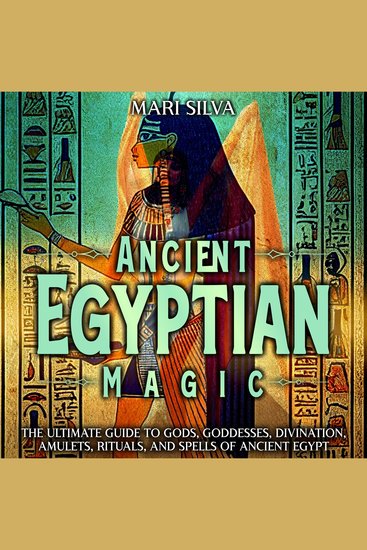
    Expand your knowledge about the culture of the ancient Egyptians and reveal the magic interwoven within their lives. 
    Have you always been fascinated by ancient Egyptian culture? 
    Do you want to learn about the type of magic they practiced? 
    Do you want to incorporate ancient Egyptian magic into your new-age magic practice? 
    The practice of magic played an enormous role in ancient Egyptian civilization. By studying how magic was viewed by those who practiced it at that time, you can uncover the secrets to practicing their magic in modern times. 
    In this audiobook, you will:Learn about the role of magic in ancient Egyptian culture.Gain insight into the ancient Egyptian worldview, including their creation myth and spiritual beliefs.Familiarize yourself with the Egyptian pantheon’s most influential male and female deities.Uncover the magical significance of well-known Egyptian symbols and their use in rites and practices.Master the art of making powerful Egyptian amulets for protection, honoring the deities, scarabs, and much more.Learn how to create magical tools for performing Egyptian magic.Discover how the ancient Egyptians viewed divination through the different divination methods.Learn which sacred plants and herbs may benefit your ancient Egyptian spell work.Uncover ways to enact spells or perform rituals found in an ancient Egyptian spell book. 
    By combining insightful information about ancient Egyptian culture and beginner-friendly practical instructions, this audiobook will be your reference guide to everything related to spells, rituals, divinatory practices, amulets, and deities of ancient Egyptian magic. 
    Click on the “add to cart” button now and unlock the secrets behind ancient Egyptian magic practices.
    Ver livro
  • Hohokam Civilization - Desert Farmers and the Engineers of Ancient Arizona - cover

    Hohokam Civilization - Desert...

    Rolf Hedger

    • 0
    • 0
    • 0
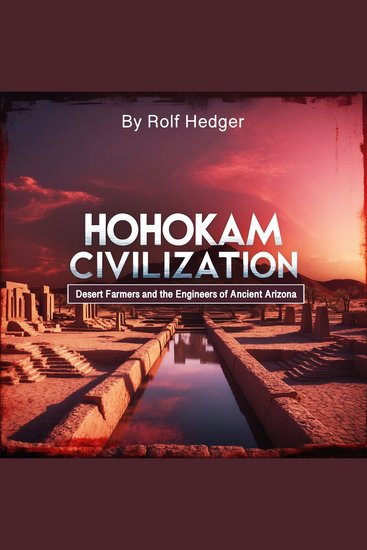
    The Hohokam civilization, flourishing in the deserts of what is now southern Arizona, represents one of the most fascinating examples of ancient ingenuity in the American Southwest. Known for their advanced irrigation techniques, complex social structures, and distinctive artistic expressions, the Hohokam thrived in a harsh environment for over a thousand years. Their story provides valuable insight into human adaptability and innovation in response to challenging surroundings. 
    The origins of the Hohokam civilization are traced back to around 300 BCE, with their culture emerging as a distinct entity by approximately 600 CE. Archaeologists and researchers have found evidence of their presence in the Sonoran Desert, a region marked by intense heat and little rainfall. Despite these extreme conditions, the Hohokam were able to build thriving communities that relied heavily on farming, with maize, beans, and squash being staple crops. The Hohokam’s ability to create sustainable agricultural systems in the desert is considered one of their greatest achievements. 
    Central to the Hohokam way of life was their mastery of water management. They constructed a vast network of irrigation canals, some of which stretched for miles, to channel water from rivers into their fields. This water was crucial not only for agriculture but also for their communities' survival. The Hohokam’s innovative canal systems transformed the desert landscape, allowing them to cultivate the land and support large populations. These systems remain a testament to their engineering skills and ability to harness the natural environment for their benefit.
    Ver livro
  • Neoliberalism Unveiled - Understanding the Shift Towards Free Market Policies - cover

    Neoliberalism Unveiled -...

    Arlo Holders

    • 0
    • 0
    • 0
    Neoliberalism is a term that has been widely used in academic, political, and economic discussions, yet its exact definition often varies depending on the context. Broadly, neoliberalism refers to a set of economic and political policies that emphasize the role of free markets in achieving economic prosperity, social well-being, and individual freedom. At its core, neoliberalism promotes the idea that markets should operate with minimal interference from the state, and that individuals should be free to pursue their economic interests without governmental restrictions. 
    The roots of neoliberalism can be traced back to the early 20th century, particularly to the ideas of economists such as Friedrich Hayek and Milton Friedman. These thinkers were critical of state intervention in the economy and argued that government control of markets often led to inefficiency and loss of individual freedoms. Hayek’s influential work, The Road to Serfdom (1944), warned against the dangers of central planning and collectivism, which he believed could lead to authoritarianism. Similarly, Friedman, through his advocacy for monetarism and the reduction of government spending, pushed for policies that emphasized the importance of individual choice and market forces over state control. Their ideas laid the intellectual foundation for what would later become neoliberalism. 
    Neoliberalism as a political and economic force began to take shape during the 1970s as many Western economies faced economic stagnation and rising inflation, often referred to as stagflation. Traditional Keynesian approaches, which advocated for government intervention to manage demand and stabilize economies, appeared to fail in addressing these new challenges. In response, neoliberal ideas gained traction, especially in the United States and the United Kingdom.
    Ver livro
  • Into Enemy Arms - The Remarkable True Story of a German Girl's Struggle Against Nazism and Her Daring Escape with the Allied Airman She Loved - cover

    Into Enemy Arms - The Remarkable...

    Michael Hingston

    • 0
    • 0
    • 0
    The suspenseful true story of a love that defied Nazi oppression, and a harrowing journey to freedom. 


    In 1945, Ditha Bruncel was living with her parents in the small town of Lossen, in Upper Silesia. Close Jewish friends had vanished, swastikas hung from every building, and neighbors were disappearing in the middle of the night. At the same time more than fifteen hundred British and Commonwealth airmen were being marched out of Stalag Luft VII, a POW camp in the same region. Twenty-three of these prisoners managed to escape from the marching column—and by chance hobbled into Lossen. One among them, Warrant Officer Gordon Slowey, was the man Ditha was destined to meet and fall in love with. 


    Into Enemy Arms tells the extraordinary story of Ditha and the escaped POWs she helped save. Together, they embarked on a dangerous and daring flight out of Germany. As they faced exhaustion, hunger, extreme cold, and the constant risk of discovery, Ditha and Gordon's love for one another intensified, and so did their determination to survive and escape.
    Ver livro
  • Creating Space - Story Reflection and Practice in Healthcare Chaplaincy - cover

    Creating Space - Story...

    Sacha Pearce, Jan Collis

    • 0
    • 0
    • 0
    Creating Space tells a professional and personal story of healthcare chaplaincy and models the way in which practice development emerges from reflecting on the human story. This book reveals to healthcare, the Church and the community, the unique role of the chaplain’s experiences as a resource to others. It is written for professional practitioners, prompting their own contextual learning and development, whether as chaplains, pastoral carers, parish clergy, lay ministers, volunteers in any caring context, those who work in listening therapies, those who provide care and support to others of any kind, or those who use or teach reflective practice.
    
     
    The authors connect in a straightforward way their view of healthcare chaplaincy as a model of practical theology, based on key practical theologians who see the human story as a source of learning. They outline their own reflective practice tool for learning and share the way in which they see each pastoral encounter as a reflective source of learning. They discover how their experiences have developed the discernment process for chaplaincy vocation, urging the Church to see beyond the parish model in today’s world.
    Ver livro