Rejoignez-nous pour un voyage dans le monde des livres!
Ajouter ce livre à l'électronique
Grey
Ecrivez un nouveau commentaire Default profile 50px
Grey
Abonnez-vous pour lire le livre complet ou lisez les premières pages gratuitement!
All characters reduced
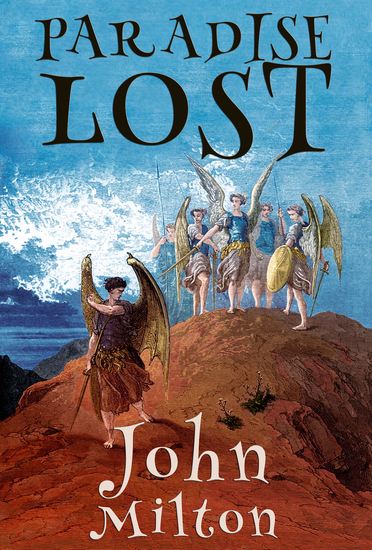
Paradise Lost - cover

Paradise Lost

John Milton

Maison d'édition: E-Kitap Projesi & Cheapest Books

  • 0
  • 0
  • 0

Synopsis

Paradise Lost is an epic poem in blank verse by the 17th-century English poet John Milton (1608–1674). The first version, published in 1667, consisted of ten books with over ten thousand lines of verse. A second edition followed in 1674, arranged into twelve books (in the manner of Virgil's Aeneid) with minor revisions throughout and a note on the versification. It is considered by critics to be Milton's "major work", and helped solidify his reputation as one of the greatest English poets of his time.

The poem concerns the Biblical story of the Fall of Man: the temptation of Adam and Eve by the fallen angel Satan and their expulsion from the Garden of Eden. Milton's purpose, stated in Book I, is to "justify the ways of God to men"

Short Summary:

The poem is separated into twelve "books" or sections, the lengths of which vary greatly (the longest is Book IX, with 1,189 lines, and the shortest Book VII, with 640). The Arguments at the head of each book were added in subsequent imprints of the first edition. Originally published in ten books, a fully "Revised and Augmented" edition reorganized into twelve books was issued in 1674, and this is the edition generally used today.

The poem follows the epic tradition of starting in medias res (Latin for in the midst of things), the background story being recounted later. Milton's story has two narrative arcs, one about Satan (Lucifer) and the other following Adam and Eve. It begins after Satan and the other rebel angels have been defeated and banished to Hell, or, as it is also called in the poem, Tartarus. In Pandæmonium, Satan employs his rhetorical skill to organise his followers; he is aided by Mammon and Beelzebub. Belial and Moloch are also present. At the end of the debate, Satan volunteers to poison the newly created Earth and God's new and most favoured creation, Mankind. He braves the dangers of the Abyss alone in a manner reminiscent of Odysseus or Aeneas. After an arduous traversal of the Chaos outside Hell, he enters God's new material World, and later the Garden of Eden.

At several points in the poem, an Angelic War over Heaven is recounted from different perspectives. Satan's rebellion follows the epic convention of large-scale warfare. The battles between the faithful angels and Satan's forces take place over three days. At the final battle, the Son of God single-handedly defeats the entire legion of angelic rebels and banishes them from Heaven. Following this purge, God creates the World, culminating in his creation of Adam and Eve. While God gave Adam and Eve total freedom and power to rule over all creation, He gave them one explicit command: not to eat from the Tree of the knowledge of good and evil on penalty of death.
Disponible depuis: 30/01/2024.
Longueur d'impression: 400 pages.

D'autres livres qui pourraient vous intéresser

  • Crooked Sticks Smouldering Wicks - Anthology of Collateral Damage - cover

    Crooked Sticks Smouldering Wicks...

    Stephen Davis

    • 0
    • 0
    • 0
    Words for wanderers, troubled souls, kindred spirits.
    Voir livre
  • Later Life - cover

    Later Life

    A. R. Gurney

    • 0
    • 0
    • 0
    Austin is a distinguished Bostonian with a WASP pedigree, an unbeatable squash game, and a frightening secret. After he meets up with his old flame Ruth, they begin a comic and painful voyage of self-discovery.Directed by Robert RobinsonProducing Director: Susan Albert LoewenbergAn L.A. Theatre Works full-cast recording starring:Valorie Armstrong as The Other WomenDavid Dukes as AustinJudith Ivey as RuthDavid Hyde-Pierce as The Other MenRadio Production: Raymond GuarnaStage Manager and Sound Effects Artist: Amy StrongAssistant Stage Manager: David Spero
    Voir livre
  • May-Day and Other Pieces - cover

    May-Day and Other Pieces

    Ralph Waldo Emerson

    • 0
    • 0
    • 0
    Spring arrives with a rush of words, and Ralph Waldo Emerson stands at the threshold, pen in hand. May-Day and Other Pieces is not just a collection of poems—it is an invitation to witness the shifting tides of nature, thought, and destiny through the eyes of one of America's sharpest philosophical minds.
    From the awakening landscapes of May-Day to the untamed wilderness of The Adirondacs, Emerson moves effortlessly between the grandeur of the world and the depths of the soul. The mysticism of Brahma, the inevitability of Fate, the defiance of Freedom—each poem is a meditation, a spark meant to ignite the reader's own reflection. History echoes in the Boston Hymn, sung as the Civil War reshaped a nation, while the lyrical simplicity of My Garden and Seashore captures fleeting moments of peace amid the rush of existence.
    Yet, Emerson never lingers too long in stillness. He follows the restless course of Two Rivers, listens to the quiet solitude of Waldeinsamkeit, and faces the finality of Terminus with unwavering clarity. This is poetry that questions, poetry that endures. It is a journey through seasons, through America, through the self—one that leaves the reader standing on the shore, looking out at the vastness, changed.
    May-Day and Other Pieces is more than verse. It is a conversation with the universe, and Emerson, ever the sage, is still speaking.
    Contents
     • May-Day
     • The Adirondacs
        A Journal
        Dedicated to my Fellow Travellers IN August, 1858
    • Brahma
    • Nemesis
    • Fate
    • Freedom
    • Ode Sung in the Town Hall, Concord, July 4, 1857
    • Boston Hymn, Read in Music Hall, January 1, 1863
    • Voluntaries
    • Love and Thought
    • Una
    • Boston
    • Letters
    • Rubies
    • Merlin's Song
    • The Test
    • Solution
    • Hymn Sung at the Second Church, at the Ordination of Rev. Chandler Robbins
    • Nature I
    • Nature II
    • The Romany Girl
    • Days
    • My Garden
    • The Chartist's Complaint
    • The Titmouse
    • The Harp
     • Seashore
    • Song of Nature
    • Two Rivers
    • Waldeinsamkeit
    • Terminus
    • The Nun's Aspiration
    • April
    • Maiden Speech of the Aeolian Harp
    • Cupido
    • The Past
     • The Last Farewell
       Lines written by the author's brother, Edward Bliss Emerson, whilst sailing out of Boston Harbor, bound for the island of Porto Rico, in 1832
    • In Memoriam E. B. E.
    Voir livre
  • The Bounds - cover

    The Bounds

    Stewart Pringle

    • 0
    • 0
    • 0
    The year is 1553, the true Golden Age of English football. It's the Allen Valley Whitsun Game, and men will die today.
    This is the big game, and it's been raging for hours. Percy and Rowan are out in the middle of nowhere, miles from the action, when a stranger joins them. A stranger with tidings that will blow their world apart.
    Time passes. Night falls. The great chain of being collapses. And they're losing the bloody football...
    Stewart Pringle's play The Bounds is a darkly comedic tale of national divides, folk horror and the end of the world as we know it. It was first co-produced by Live Theatre, Newcastle upon Tyne, and the Royal Court Theatre, London, and performed at both theatres in 2024, directed by Jack McNamara.
    Voir livre
  • Where Sat the Lovers - cover

    Where Sat the Lovers

    Carys D. Coburn

    • 0
    • 0
    • 0
    Imagine you're scared for your adult sibling. They're on the brink and you want to keep them safe. You think they're mentally ill but they think they're just leftwing.
    To make the right choices together you'll need to know the right things. The big question: how do you know if you know the right things?
    Where Sat the Lovers is about codes, hallucinations, Isaac Newton, war crimes, seeing meaning where there's none and vice versa. It's about facing an overwhelming world and trying to make sense of it all.
    Created by Carys D. Coburn with MALAPROP Theatre, it was first staged at Project Arts Centre, Dublin, as part of the 2021 Dublin Fringe Festival, directed by Claire O'Reilly.
    Voir livre
  • Rhyme A Dozen A - Exploring the World - 12 Poets 12 Poems 1 Topic - cover

    Rhyme A Dozen A - Exploring the...

    Robert Louis Stevenson, W B...

    • 0
    • 0
    • 0
    ‘A dime a dozen’ as known in America, is perhaps equal to the English ‘cheap as chips’ but whatever the lingua franca of your choice in this series we hereby submit ‘A Rhyme a Dozen’ as 12 poems on many given subjects that are a well-rounded gathering, maybe even an essential guide, from the knowing pens of classic poets and their beautifully spoken verse to the comfort of your ears. 
     
    01 - A Rhyme A Dozen - 12 Poems, 12 Poets, 1 Topic - Exploring the World - An Introduction 
    02 - Foreign Lands by Robert Louis Stevenson 
    03 - In the Bazaars of Hyderabad by Sarojini Naidu 
    04 - To the City of Bombay by Rudyard Kipling 
    05 - In Amsterdam by Eugene Field 
    06 - To the Nile by John Keats 
    07 - The Isles of Greece by Lord Byron 
    08 - Away to Canada by Joshua McCarter Simpson 
    09 - Sailing to Byzantium by W B Yeats 
    10 - The Golden Journey to Samarkand by James Elroy Flecker 
    11 - Sonnet on Approaching Italy by Oscar Wilde 
    12 - Constantinople by Lady Mary Wortley Montagu 
    13 - El Dorado by Edgar Allan Poe
    Voir livre