Join us on a literary world trip!
Add this book to bookshelf
Grey
Write a new comment Default profile 50px
Grey
Subscribe to read the full book or read the first pages for free!
All characters reduced
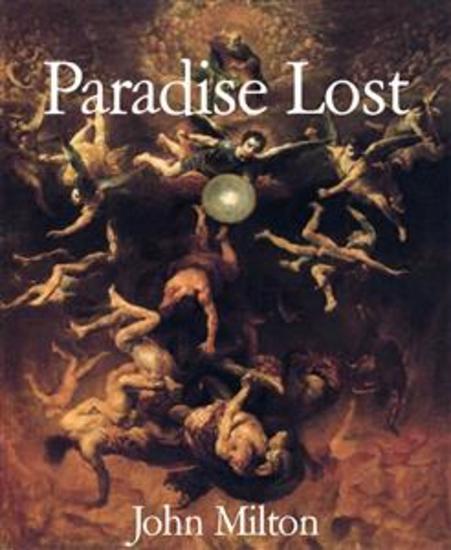
Paradise Lost - cover

Paradise Lost

John Milton

Publisher: BookRix

  • 0
  • 0
  • 0

Summary

Paradise Lost is an epic poem in blank verse by the English poet John Milton. The poem concerns the Biblical story of the Fall of Man: the temptation of Adam and Eve by the fallen angel Satan and their expulsion from the Garden of Eden. Milton's purpose, stated in Book I, is to "justify the ways of God to men". Milton's story has two narrative arcs, one about Satan and the other following Adam and Eve. It begins after Satan and the other rebel angels have been defeated and banished to Hell, or, as it is also called in the poem, Tartarus. In Pandemonium, Satan employs his rhetorical skill to organize his followers; he is aided by Mammon and Beelzebub. Belial and Moloch are also present. At the end of the debate, Satan volunteers to poison the newly created Earth and God's new and most favored creation, Mankind. He braves the dangers of the Abyss alone in a manner reminiscent of Odysseus or Aeneas. After an arduous traversal of the Chaos outside Hell, he enters God's new material World, and later the Garden of Eden.

At several points in the poem, an Angelic War over Heaven is recounted from different perspectives. Satan's rebellion follows the epic convention of large-scale warfare. The battles between the faithful angels and Satan's forces take place over three days. At the final battle, the Son of God single-handedly defeats the entire legion of angelic rebels and banishes them from Heaven. Following this purge, God creates the World, culminating in his creation of Adam and Eve. While God gave Adam and Eve total freedom and power to rule over all creation, He gave them one explicit command: not to eat from the Tree of the knowledge of good and evil on penalty of death.

The story of Adam and Eve's temptation and fall is a fundamentally different, new kind of epic: a domestic one. Adam and Eve are presented for the first time[citation needed] in Christian literature as having a full relationship while still being without sin. They have passions and distinct personalities. Satan, disguised in the form of a serpent, successfully tempts Eve to eat from the Tree by preying on her vanity and tricking her with rhetoric. Adam, learning that Eve has sinned, knowingly commits the same sin. He declares to Eve that since she was made from his flesh, they are bound to one another ‒ if she dies, he must also die. In this manner, Milton portrays Adam as a heroic figure, but also as a greater sinner than Eve, as he is aware that what he is doing is wrong. After eating the fruit, Adam and Eve have lustful sex. At first, Adam is convinced that Eve was right in thinking that eating the fruit would be beneficial. However, they soon fall asleep and have terrible nightmares, and after they awake, they experience guilt and shame for the first time. Realizing that they have committed a terrible act against God, they engage in mutual recrimination.
Available since: 12/19/2023.
Print length: 321 pages.

Other books that might interest you

  • The Ballad of the Harp-Weaver - cover

    The Ballad of the Harp-Weaver

    Edna St. Vincent Millay

    • 0
    • 0
    • 0
    LibriVox volunteers bring you 7 different recordings of The Ballad of the Harp-Weaver by Edna St. Vincent Millay.
    Show book
  • What The Deep Water Knows - Poems - cover

    What The Deep Water Knows - Poems

    Miranda Cowley Heller

    • 0
    • 0
    • 0
    From the #1 New York Times bestselling author of The Paper Palace, a Reese's Book Club Pick, comes a debut poetry collection that paints a moving portrait of a rich life from childhood to love to marriage to motherhood to divorce and beyond. 
     
    "Breathtaking . . . will change the way you see the world." —Daisy Goodwin, author of The American Heiress 
     
    If I could fly backward, I would. To the safety of branches, to the time when my heart still raced for you, twelve hundred beats a minute. 
     
    In poetry that is at once bold and lyrical, affecting and devastatingly frank, Miranda Cowley Heller takes us through childhood, marriage, motherhood, and beyond. Suffused with the natural world and the landscape of Cape Cod, where many of the poems are set, What the Deep Water Knows contemplates love in all the seasons.
    Show book
  • War Is Kind (Collection) - cover

    War Is Kind (Collection)

    Stephen Crane

    • 0
    • 0
    • 0
    Published in 1899, just a year before his death, War Is Kind by Stephen Crane evokes again the dark imagery of war which made his fortune in The Red Badge Of Courage. Unlike that book, this collection leaves the battlefield itself behind to explore the damage war does to people’s hearts and minds. Reeking of dashed hopes, simultaneously sympathetic with the victims of war and cynical about the purposes of war, Crane implicitly criticizes the image of the romantic hero and asks if Love can survive. 
    The poetic voice is one of an old and wearied soul, stark and disillusioned, which is all the more intriguing since Crane was dead before he reached his 30th birthday. His work calls to mind the Beat Poets of the mid 20th century in its powerful use of language and bleak idiomatic landscape. It is poetry on the cusp of the fin de siècle; echoing the passing age and presaging the newborn century.  (Summary by Chip)
    Show book
  • The wound dresser - cover

    The wound dresser

    Walt Whitman

    • 0
    • 0
    • 0
    What does true compassion look like in the midst of war?
    
    The Wound-Dresser by Walt Whitman is one of the most tender and powerful poems ever written about the human cost of conflict. Drawn from Whitman's real-life experience as a volunteer nurse during the American Civil War, the poem offers a deeply personal account of caring for wounded soldiers amid pain, fear, and loss.
    
    Rather than focusing on battle or glory, Whitman turns his attention to quiet acts of mercy—washing wounds, holding hands, and offering comfort to the dying. His free-verse style gives voice to empathy, love, and the dignity of suffering humanity.
    
    This eBook presents the poem in a clear, accessible format, allowing readers to experience one of the most moving expressions of compassion in American literature.
    
    Inside this eBook, you'll encounter:
    
    A firsthand poetic response to the Civil War
    
    Themes of empathy, service, and human connection
    
    Whitman's revolutionary free-verse style
    
    A timeless meditation on suffering and care
    
    Frequently studied in literature and history courses, The Wound-Dresser remains essential reading for anyone interested in war poetry, caregiving, and the moral power of compassion.
    
    Witness the quiet heroism behind the front lines. Buy now and experience one of Walt Whitman's most heartfelt works.
    Show book
  • Reflection: Poetry - cover

    Reflection: Poetry

    John Samurai

    • 0
    • 0
    • 0
    John Samurai – Reflection Poetry 
    A book full of inspiring and delightful ruminations. Exquisite poetry that will make you ponder and will get you closer to Satori. Enlightenment. This book was written in order to entertain and leave a gasped by its profundity every reader of any walk of life. You can be a housewife or a professor at MIT and you still will find something in this book that will make you want to read more of it. There are jokes in this book as well as deepest meditations on topics of life and death. The philosophy of the author allows to bring yourself forward and learn from every word written in this book. After all we are all life long learners even if not everyone of us has a degree to show for it. 
    This book is the book to beginner poet and philosopher. The tightly knit words and one-page plots make you wonder how much more of it can you get just between the covers of one hundred pages. 
    Buy, read, enjoy and get closer to your own spiritual enlightenment.   
    Show book
  • Umbilical Cord - cover

    Umbilical Cord

    Hasan Namir

    • 0
    • 0
    • 0
    Dear Child
    Once upon a time
    Your baba fell in love with your dad
    
    We got married and dreamt of having a baby
    
    A roller coaster of emotions and feelings
    
    We were always hopeful
    Lambda Literary and Stonewall Book Award-winner Hasan Namir shares a joyful collection about parenting, fatherhood and hope. These warm free-verse poems document the journey that he and his husband took to have a child. Between love letters to their young son, Namir shares insight into his love story with his husband, the complexities of the IVF surrogacy process and the first year as a family of three. Umbilical Cord is a heartfelt book for parents or would-be parents, with a universal message of hope.
    Show book