¡Acompáñanos a viajar por el mundo de los libros!
Añadir este libro a la estantería
Grey
Escribe un nuevo comentario Default profile 50px
Grey
Suscríbete para leer el libro completo o lee las primeras páginas gratis.
All characters reduced
The Voiage and Travayle of Sir John Maundeville Knight - Which treateth of the way towards Hierusalem and of marvayles of Inde with other ilands & countreys - cover

The Voiage and Travayle of Sir John Maundeville Knight - Which treateth of the way towards Hierusalem and of marvayles of Inde with other ilands & countreys

John Mandeville

Editorial: Good Press

  • 0
  • 0
  • 0

Sinopsis

The Voiage and Travayle of Sir John Maundeville Knight is a compelling narrative that combines travelogue, adventure, and adventure fiction, presenting a fantastical account of the East during the 14th century. Written in a conversational style, Mandeville's text is characterized by its vivid descriptions of diverse cultures, exotic lands, and extraordinary peoples, often blending historical facts with myth. As a product of its time, the book serves not only as a reflection of the fascination with the 'Orient,' driven by the medieval Crusades and the burgeoning interest in exploration, but also as a lens through which one can perceive the Eurocentric worldview of the late Middle Ages. John Sir Mandeville, a possibly mythical figure himself, claimed to be an English knight who traveled extensively through Europe, the Middle East, and Asia. His writings draw from various sources, including oral traditions and earlier texts, positioning him within the literary legacy of medieval explorers. Mandeville's work is notable for its influence on the literature of travel and exploration, echoing the themes of wonder and discovery that would resonate in later European explorations. This work is highly recommended for readers interested in medieval literature, travel narratives, and the intersections of myth and reality. Mandeville's unique voice and adventurous spirit invite readers into a rich tapestry of wonder and knowledge, making The Voiage and Travayle an essential read for anyone keen to understand the cultural psyche of the time and the origins of Western curiosity about the East.
Disponible desde: 31/10/2023.
Longitud de impresión: 248 páginas.
Otros libros que te pueden interesar

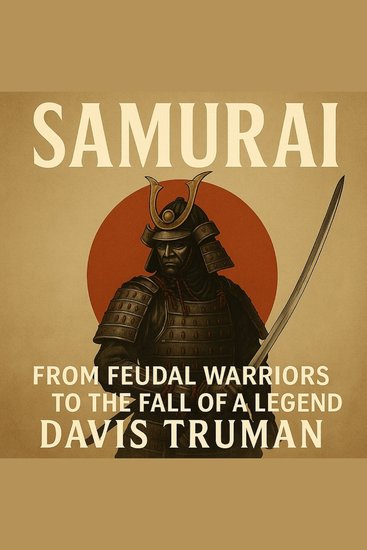
  • Samurai - cover

    Samurai

    Jodie Brooks

    • 0
    • 0
    • 0
    Samurai: From Feudal Warriors to the Fall of a Legend 
     Honor. Power. Betrayal. The true story behind the myth. 
    Step into the shadows of ancient Japan and uncover the riveting saga of the samurai, the elite warrior class whose fierce loyalty, deadly skill, and unbreakable code of honor shaped the destiny of an empire. 
    From their blood-soaked rise during the Heian period to their dominance under the shogunate and eventual downfall in the modern age, Samurai: From Feudal Warriors to the Fall of a Legend brings history to life like never before. Journey through epic battles, political intrigue, and the philosophical heart of bushidō, the soul of the samurai. 
    ✔Richly detailed and deeply researched 
     ✔Features legendary figures like Miyamoto Musashi, Oda Nobunaga, and Tokugawa Ieyasu 
     ✔Perfect for fans of military history, Japanese culture, and epic storytelling 
    Whether you're a seasoned historian or a curious reader, this book offers a gripping narrative that is both educational and unforgettable. Discover how these warrior legends lived, fought, and died, and why their legacy still captivates the world today. 
    Unlock the legend. Learn the truth. Become part of the story.
    Ver libro
  • The Station - Athos: Treasures and Men - cover

    The Station - Athos: Treasures...

    Robert Byron

    • 0
    • 0
    • 0
    The Station follows three high-spirited young men visiting the monasteries on Mount Athos in 1927. They examine treasures and sketch the courtyards and those who live in them. They swim ecstatically off the sparkling, deserted beaches, climb mountains, talk and share meals with monks and transcribe these conversations with relish.  For life is very different for a celibate hermit on Mount Athos. Time has no meaning: the Son of God, His Virgin Mother, the Angels and the Saints are all living creatures of flesh and blood, and the Pope is a heretic. This slim book was little short of revolutionary in its championing of Greek Orthodoxy and Byzantine civilization, reversing centuries of western prejudice. It was the first of Robert Byron's travel books, revealing the flashing wit, bravery, passion and astonishing powers of visual observation which made him such an exceptional witness.
    Ver libro
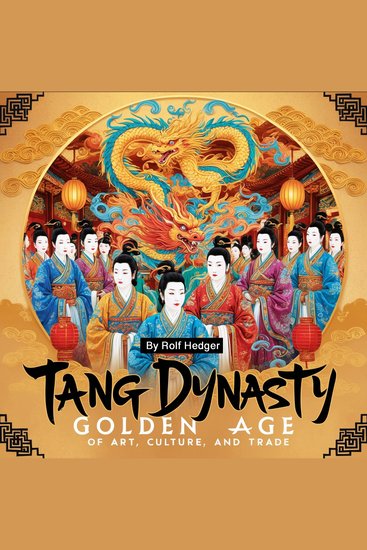
  • Tang Dynasty - Golden Age of Art Culture and Trade - cover

    Tang Dynasty - Golden Age of Art...

    Rolf Hedger

    • 0
    • 0
    • 0
    The Tang Dynasty, one of the most prosperous and influential periods in Chinese history, lasted from 618 to 907 CE. Often referred to as a golden age, it was marked by significant cultural, political, and economic developments that shaped the trajectory of Chinese civilization. The dynasty succeeded the Sui Dynasty, which had fallen due to internal strife and excessive military campaigns, and it laid the foundation for many of the political and cultural features that would characterize Chinese history for centuries. The Tang Dynasty's legacy is still visible in the arts, governance, and cultural exchanges that continue to influence China today. 
    The founding of the Tang Dynasty is attributed to Li Yuan, who became Emperor Gaozu after a successful rebellion against the Sui Dynasty in 618. His reign was followed by that of his son, Emperor Taizong, one of the most renowned rulers in Chinese history. Under their leadership, the Tang Empire quickly expanded its territories, establishing control over much of present-day China and extending its influence across Central Asia, Korea, and parts of Southeast Asia. This expansion was not only military but also cultural, as the Tang Dynasty became a melting pot of diverse peoples, cultures, and ideas. 
    Politically, the Tang Dynasty introduced several innovations that helped maintain its stability and success. It perfected the imperial examination system, which allowed for a more meritocratic approach to selecting government officials, and it expanded the civil service, ensuring that a large and efficient bureaucracy could handle the empire’s vast territory. The legal system, known as the Tang Code, was influential in shaping the governance of China for centuries and served as a model for other East Asian countries.
    Ver libro
  • Florida Spectacular - Extraordinary Places and Exceptional Lives - cover

    Florida Spectacular -...

    Cathy Salustri

    • 0
    • 0
    • 0
    If when you think "Florida" you don't think "spectacular," Cathy Salustri is determined to change your mind. Explaining why the state is more than the "Florida Man" stories and the politics that so often make national news, and looking beyond the crowded beaches and theme parks, Salustri celebrates what makes the state worth a deeper understanding in this lively trip through its natural beauty and fascinating history. 


    Florida Spectacular lifts the curtain on multiple facets, including the legacy of Zora Neale Hurston and the Black community at Eatonville; the bravery of Emateloye Estenletkvte, a Seminole woman who escaped from captivity back to her homeland; the two "frenemy" Henrys, Flagler and Plant, and their projects in transportation and tourism; the three "Marjories," the influential environmentalists and writers; and people working to solve issues facing the state today, such as those who have used Florida's hurricanes to make storm forecasting better for the whole world. 


    Along the way, Salustri brings to light lesser-known moments from Florida's history that help illuminate the state's significance in American and world history. Salustri tours listeners through the hidden-in-plain-sight Florida, the overlooked treasures, the cultural complexities, the environmental challenges and successes.
    Ver libro
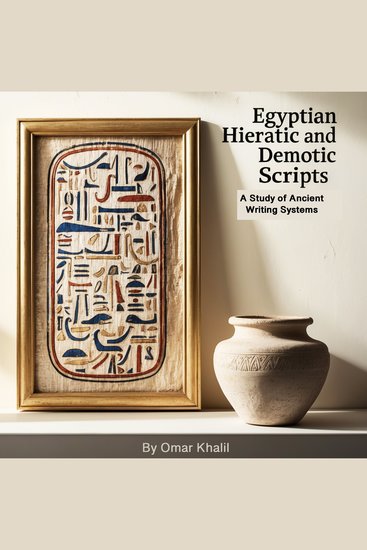
  • Egyptian Hieratic and Demotic Scripts - A Study of Ancient Writing Systems - cover

    Egyptian Hieratic and Demotic...

    Omar Khalil

    • 0
    • 0
    • 0
    The writing systems of ancient Egypt are among the most fascinating and intricate aspects of the civilization’s rich cultural heritage. These scripts not only served as practical tools for administration and communication but also held immense symbolic and ritual significance. The evolution of Egyptian scripts reflects the social, political, and religious transformations that took place throughout the millennia of Egyptian history. 
    Egyptian writing developed as a means of recording religious texts, administrative documents, literary works, and personal correspondence. Among the earliest and most iconic forms of writing is the hieroglyphic script, characterized by its detailed pictorial symbols. While hieroglyphs are often associated with monumental inscriptions and sacred texts, they were not the only writing system employed by the ancient Egyptians. As the civilization advanced, the need for more practical and expedient writing methods became apparent, giving rise to the development of cursive scripts. 
    Hieratic script emerged as a more fluid and practical adaptation of hieroglyphs, primarily used for religious texts, administrative records, and personal documents. Unlike the elaborate and artistic nature of hieroglyphs, hieratic writing was simplified, making it faster to write and more suited for daily use. Its cursive nature allowed scribes to quickly document information on papyrus, ostraca, and other media. Despite its practicality, hieratic remained closely tied to its hieroglyphic origins, preserving many of the same signs and structures.
    Ver libro
  • Gupta Empire - Golden Age of Art Science and Literature - cover

    Gupta Empire - Golden Age of Art...

    Rolf Hedger

    • 0
    • 0
    • 0
    The Gupta Empire, one of the most influential dynasties in Indian history, emerged in the early 4th century CE. It marked the beginning of a new era characterized by political stability, territorial expansion, and remarkable advancements in various fields. The foundation of the empire was laid by Chandragupta I, whose leadership and strategic alliances set the stage for the golden age that followed. 
    The origins of the Gupta dynasty remain somewhat obscure, but historical records suggest that they were a powerful regional clan in the Magadha region, present-day Bihar. Unlike the Mauryan Empire, which had a centralized administrative structure, the Gupta rulers adopted a more decentralized approach, allowing local rulers to maintain a degree of autonomy while still pledging allegiance to the empire. This governance model contributed to their long-lasting rule and ensured stability across their vast territories. 
    Chandragupta I, who ascended the throne around 320 CE, played a crucial role in the establishment of the empire. His most significant achievement was his matrimonial alliance with the Licchavi princess Kumaradevi, which not only strengthened his position but also expanded his influence in the fertile Ganges basin. This strategic marriage helped him consolidate power and gain the support of powerful regional factions. As a result, the empire's boundaries began to expand, laying the groundwork for future conquests.
    Ver libro